Latest update August 17th, 2026 10:20 AM



Latest News
- Two Australian firms now hold 770 km² gold lands in Guyana
- Mayor demands answers as Linden grid breaks under industrial weight
- Colombian president asks Trump to suspend tariffs to help earthquake recovery
- $6.6B Bath Hospital must deliver more than ‘grand ceremonies’ – Opposition Leader says
- Fast-growing Guyana still depends on private planes for medevac
Building communities that are mentally well, resilient and environmentally responsible
Dear Editor,
Mindful Guyana Inc. welcomes the Government of Guyana’s publicly announced initiative concerning the development of “model communities” and, of course, the ongoing consultations taking place across the country’s regions.
We believe that any initiative that seeks to improve the quality of life of Guyanese citizens deserves serious consideration and meaningful public discussion. We also welcome the decision to engage communities through consultations. Listening to citizens before designing programmes that affect their communities is an important principle of good governance.
At the same time, as an organisation concerned with mental wellness, community wellbeing and environmental stewardship, we believe there is an important question that should be placed squarely on the national agenda:
Can Guyana, with its extraordinary cultural, geographical, environmental and social diversity, realistically define a single concept of a “model community”?
We respectfully suggest that this question deserves careful consideration before the government settles on a framework for assessing communities.
Guyana’s communities are shaped by very different circumstances.
A densely populated urban community has challenges that are different from those of a coastal agricultural village. A riverine community faces different realities from a mining settlement. An Indigenous community has cultural, historical and environmental considerations that cannot necessarily be applied to a suburban community on the coast.
Also, our communities differ in their social structures, traditions, economic activities, environmental vulnerabilities, access to public services and relationships with the natural environment.
Consequently, what constitutes a successful and healthy community in one location may not necessarily be the appropriate measure for another.
This raises an important question:
What exactly would make a community a “model” community, and who determines the model?
If the answer is based primarily on a set of centrally determined indicators, then, there is a risk that communities will be judged according to their conformity to a predetermined standard rather than their ability to respond effectively to their own circumstances. And that would be unfortunate.
We hold the view, that, the objective of community development should not be to make every community look and function alike. It should be to ensure that every community has the opportunity, resources and institutional support to provide its residents with a safe, healthy, dignified and sustainable quality of life.
Again, from the perspective of Mindful Guyana Inc., there is another dimension that deserves much greater attention that it is presently accorded: mental wellness.
A community is more than its roads, drains, buildings and physical infrastructure.
A community is also the environment in which people experience belonging, safety, connection, dignity, opportunity and hope. We should therefore be cautious about defining a successful community solely by its physical appearance or infrastructure.
It is practically true that a community can have beautifully maintained streets and public spaces while residents experience social isolation, unemployment, insecurity, family stress, substance misuse, violence or a lack of meaningful opportunities for young people.
Conversely, communities with limited physical resources may possess strong social networks, cultural traditions, community leadership and a remarkable capacity for mutual support.
A genuinely healthy community must address both the physical and psychosocial environment.
Government’s community development framework should therefore consider issues such as social connectedness, opportunities for recreation, safe spaces for children and young people, community participation, inclusion of older persons and vulnerable groups, access to mental-health and psychosocial support, and opportunities for residents to contribute meaningfully to decisions affecting their lives.
Again, these are not luxuries; they are essential components of community wellbeing.
Also, mental wellness is closely connected to the physical environment in which people live. The quality of our surroundings can influence stress, safety, social interaction, physical activity and our sense of pride and belonging.
Poor drainage, unmanaged garbage, polluted waterways, abandoned spaces, excessive noise, inadequate recreational areas and unsafe public spaces can contribute to an environment in which people feel neglected and disconnected.
On the other hand, clean and accessible public spaces, trees and greenery, recreational areas, safe walking routes, healthy waterways and well-maintained neighbourhoods can encourage physical activity, social interaction and a greater sense of connection to place.
This is why environmental stewardship should not be treated as a separate issue from mental wellness. A healthy environment and a mentally healthy community reinforce each other.
The environmental dimension is particularly important in Guyana.
Our communities exist within very different ecological settings. Coastal communities face flooding, drainage and sea-level-related vulnerabilities. Hinterland communities may have different challenges involving forests, rivers, mining, transportation and access to services.
Communities also have different relationships with land and natural resources.
An environmental standard therefore needs to be national in its ambition but sufficiently flexible to reflect local realities.
Rather than asking whether a community looks like a “model community,” government could ask whether the community is becoming more environmentally responsible and resilient.
Are residents participating in keeping their surroundings clean?
Are waterways being protected?
Is waste being properly managed?
Are public spaces being maintained?
Are communities prepared for flooding and other environmental hazards?
Are young people being engaged in environmental education?
Are development decisions taking the long-term health of the community and its environment into account?
These are more meaningful questions.
Mindful Guyana Inc. therefore respectfully recommends that the Government reconsider the concept of a “Model Community Programme” and instead establish a Healthy, Resilient and Sustainable Communities Framework. Under such a framework, government would establish broad national objectives while allowing communities to determine their own priorities.
The framework could be built around several interconnected pillars:
- Physical wellbeing
Safe water, sanitation, housing, roads, drainage, healthcare, recreation and other essential services.
- Mental and social wellbeing
Social connection, community safety, youth engagement, inclusion, psychosocial support, meaningful participation and opportunities for residents to develop a sense of belonging.
- Environmental stewardship
Waste management, protection of waterways and natural areas, green spaces, climate resilience, disaster preparedness and responsible use of natural resources.
- Economic wellbeing
Employment, entrepreneurship, skills development and opportunities for sustainable livelihoods.
- Community participation and governance
Residents should have a meaningful role in determining priorities, implementing initiatives and evaluating progress.
Most importantly, communities should establish their own locally appropriate development targets within national standards.
There is nothing wrong with government identifying successful practices and sharing them across the country. For example, if one community develops an excellent waste-management programme, another establishes an effective youth initiative, another creates a successful community garden, and another develops a strong flood-resilience programme, those experiences should be documented and shared. But we should distinguish between a model practice and a model community.
A successful initiative in one community can inspire another without suggesting that the entire community itself is a template that everyone else must follow. The measure should be progress.
Government could establish baseline indicators and then assess whether each community is improving against its own circumstances and agreed priorities.
This would allow us to celebrate communities for the progress they make rather than ranking them according to how closely they resemble a centrally determined ideal.
The ongoing regional consultations provide an excellent opportunity to have this conversation.
However, Mindful Guyana Inc. encourages the Government to use these consultations not merely to determine which communities should become “models,” but to ask a deeper question:
What does a healthy, resilient and sustainable community look like from the perspective of the people who live there?
The answers will undoubtedly differ. And that is precisely the point.
Guyana’s diversity is not a problem to be standardised away. It is one of our country’s greatest strengths. Therefore, our goal should not be to create communities that are identical. Our goal should be to create communities where people can live safely, connect with one another, maintain their mental and physical wellbeing, preserve their cultural identity, participate in decisions affecting their lives, and live in harmony with their environment.
That is a much more ambitious, and ultimately more meaningful, vision than the creation of “model communities.”
Mindful Guyana Inc. therefore encourages the Government, civil society, community organisations, environmental groups, mental-health professionals and, most importantly, residents themselves to broaden the national conversation.
Let us move from model communities to healthy communities; from standardisation to local empowerment; from measuring appearance to measuring wellbeing; and from development alone to sustainable human and environmental development.
If we get this right, we will not have a handful of “model communities.” We will have a Guyana in which every community is supported to become healthier, more resilient, more inclusive and more sustainable on its own terms.
Yours faithfully,
Royston King
Chairman
Mindful Guyana Inc.
Share this:

Discover more from Kaieteur News
Subscribe to get the latest posts sent to your email.
Similar Articles
2 thoughts on “Building communities that are mentally well, resilient and environmentally responsible”
Leave a Reply

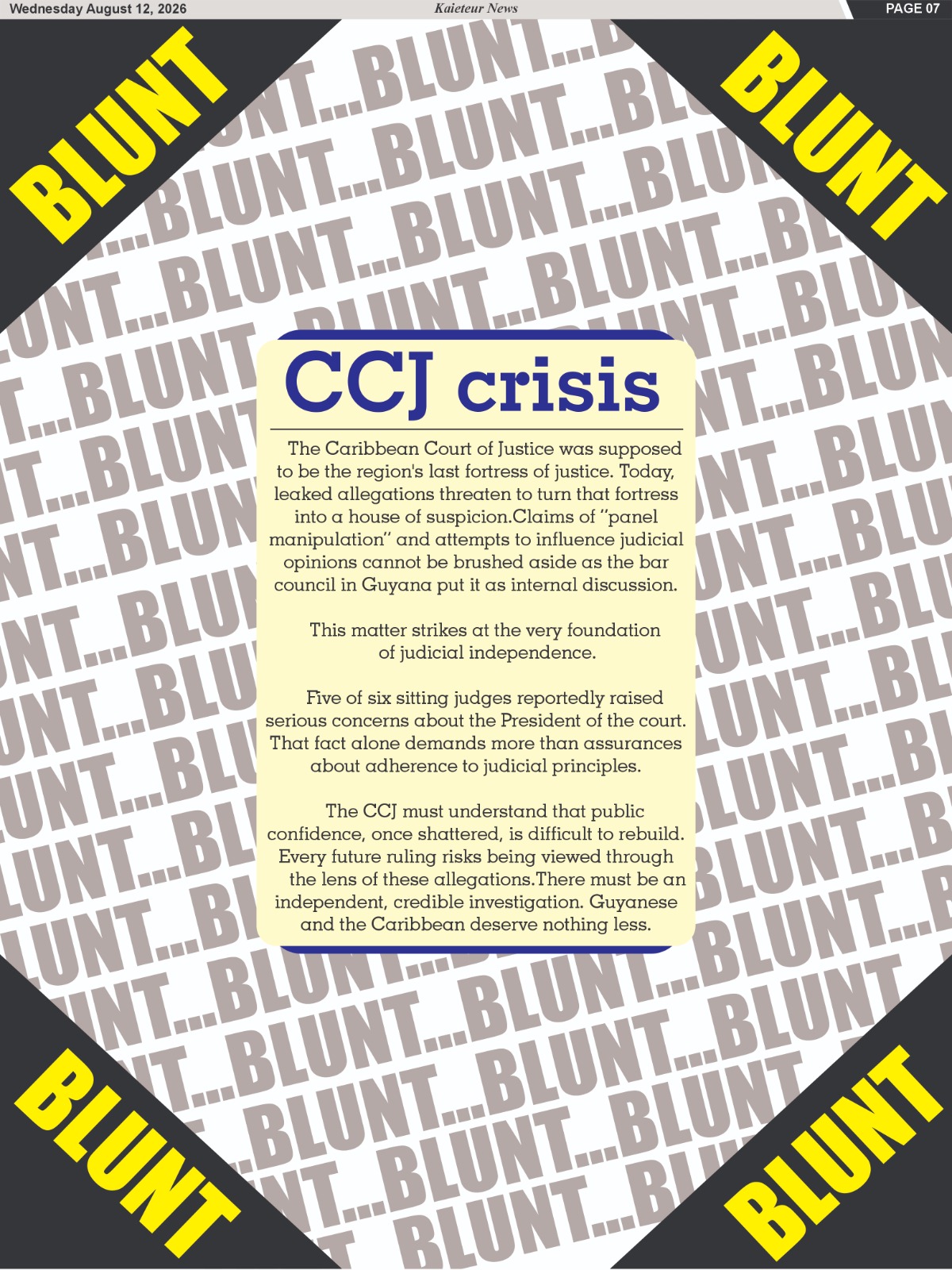
Blunt of the day
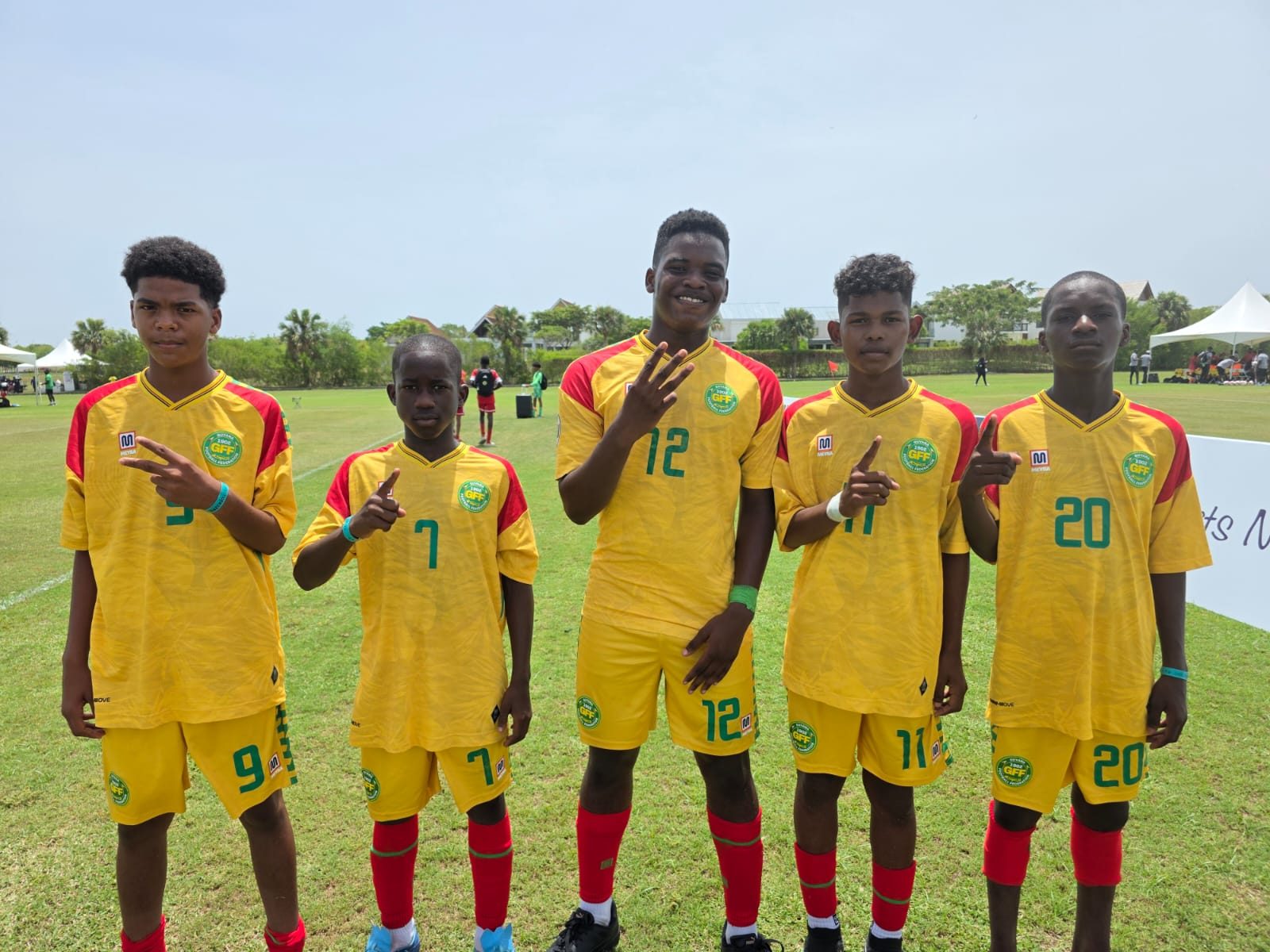
Sports
Features/Columnists

Sir. Ronald Sanders

The GHK Lall Column

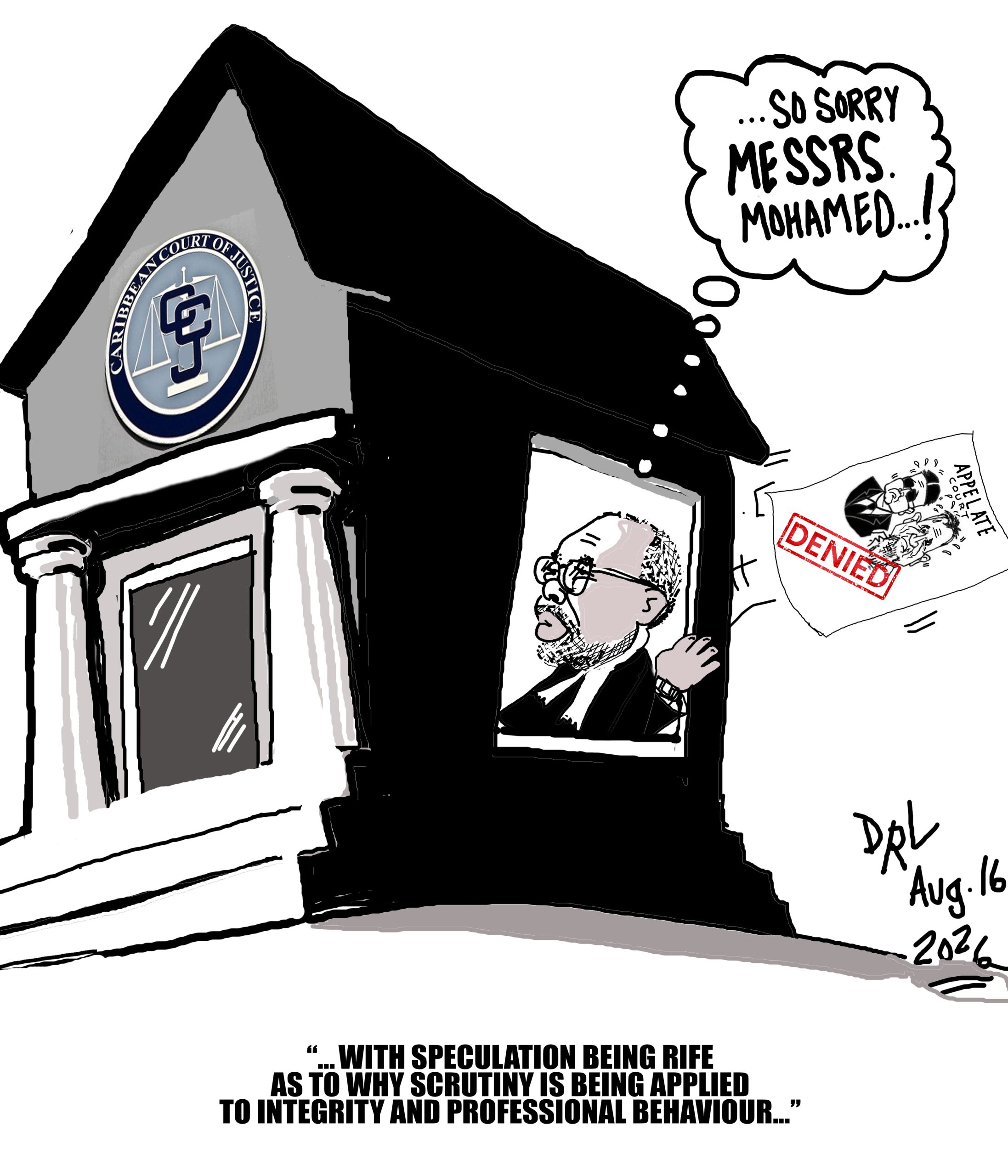
Weekend Cartoon


Yes Royston, a very good intelligent writing and in-depth understanding and observation of what a healthy, resilient and sustainable community, in Guyana or any part of the World, should aim to physically capture to fully ensure a good steady happy harmonious quality of Life of each stake-holder of that specific geography……
As ” Abraham” would say “You came forth to live happily ever after.”
And as Jesus said; “I remind you that from the beginning of this reality known as physicality,
you are the creators.
You have brought forth physicality.
You have brought forth this dimension.
You, as what you understand as co-creators, brought forth the planets and our holy Mother the Earth.
You as the consciousness, the Isness of the interdimensional Self,
asked in an instant that was outside of time,
“What can I create?”
And you got very busy with your imagination,
your creativity,
and have brought forth most wondrous physicality.”
Can you see, if we as Humans remember and understand what these Powerful ‘People” are saying, what a wonderful Healthy Community, we can turn our earthly living spaces into? And bring constant Joy into our Lives.
Victor19
Royston had his opportunity for years at the Georgetown City Hall & the M &CC
but with Hamilton Green made the “garden City a garbage city’ infested with criminals & unsightly shacks peddling all sorts of household items in front of legitimate businesses!!! THanks to the government for restoring some of the ambiance of Georgetown!!!