Latest update October 14th, 2026 10:27 AM



Latest News
- Govt. briefs U.S. Justice Dept. on Mohamed shooting incident
- “Gun appeared out of thin air” – lawyer slams police over arrest of Mohamed
- U.S. wants tax incentives for American firms as Exxon enjoys tax-free deal
- Pope Leo diagnosed with cancer after surgery to remove part of lung
- US firm in move to take over Guyana gold project in US$4.2M deal
The electricity crisis
(Kaieteur News) – One of the persistent afflictions of post-colonial societies is the absence of planning commensurate with ambition. Governments announce grand projects, inaugurate grand buildings, make grand speeches and produce grand visions, but somewhere between the vision and the delivery there is often a failure to ask the most elementary question: “What will be required to make all of this work?”
Guyana has become a particularly instructive case.
The difficulty now confronting the electricity sector is not simply that electricity demand has risen. Demand was supposed to rise. It was forecast to rise. It was built into the country’s development strategy. The Government’s own planning documents announced, in unmistakable language, that economic transformation would produce a dramatic increase in electricity consumption.
The Low Carbon Development Strategy 2030 was not shy about the matter. Its clean-energy chapter stated that “the power demand in Guyana’s public electricity grids is forecast to triple over the next five years.” The Demerara-Berbice Interconnected System, which accounted for the overwhelming majority of the cost of electricity generation, had a peak demand of 126 MW in 2020.
The LCDS estimated that this would rise to 415 MW by 2025. It further calculated that 300 MW of new firm capacity would be required to accommodate the increase in demand, replace ageing generators and improve reliability.
The final LCDS formulation was equally explicit about the larger trajectory. The first phase, from 2022 to 2027, anticipated a threefold increase in energy demand. The second phase, from 2027 to 2032, anticipated another substantial increase, while demand after 2032 was expected to be met increasingly through solar and wind. By 2030, the strategy projected that energy use could increase fivefold, while greenhouse-gas emissions remained approximately flat.
The Guyana Energy Agency subsequently reinforced the warning. Its own presentation of the electricity outlook put the projected peak load of the DBIS at 407 MW in 2025, compared with 135.7 MW in 2021. It repeated the estimate that 300 MW of new firm capacity would be necessary to accommodate demand growth, retire ageing generators and improve reliability.
In other words, Guyana did not stumble unexpectedly into an electricity-demand crisis. And yet here we are in 2026, being told that electricity demand is surging and that citizens must conserve.
The Guyana Energy Agency and Guyana Power and Light launched a Demand Side Management programme in March. The programme was described as a means of managing demand rather than relying exclusively upon expanding generation capacity.
In July, Prime Minister Mark Phillips, receiving the country’s Demand Side Management Action Plan, acknowledged that rapid economic growth and investment were driving increased electricity demand and urged what he called “smart consumption” to help meet that growth. The plan itself is intended to improve efficiency, manage peak demand and make better use of existing and future infrastructure.
Conservation is sensible. Nobody should object to households, businesses and government offices wasting electricity. Energy efficiency is an important part of any modern electricity system. But conservation cannot become the substitute for planning.
If the country knew that electricity demand would triple, why was sufficient generating capacity not brought on stream in time? What contingency arrangements were made for the gap between projected demand and available firm capacity?
If 300 MW of additional firm capacity was identified as necessary, where was the corresponding programme to ensure that capacity would actually exist when required? The power ships are not permanent capacity.
On top of this, we are told that data centers – huge guzzlers of electricity – are being planned, with one to be established in Region 3. So while we are not battling with managing demand, we are planning to make that predicament worse with the establishment of data centers that use an inordinate amount of power.
There is an almost comic quality to the present predicament. Guyana has discovered that prosperity consumes electricity. But the more serious possibility is that we have mistaken the announcement of development for the planning of development. We have become adept at proclaiming what Guyana will become and less adept at constructing the systems required to sustain it.
The Government therefore owes the public a straightforward explanation. Not another appeal for conservation. Not another recital of the wonders of economic growth. The country already knows that demand is increasing.
The question is why the surge that was predicted years ago was not adequately catered for. The forecasts were there. The numbers were there. The warnings were there. What appears to have been missing was the electricity.
The views expressed in this article are those of the author and do not necessarily reflect the opinions of this newspaper
Share this:

Discover more from Kaieteur News
Subscribe to get the latest posts sent to your email.
Similar Articles
One thought on “The electricity crisis”
Website Hits

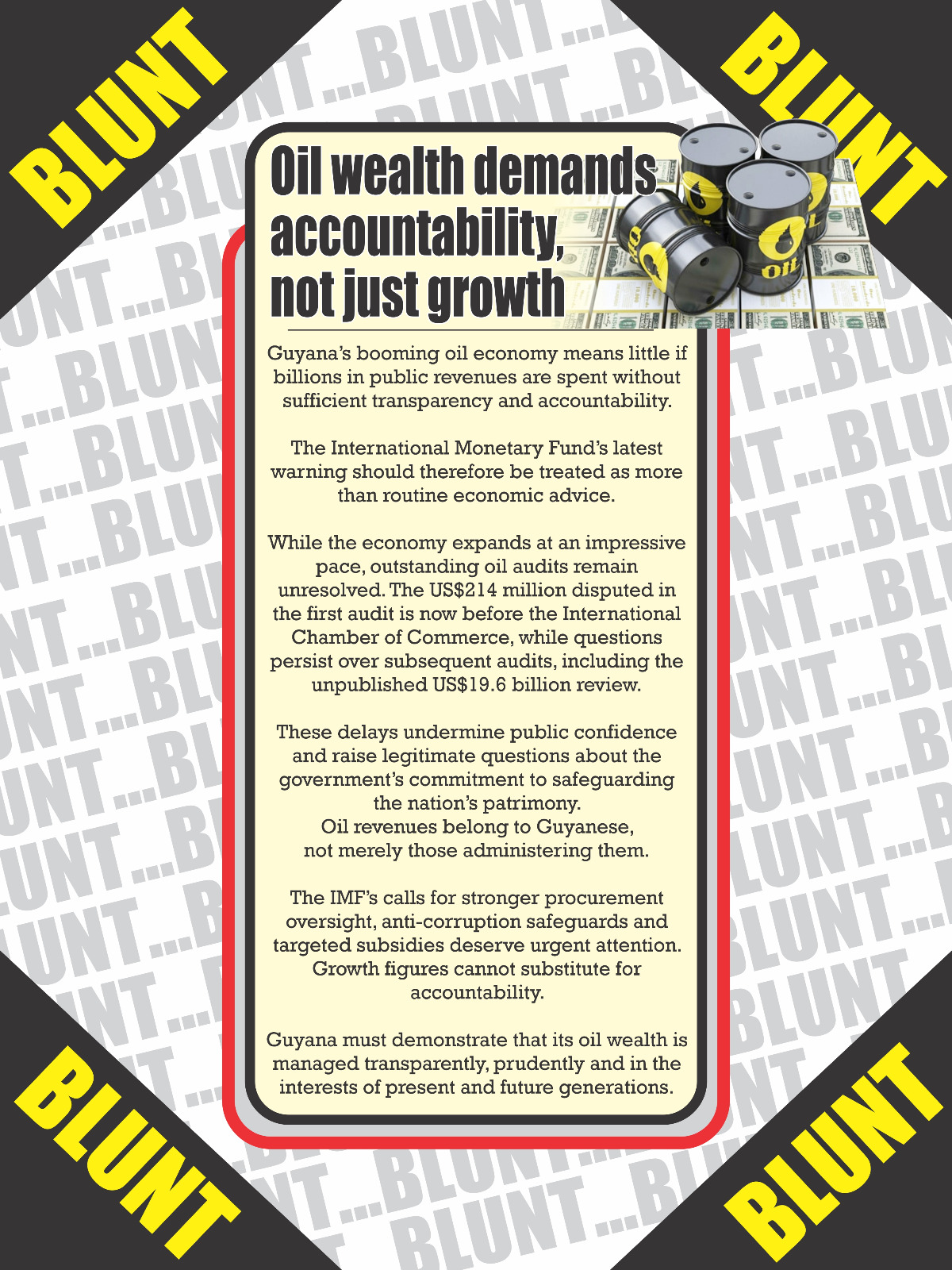
Blunt of the day
Sports

Features/Columnists

Sir. Ronald Sanders

The GHK Lall Column

Weekend Cartoon



WATER & ELECTRICITY have always been sore problems in the society!!
We have been hoping all the times for some remedy to no avail!!!