Latest update August 5th, 2026 12:32 AM



Latest News
- Donald Trump blasts ExxonMobil, Chevron for making “too much money” during war, says companies should lower prices
- Govt’s water bottling plan could crush private sector – GMSA
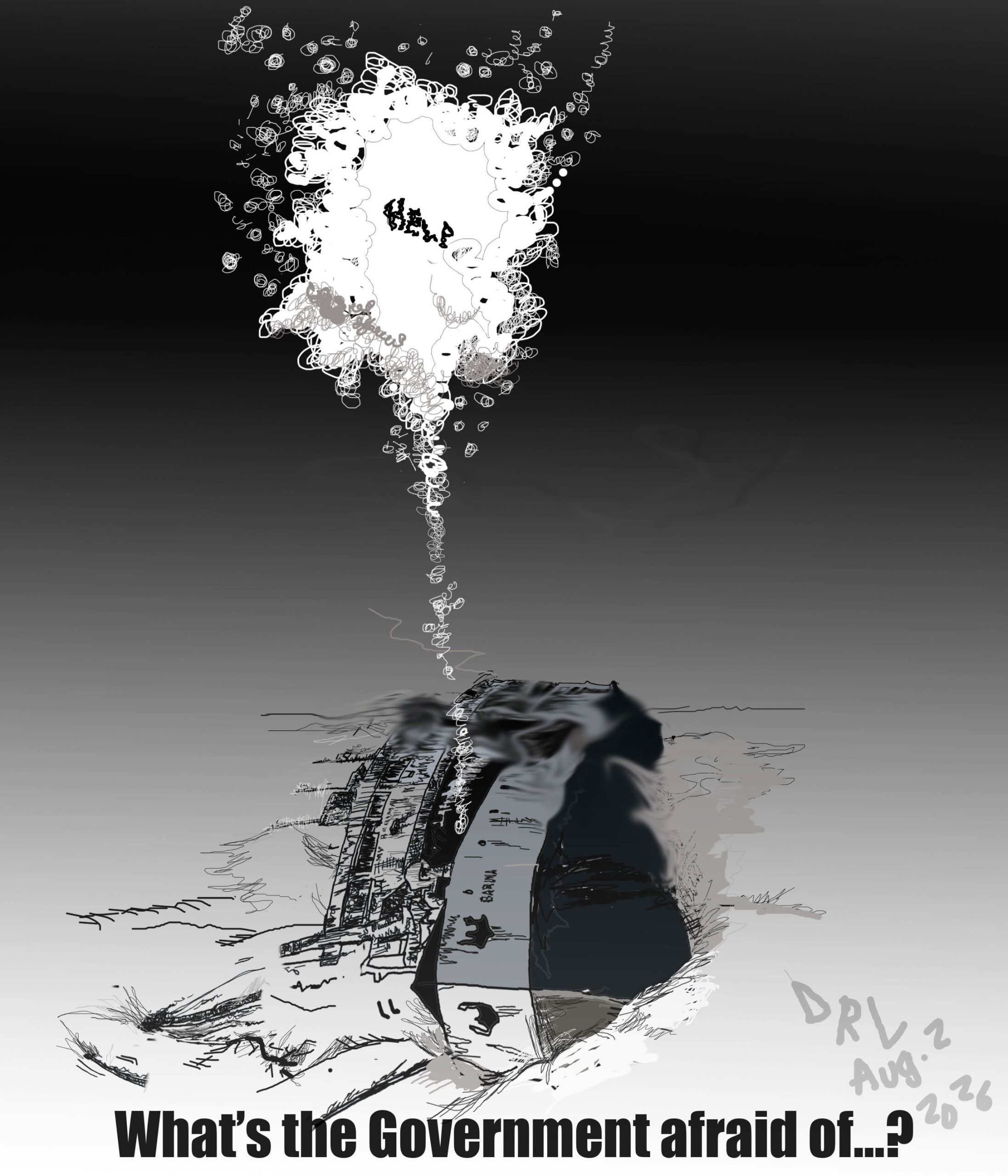
- ‘Search Over’ …Govt. calls off MV Barima operations, several bodies still to be identified
- One Killed, several injured in West Coast Berbice crash
- Iran boosts military strength during ceasefire with U.S.
The respectable myths of an age are usually written by those who profit from them
(Kaieteur News) – For years we have been told that institutions are the engines of prosperity. Build stronger courts, establish more transparent procurement systems, strengthen regulatory agencies, improve parliamentary oversight, and prosperity will follow as surely as dawn follows darkness. It is an attractive doctrine because it relieves us of the burden of asking a more uncomfortable question: who builds institutions, and in whose interest are they built?
One need not be a Marxist to appreciate that institutions do not descend from the heavens carrying tablets of administrative virtue. They emerge from societies already shaped by economic power. The architecture of politics is first sketched by the geometry of wealth.
The respectable myths of an age are usually written by those who profit from them. Every ruling class seeks to convert its interests into universal truths. Medieval aristocrats spoke of divine right. Victorian industrialists preached the sanctity of laissez-faire. Today’s managerial elite extols the gospel of institutional reform, as though institutions possess mystical powers capable of suspending the laws of political economy.
The history of capitalism suggests otherwise. Economic transformations have repeatedly rearranged the furniture of politics long before constitutions caught up. The Industrial Revolution did not wait for perfect institutions before overturning Europe. It was the explosive growth of factories, trade, banking and urban wealth that forced governments to expand representation, regulate labour, establish public education and eventually create welfare states. Politics followed commerce. Law followed capital. Institutions became the formal record of changes already accomplished in the economic sphere.
Karl Marx wrote about the class struggle. In so doing he identified an enduring truth: the economic base exerts a commanding influence over the political and legal superstructure. One need not accept every page of Marx to recognise that property relations, production, and the distribution of wealth profoundly shape the institutions that societies construct.
This observation matters enormously for countries blessed—or burdened—with natural resources. The fashionable prescription insists that the Resource Curse can be avoided only through stronger institutions. Such advice appears sensible until one notices that it quietly assumes institutions exist independently of the economic order they regulate. They do not. Institutions are themselves products of economic arrangements, social coalitions and balances of power.
Oil does not merely test institutions; it transforms them because it transforms the underlying economy. Vast resource revenues alter incentives, redistribute wealth, create new elites, reshape labour markets and redefine relationships between state and citizen. The political consequences arise not because institutions suddenly forget their duties but because the economic landscape beneath them has shifted.
To insist that institutional reform is the antidote to the Resource Curse is therefore to begin the analysis in the middle rather than at the beginning. Institutions respond to economic forces far more often than they command them.
There is also an ideological dimension to this argument that deserves greater scrutiny. Institutional fundamentalism reflects a distinctly bourgeois understanding of society. It assumes existing market relations are fundamentally sound and that the principal challenge lies in improving governance around them. In doing so, it leaves untouched the distribution of economic power itself.
To focus exclusively on transparency, accountability and regulatory efficiency while ignoring ownership, production and class relations is to defend, whether intentionally or not, the prevailing economic order. The conversation becomes one about managing capitalism rather than questioning how capitalism itself shapes political outcomes.
One notices, too, the selective enthusiasm with which institutional reform is prescribed. Nations are advised to establish independent commissions, sovereign wealth funds and fiscal rules, yet comparatively little attention is devoted to the structure of domestic enterprise, the diversification of production, technological upgrading or the emergence of productive national capital. The emphasis falls upon supervising wealth rather than creating new sources of it.
None of this is to argue that institutions are irrelevant. Honest courts are preferable to corrupt ones. Independent auditors outperform obedient accountants. Transparent procurement is superior to secret contracts. But to elevate institutions into the prime movers of history is a misguided notion.
If the objective is to escape the Resource Curse, the first question should not simply be whether institutions are sufficiently robust. It should be what kind of economy is emerging, who controls productive assets, how wealth is distributed, what incentives govern investment, and which social classes stand to gain from the evolving structure of production. Those questions precede institutional design because they ultimately determine it. Yet the proponents of institutional fundamentalism often shy away from these issues.
The Resource Curse is less a failure of institutions than a consequence of economic transformation. Institutions remain important, but they are more accurately understood as mirrors reflecting the prevailing balance of economic power. A society cannot legislate itself out of contradictions embedded within its own political economy. It must first confront the economic realities that give its institutions both their form and their limits.
(The views expressed in this article are those of the author and do not necessarily reflect the opinions of this newspaper)
Share this:

Discover more from Kaieteur News
Subscribe to get the latest posts sent to your email.
Similar Articles

Blunt of the day
Sports

Features/Columnists

Sir. Ronald Sanders

The GHK Lall Column

Weekend Cartoon