Latest update August 5th, 2026 1:26 AM



Latest News
- Govt. secretly invited Dutch firm to raise MV Barima long before issuing tender – well-placed sources
- Guyana still to receive full 50% profits promised by VP Jagdeo
- Jagdeo faces hostile Linden protests
- Trump blasts ExxonMobil, Chevron for making “too much money” during war, says companies should lower prices
- GMSA rails against Govt’s $496 million water bottling plant
The opposition wants mass protests, but Guyana is not ready
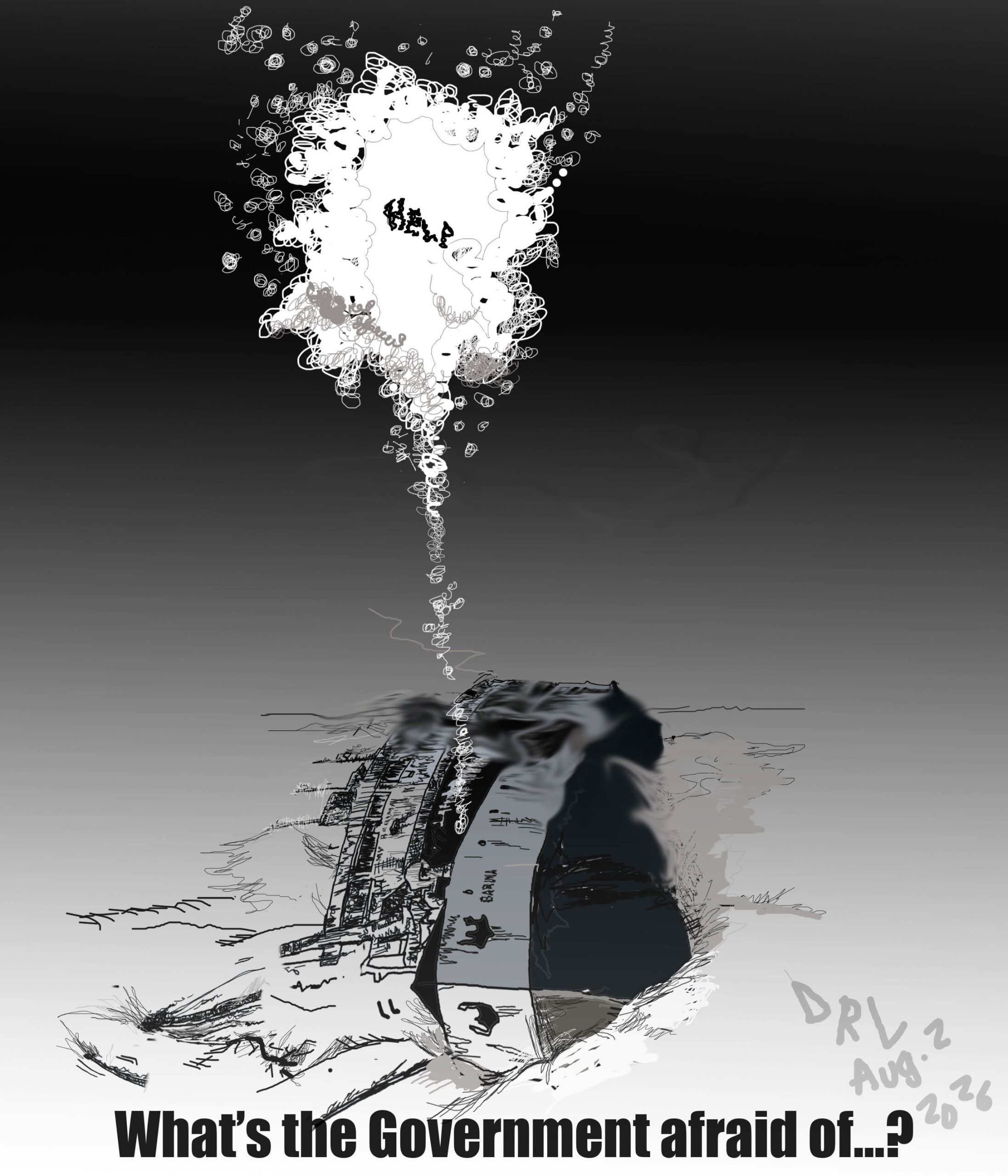
(Kaieteur News) – The sinking of the M.V. Barima has understandably produced anger, grief and frustration across Guyana, and in any functioning democracy a credible opposition would be expected to seize upon such a national tragedy and use it to hold the government accountable. That is what politics is about, after all: when an opportunity presents itself, you do not politely ask it to come back another day.
So, nobody should be surprised that the parliamentary opposition and other groups hostile to the PPP/C government have sought to turn the tragedy into a political issue. Governments are expected to answer difficult questions when tragedy strikes, and opposition parties are expected to ask those questions loudly, repeatedly and, if necessary, in parliament, on the streets and wherever else public opinion is formed.
The problem for the opposition is not that there is no public anger, because there certainly is. The problem is that public anger does not automatically translate into mass political action, and at present neither the objective nor the subjective conditions exist for the sort of sustained protest movement that could seriously shake the government.
The 2025 elections should have taught the opposition something about the political mood of the country. Guyana remains deeply divided along ethnic and political lines, and although the PPP/C experienced voter apathy within its own base, it nevertheless succeeded in holding that base together sufficiently to retain power.
That is an important fact which cannot simply be wished away. A government can be unpopular with many people and still remain politically secure if its opponents cannot transform that dissatisfaction into a broad movement capable of crossing traditional political boundaries.
There is another little problem confronting those hoping for a great uprising, and that is the Guyanese economy. This is the season of economic hustling, with people trying to make a dollar wherever they can, and many are far more interested in securing their own economic future than in spending days marching behind politicians.
People know that the oil boom will not last forever, even if nobody knows precisely when the party will end. There is money to be made now, contracts to be secured, businesses to be built and opportunities to be grabbed, so telling people to abandon the hustle and spend their days protesting is not necessarily the most attractive political proposition.
Then there is the opposition itself, which is perhaps the biggest obstacle to the protest movement it wants to create. The political forces that would have to mobilise a mass movement are themselves divided, suspicious of one another and competing for the same political space.
APNU and WIN are hardly operating as members of one happy political family. APNU is watching WIN carefully because WIN has made inroads into constituencies that APNU once regarded as its natural political territory, and nobody in politics likes discovering that the fellow standing beside him at the rally is actually measuring the size of his political shoes.
APNU also has a leadership problem, not necessarily because it has no capable people, but because many of its newer leaders are still finding their political feet. Leadership has to be earned over time, and people have to become sufficiently convinced in a leader’s courage, judgment and ability before they are prepared to follow that person into the streets.
The opposition therefore finds itself unable to rise above its own divisions. Mass movements require organisation, leadership, trust and a common purpose, and none of these can be manufactured overnight because a tragedy has created a convenient political opening.
There is also the question of the demand that ministers responsible should resign. The opposition has made resignation a central political principle, but the inconvenient truth is that ministerial resignation following national tragedy has never been a settled tradition in Guyanese politics.
Indeed, the opposition’s moral authority on this question is weakened by its own political history. When the APNU-AFC administration was in office and the Camp Street Prison uprising resulted in destruction and deaths, there was no comparable insistence that a responsible Minister must resign as a matter of principle.
That makes the present demand look less like an established constitutional convention and more like a political weapon being deployed against an opponent. If resignation is genuinely a principle, then it must be applied consistently, whether the government involved is the PPP/C, APNU-AFC or any other political administration.
None of this means that the government should be protected from criticism. Quite the opposite: the circumstances surrounding the Barima tragedy demand a thorough investigation, accountability where responsibility is established, and reforms to ensure that such a disaster does not happen again.
But there is a difference between demanding accountability and imagining that the country is on the verge of mass political protests. The Barima tragedy may have triggered genuine public outrage, but outrage by itself is not a mass movement, and political opportunity by itself does not produce political momentum.
The opposition would therefore do well to understand the difference between the objective and subjective conditions. The objective conditions—the broader social and economic circumstances—are not sufficiently favourable, while the subjective conditions—leadership, organisation, unity and public confidence in those leading the protest—are even less favourable.
For now, Guyanese people appear more interested in mourning the dead, demanding answers and getting on with their lives than in becoming foot soldiers in somebody else’s political and personal battles. The Opposition may have found an issue, but finding an issue is one thing; finding a country ready to march behind you is something else entirely.
The views expressed in this article are those of the author and do not necessarily reflect the opinions of this newspaper
Share this:

Discover more from Kaieteur News
Subscribe to get the latest posts sent to your email.
Similar Articles

Blunt of the day

Sports
Features/Columnists

Sir. Ronald Sanders

The GHK Lall Column

Weekend Cartoon