Latest update August 8th, 2026 12:30 AM



Latest News
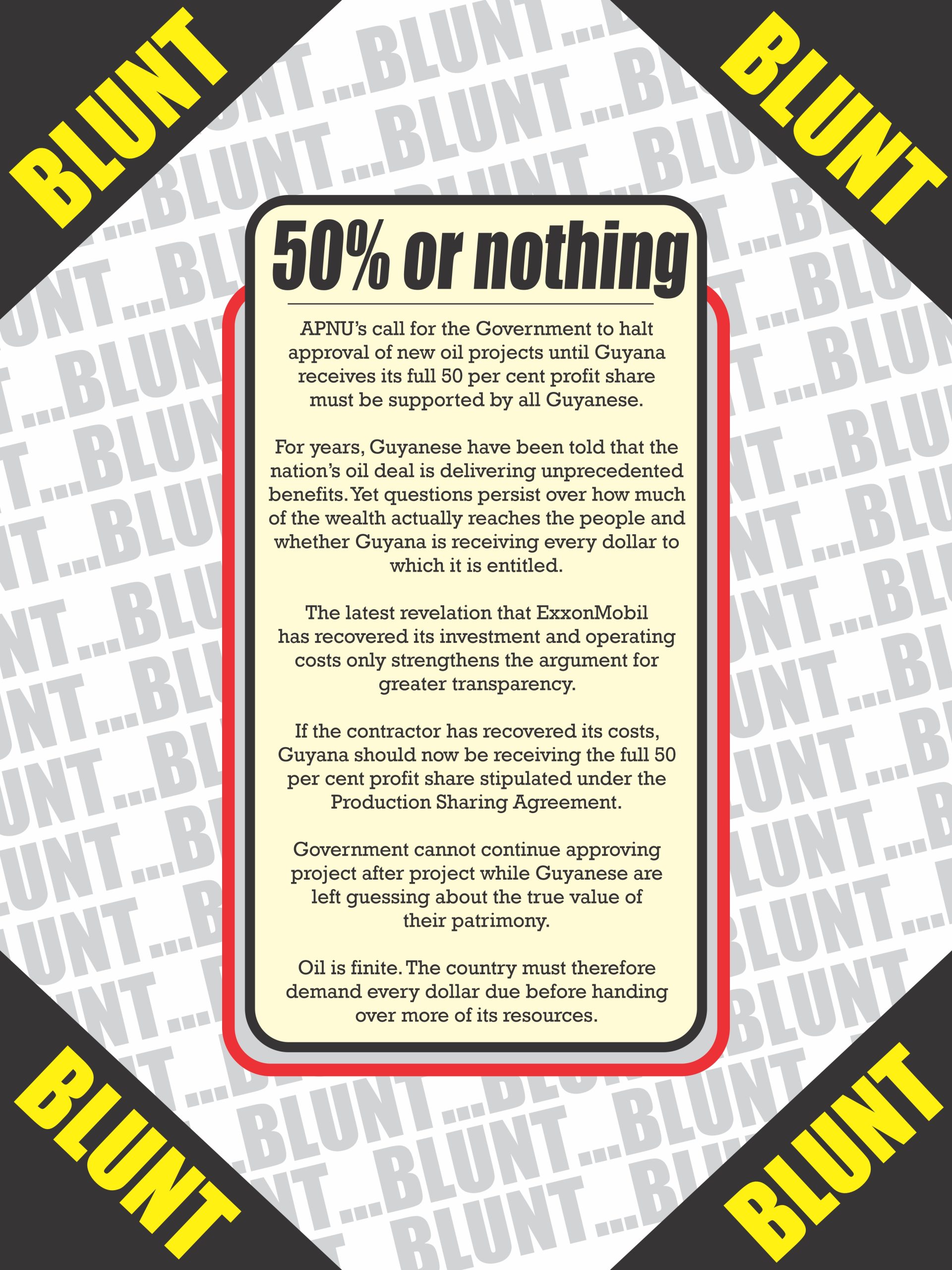
- ‘No new oil projects until Guyana gets full 50% profits’ – APNU tells Govt.
- Two dead in Water Street brawl
- “We will follow you wherever you go” – opposition vows to beef up protests against government
- Trump says war ‘can’t go much longer’
- Guyana’s oil helps cushion impacts from Middle East disruption – Exxon
Service and the state: Theorising about post-colonial Guyana
Kaieteur News – Anyone who lived in Europe would know that service is natural, automatic and pleasing. Anyone who lived in the post-colonial world as in a country named Guyana would know service hardly exists and when it exists it is ugly, grotesque and contemptuously delivered.
How does one explain the willingness of the state in capitalist, liberal bourgeois Europe to provide service and the sadistic nature of service in the post-colonial world? Please note, my example has to be Guyana since I have limited experience in the Third World (TW). This column is simply brief explanatory notes. There can be no elaboration because this analysis here is a newspaper column.
For example, both Guyana and Barbados were colonial subjects. But service in Barbados is exemplary for a TW country while in Guyana recipients of service are reminiscent of how slaves were treated. Briefly, this has to do with the evolution of the economy in both countries. Barbados’ fulcrum rests on tourism. Tourism is a service industry.
Barrington Moore Jr. in one of the Social Sciences’ most valued scholarly books, “The Economic Origins of Democracy and Dictatorship” argued that how a society evolves and what it becomes depends on class relationships. It is this central issue of relations among classes that determined the nature of service in Europe and the TW countries.
The sovereign state in Europe emerged out of the military wars that ended the Thirty Years War in 1648 with the Treaty of Westphalia thereby creating the European nation state. War played an essential role as to how the state was shaped in the sovereign nation and how leadership saw their subjects.
Since the nation-state was born out of war, monarchs and rulers endowed a special gratitude on the citizenry because it was the citizenry that brought about the nation-state through their courage in war. In other words, after the creation of the sovereign state there was less class antagonism the opposite of which occurred after the end of colonialism.
Thomas Hobbes, the great English philosopher, contributed in a critical way with his writings to the shape of the state after 1648. Hobbes’s social contract appeared ironic because he argued for a strong, all-powerful leader but his theory had implication for the process of service.
Hobbes advocated a social contract in which the Leviathan will be all-powerful but the contract can only last if the Leviathan protects the citizenry. Hobbes argued that if the Leviathan fails to do so then he broke the contract. The Leviathan then saw service to his subjects as his survival mechanism. This explains why the state throughout the centuries placed should strong emphasis on service.
In contrast, anti-colonialism was not a military movement against the European empires. Even in India, Yemen and Algeria, the agitations did not lead to wars. In most situations, the colonial empires were willing to leave because World War 2 had literally devastated their economies.
Whereas the rulers were grateful for the subjects’ participation in the Thirty Years War thus lessening class antagonism, after the demise of colonialism, the middle classes that inherited the Whiteman’s power showed no such gratitude because there were no anti-colonial wars that were fought. Class confrontation then ensued as we saw in Guyana between Burnham and Rodney.
The middle class inherited two evils from colonial rule that took over their psyche and their rule was similar to the colonial master. Colonial rule was a predatory system with three designs – extract resources; use military power for constant subjugation; offer little service so that the subjects would spend all their time trying to make ends meet and would not have time to think of revolution.
Post-colonial Guyana under Burnham was a militaristic state. It was the Pakistani thinker who coined the term “Overdeveloped State” meaning the colonials had to preserve a large, security state to keep the local in check. The over-developed state remained after Burnham. Former Guyanese professor, Ken Danns, noted that one in every four persons belonged to a military organisation under Burnham’s rule.
After Independence, service delivery was no different as when the colonials governed. You see, under colonialism service was never developed to the point where the local politicians understood its importance. Post-colonial governance then did not place special emphasis on the state as a service-provider. Emphasis was on state security.
There was service under the colonial state but it was narrow and specific – service to the colonial elites. The broader society had no experience – whether private sector or local administrators – as to the precious role the state should play in providing service to citizens. 55 years after Independence, whether in the state sector or in the corporate sphere, no employer or governmental boss knows what service means in Guyana.
(The views expressed in this article are those of the author and do not necessarily reflect the opinions of this newspaper.)
Share this:

Discover more from Kaieteur News
Subscribe to get the latest posts sent to your email.
Similar Articles

Blunt of the day
Sports
Features/Columnists

Sir. Ronald Sanders

The GHK Lall Column

Weekend Cartoon