Latest update July 31st, 2026 12:35 AM



Latest News
- Bloomberg reports: Oil curse hanging over Guyana’s head
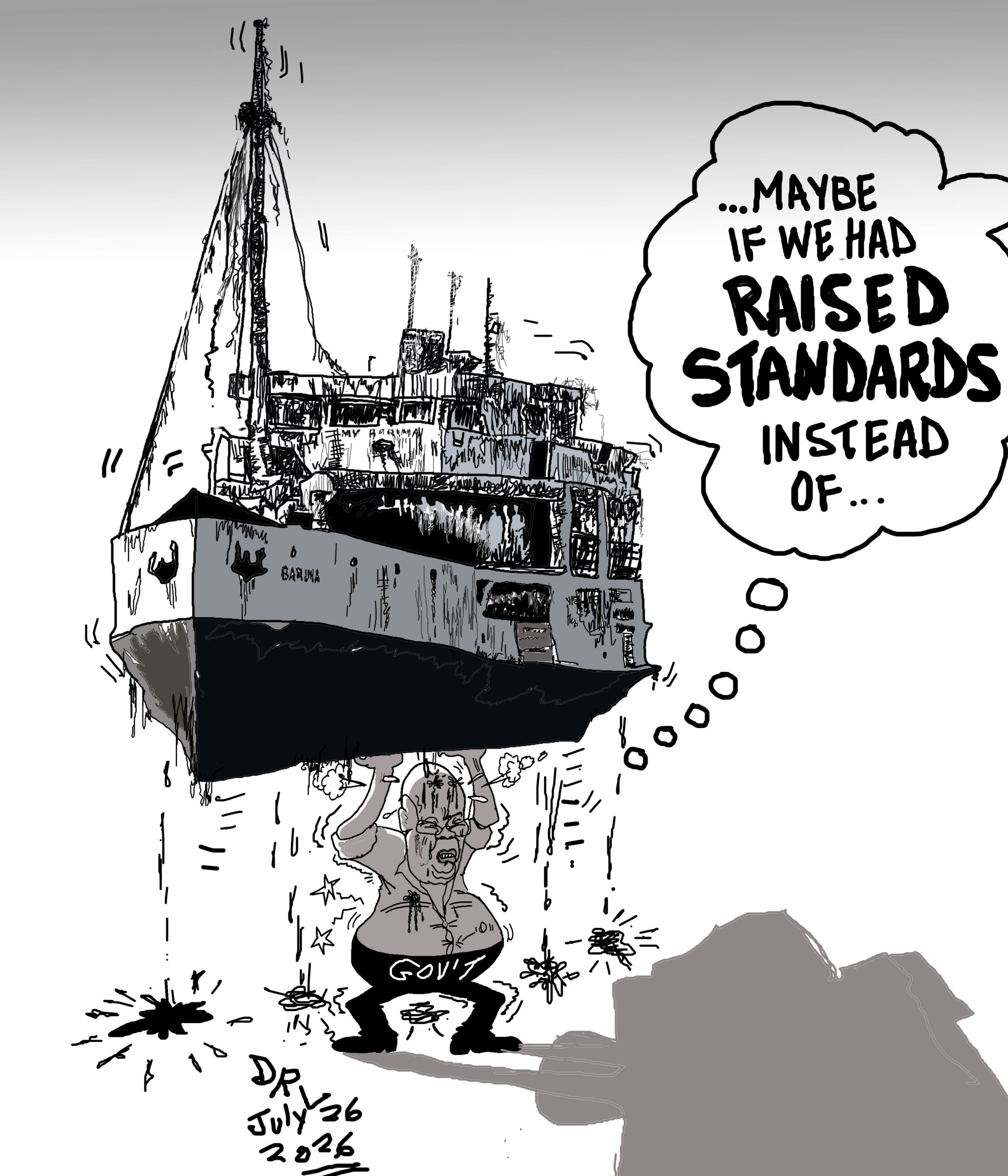
- ‘You can’t have both’ …Todd challenges parallel COI, murder prosecution of MV Barima crew
- Pres. Ali dodges media
- ‘Seaworthiness of MV Barima was MARAD’s responsibility, not charged crew’s’ – Dr. Todd
- ExxonMobil to conclude another exploration well next month
The meaning of Minamata for Guyana
Excerpts from an address by H.E. David Granger to the Minamata Convention on Mercury (Geneva, Switzerland 2017.09.28)
Mercury is not a plaything. It is harmful to human health and to the physical environment whether in the air, on land or in water. The use of mercury, in human products and processes, is a threat to human health and the environment.
The Minamata Convention on Mercury is an important instrument and its implementation must be intensified to avoid further harm by mercury emissions and for the protection of people and the preservation of the planet.
Guyana reaffirms its commitment to the implementation of the Minamata Convention. My country set itself the goal of reducing mercury emissions by 55 per cent within the next five years and to eliminate mercury use by 2027.
Guyana, a small, low-lying, coastal state on the South American continent, is part of the Guiana Shield – an area larger than Greenland which incorporates parts of Brazil, Colombia, French Guiana, Suriname and Venezuela.
The Shield is one of the most biologically rich and diverse zones and is one of the largest blocks of tropical rainforest on the planet.
Guyana, located near the centre of the ‘Shield’, has one of the highest rates of forest cover on the planet. Guyana’s indigenous people enjoy ownership of 14 per cent of the territory and live mainly in the hinterland near to the forested areas.
The landscape is diverse – comprising grasslands, highlands, islands, wetlands, coastal lowlands, lakes, rainforests, rivers and waterfalls – is the habitat to over 467 species of fish, 130 species of amphibians, 179 species of reptiles, 814 species of birds, 225 species of mammals, thousands of species of plants and home to a wide biodiversity used for food, medicines and shelter.
The hinterland has been home, also, of extractive industries – bauxite, diamonds, gold and manganese-mining – sometimes illegally, across its long, land frontiers with Brazil, Venezuela and Suriname.
Mercury, used to extract gold from ore, can find itself into the air, soil and rivers. The prevention of mercury pollution is vital to protection of people’s lives and livelihoods and the sustainability of the environment.
Guyana is pursuing a model of development aimed at becoming a ‘green’ state’ – one that emphasises the extension of protected areas, the preservation of its biodiversity, the protection of the environment, the provision of eco-tourism and eco-educational services, the promotion of renewable energy generation and the sustainable management of its natural resources.
Guyana needs the Minamata Convention on Mercury. It is a means to achieve its ‘green’ development objectives. The phased reduction and eventual elimination of the use of mercury is part of its national mining policy and is consistent with its obligations under the Convention.
The Convention will be a tool to ensure both improved human health in the artisanal and small- gold-mining sector and the sustainable management of its natural resources.
The artisanal, small- and medium-scale gold-mining sector is significant to the national economy. The sector:
– produced over 700,000 ounces of gold or 12.1 per cent of our Gross Domestic Product (at 2006 prices) in 2016 of which 67.7 per cent of total gold production came from more than 3,000 artisanal, small- and medium-scale mining enterprises; and
– employs more than 18,000 persons directly and supports the livelihoods of more than 100,000 persons, indirectly. It is the country’s single, largest foreign exchange earner.
The sector, however, is associated with 41 per cent of anthropogenic emissions and releases of mercury. The reduction of mercury emissions, therefore, is highly dependent on the reduction in the use of mercury in gold-mining.
Mercury used in the amalgamation process in gold-mining has found its way into the waterways – rivers and creeks – and presents a threat to the country’s aquatic systems and its biodiversity. The amalgamation process can leech into the soil and waterways, affecting both humans and the ecosystems.
The rivers (the word ‘Guiana’ means land of waters) which dissect the hinterland are still used for bathing, cooking, drinking, fishing and washing in traditional communities.
Gold-mining impacts on the physical environment through the use of dredges along river banks. The discharge of mining effluent into rivers creates problems of land degradation and water pollution.
Mercury used on land, similarly, can find its way into the food chain and can be harmful to humans and the biota and abiota.
Guyana has a low deforestation rate of 0.065 per cent but gold-mining accounted for 89 per cent of deforestation over the last few years.
Guyana was among the earliest signatories to the ‘Convention’, acceding in October 2013 and ratifying one year later. Implementing began with the preparation of a draft National Action Plan aimed at advancing efforts at the phased reduction and eventual elimination of mercury and mercury products.
Commitments for our National Action Plan, developed in compliance with the Convention’s requirements, need international support. The international community – United Nations Development Programme funded Minamata Initial Assessment (MIA) and World Wildlife Fund – was involved in the preparation for the implementation of the Convention.
The Convention’s implementation will be driven over the next decade by a GEF-funded project entitled Global Opportunities for Long-term Development (GOLD) in the Artisanal Small Gold-mining Sector – programme, one of eight such programmes undertaken with the assistance of Conservation International worldwide.
Guyana’s project is entitled: ‘A supply chain approach to eliminating mercury in Guyana’s Artisanal and Small Gold-mining (ASGM) sector: El Dorado Gold Jewelry – Made in Guyana’.
It envisages gold from at least one administrative region being produced in a manner which meets environmental and social safeguards, involves higher recovery rates and uses close to zero mercury in its processing.
The success of the implementation of the Minamata Convention on Mercury will depend on three factors:
– education and transfer of mercury-free technologies throughout the artisanal and small- gold-mining sector;
– enforcement of regulations throughout the hinterland and the mining sector;
– introduction of economically viable alternatives to mercury use to aid in the efficiency of gold production.
The implementation of the Minamata Convention on Mercury encourages policies and practices which eliminate or limit the use of mercury, promotes sustainable livelihoods and improves human safety.
The eradication of mercury, in countries in which gold mining is a significant economic activity, requires a holistic, phased reduction, the identification of viable mercury-free technologies and the transfer of those technologies to countries which do not possess such technologies.
I applaud the United Nations Environment Programme and the Global Environment Fund for shepherding the process which led to the coming into effect of the Minamata Convention on Mercury. The ‘Convention’ is helping us to protect the people and the planet.
Share this:

Discover more from Kaieteur News
Subscribe to get the latest posts sent to your email.
Similar Articles

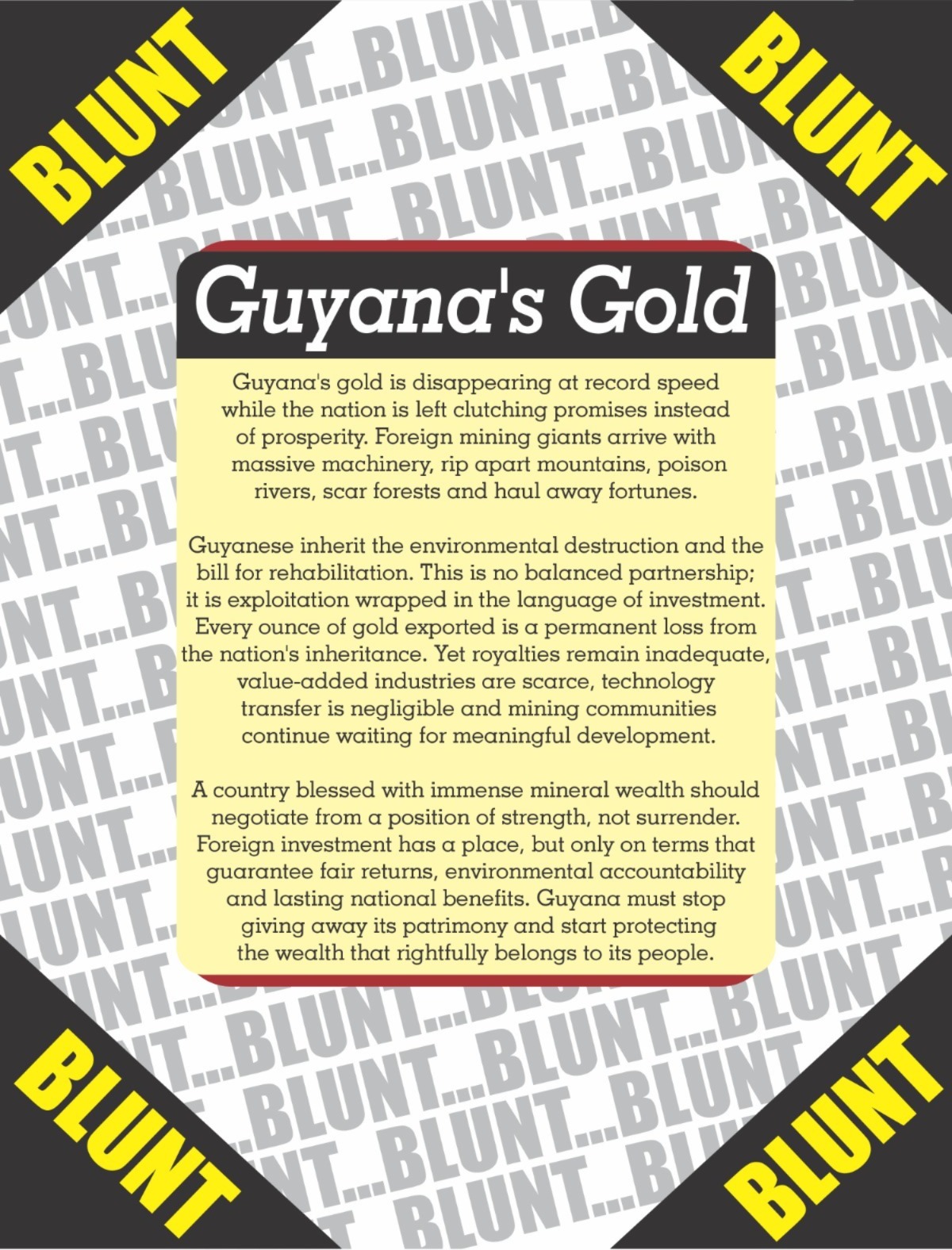
Blunt of the day
Sports
Features/Columnists

Sir. Ronald Sanders

The GHK Lall Column

Weekend Cartoon