Latest update October 14th, 2026 10:27 AM



Latest News
- Govt. briefs U.S. Justice Dept. on Mohamed shooting incident
- “Gun appeared out of thin air” – lawyer slams police over arrest of Mohamed
- U.S. wants tax incentives for American firms as Exxon enjoys tax-free deal
- Pope Leo diagnosed with cancer after surgery to remove part of lung
- US firm in move to take over Guyana gold project in US$4.2M deal
The echo of ‘reciprocity’
(Kaieteur News) – There is something almost medicinal about the word “reciprocity.” It rolls off the tongue with the moral authority of a proverb. It suggests balance, fairness, and the possibility that somewhere in the universe, justice is keeping tabs of what is taking place between Guyana and Suriname.
In Guyana, “reciprocity” has become the preferred euphemism for “we are thinking about doing something stern, but only after careful consideration, consultation, and perhaps a light lunch.”
The Government has invoked it. The Vice President invoked it four years ago with the solemnity of a man announcing the arrival of consequences, though those consequences appear to have been delayed in transit, possibly somewhere between Georgetown and Paramaribo. At the time, the issue was the dishonouring of a pledge, by Suriname, to grant fishing licenses to Guyanese fisherfolk.
The President has now invoked it again, reminding Suriname that its businesses have enjoyed the warm, accommodating embrace of Guyana’s economy. The implication, delivered with diplomatic politeness but unmistakable intent, is that embraces, like everything else in international relations, can be withdrawn. Enter the Private Sector Commission and the Georgetown Chamber of Commerce and Industry, who, like dutiful understudies have taken up the same line. Reciprocity, they affirm, is fundamental. Imbalance invites response. The Chamber goes further, suggesting that discussions on the Corentyne River bridge should be halted unless matters are resolved. This an idea that has the faint aroma of refusing to build a bridge because one is not pleased with the traffic on the river below.
Now, I am not opposed to reciprocity. It is, in fact, a lovely concept. If you invite me to dinner, I feel morally obliged to invite you back, though in my case this is complicated by my cooking. But reciprocity in international relations is a delicate instrument. It is less a hammer than a violin. Used properly, it produces harmony. Used carelessly, it produces a sound that causes neighbouring states to quietly close their doors and pretend not to be home.
The difficulty here is that both the Government and these private sector bodies seem to believe that Suriname will respond to the gentle threat of retaliation with a sudden burst of cooperative enthusiasm. This is a charming notion, but one that fails to take account of the fact that Suriname is a sovereign state with its own interests, calculations, and, quite possibly, its own supply of the word “reciprocity.” States, regrettably, do not negotiate well under duress. They negotiate under incentives, under mutual interest, and occasionally under exhaustion. But the idea that one can coax agreement by hinting at retaliation is rather like attempting to improve a marriage by reminding one’s spouse of the legal complexities of divorce. It introduces tension, but not necessarily resolution. What is particularly curious is that the private sector organizations—have chosen to echo this approach rather than anchor their arguments in customary international law. This is a missed opportunity.
Because the law, unlike reciprocity, does not require raised eyebrows or carefully worded press releases. It simply exists, quietly asserting that the use of a boundary river such as the Corentyne is governed by principles that are both practical and, in their own way, reassuring. Yes, sovereignty matters. Suriname’s sovereignty over the Corentyne River up to the low-water mark is recognised. But sovereignty comes with limitations.
Customary international law affirms that Guyana is entitled to navigate the river. Not as a favour. Not as a concession. As a right. And not a fragile right, easily discouraged by fees and formalities, but a robust one grounded in the shared understanding that rivers, especially boundary rivers, are meant to be used. Of course, Suriname may regulate that use. It may impose charges. Butthose charges must be reasonable, proportionate, and tied to actual services. They cannot be invented without regard to safety, maintenance and to services rendered. In other words, one pays for what one receives, not for the privilege of using the river.
This is where the argument should have been made. Calmly. Firmly. The private sector could have articulated this position with clarity and persuasion. Instead, we have a chorus of ‘reciprocity’, echoing across statements. It is all very dramatic, and one cannot deny a certain entertainment value. But international relations, like most things that matter, tend to reward precision over performance.
In the end, the issue is not whether Guyana should respond. It is how. One can respond with hints and warnings, or one can respond with law and logic. The former may produce headlines. The latter is more likely to produce results. And if there is one thing the private sector ought to appreciate, it is that results—unlike reciprocity—cannot be indefinitely deferred.
Share this:

Discover more from Kaieteur News
Subscribe to get the latest posts sent to your email.
Similar Articles
Website Hits

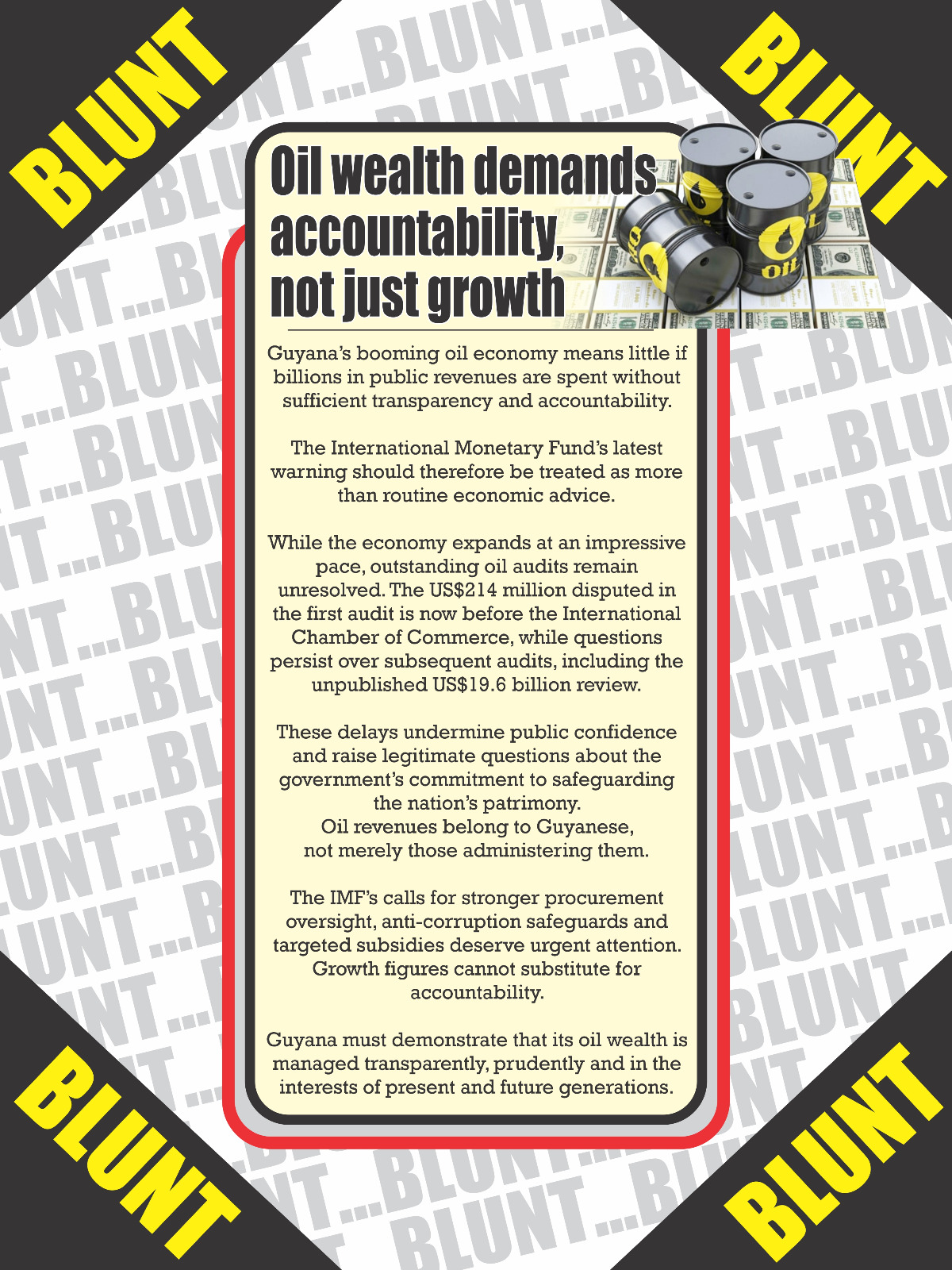
Blunt of the day
Sports

Features/Columnists

Sir. Ronald Sanders

The GHK Lall Column

Weekend Cartoon