Latest update July 24th, 2026 12:30 AM



Latest News
- MV Barima Disaster… 72 confirmed dead
- Parliament must determine COI’s composition for MV Barima probe – Dr. Campbell
- Nine victims of MV Barima tragedy laid to rest
- Transparency Int’l Guyana demands IMO probe of MV Barima tragedy
- Police detain, then apologise to, peaceful protesters at national vigil for MV Barima victims
Senegal terminates concessions for several oil blocks as contract review underway
…while Guyana govt. bent on sanctity of contract with Exxon
(Kaieteur News) – The Senegalese government headed by the youngest democratically elected President, Bassirou Diomaye Faye, has terminated the concessions for several oil blocks, to cater for reviews to and renegotiations of the contracts governing them.
According to an article carried by sceneweb.com on Saturday May 9, the Senegalese government has made what it described as “a major move” in its energy sovereignty strategy. Prime Minister Ousmane Sonko and his team of ministers had to play their part in renegotiating certain contracts deemed “unfair.”

Senegalese Head-of-State President Bassirou Diomaye Faye
The article said in addition to the adjustments on taxes of the cement sector which was announced during a press briefing on Thursday, March 12, 2026, the head of government revealed a series of terminations of oil and gas contracts. This therefore clearly marks a break in management of the country’s natural resources under the Macky Sall era. Under the Ministry of Energy’s leadership and the general management of Petrosen, several contracts have been simply cancelled as reported by the PM.
“Since we’ve been here, we’ve had to terminate contracts concerning quite a few oil blocks. We’ve terminated the Diender block, the Djiffere block. We’ll take back the Kayar deep offshore block in a few days: it’s the Kayar block, the Kayar shallow offshore block, the Saint-Louis shallow offshore block, the Rufisque offshore block… All these blocks have been terminated since we’ve been here,” he revealed.
These decisions are part of an approach aimed at ensuring a more advantageous exploitation of national resources. Speaking to journalists, the Head of Government stressed the need to “resize the blocs”.
“We are also discussing the resizing of the blocks. I said it when we were in opposition, the perimeters were too vast and too large. This does not conform to international standards,” he said.
In another article carried by Ecofin Agency on Monday March 16, the PM revealed that Senegal will define its national strategy before selecting oil and gas partners, after terminating several petroleum block contracts and plans to renegotiate key agreements, including the Greater Tortue Ahmeyim (GTA) gas project.
The country became an oil producer in 2024, with the Sangomar field, while the GTA LNG project began last year. The Senegalese government plans to change the way its petroleum contracts are signed, as it is in the process of reassessing the country’s hydro carbon sector.
Referencing a press briefing on March 12, PM Sonko said, “We are no longer operating under a model where we sign concessions with partners and then meet again in 25 years.” Instead, the government wants to align resource development with the country’s economic priorities and energy needs.
Therefore, the new strategy that will be put in place will firstly address requirements for national development and domestic energy consumption. After this phase, the authorities can then be able to select industrial partners who agree to operate within the strategic framework.
The article went on to say that it was also during this very briefing that the PM announced the termination of the contracts that cover “quite a number of oil blocks” since taking office. “An official statement from the prime minister’s office confirmed that several blocks are under review in addition to the Yakaar–Teranga licence, which authorities discussed for possible termination and nationalisation in October 2025. The government identified several blocks in the process of restructuring, including Djiender, Djiffer Offshore, Kayar Deep Offshore, Kayar Shallow Offshore, Saint-Louis Shallow and Rufisque Offshore.”
In addition, the officials have revealed that they are resizing the exploration areas so that they align with international industry standards. The government has also announced its intention to renegotiate contracts that are linked to the offshore has project Greater Tortue Ahmeyim, which operator BP develops jointly with neighbouring Mauritania.
“We consider that the signed contracts are excessively favourable and we intend to review their substance,” the prime minister’s office said in the statement. BP holds a 56% stake in the project alongside Kosmos Energywith 27%, Petrosenwith 10%, and SMH with 7%.
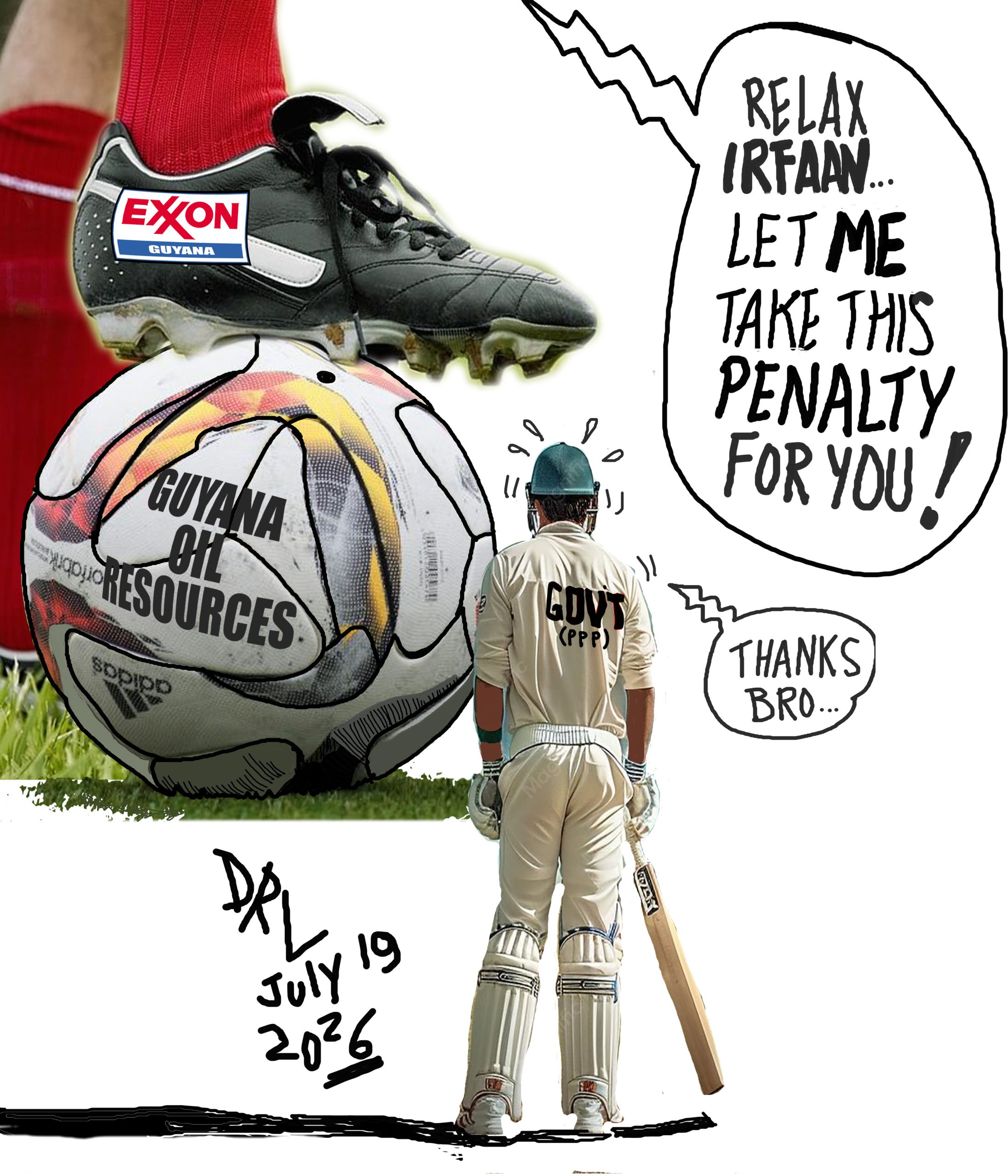
Meanwhile the Guyanese government has made it very clear that it will stick to the sanctity of the contract it has with ExxonMobil. Recently President Irfaan Ali reiterated that his administration will not budge.
The 2016 oil deal with ExxonMobil and its partners, Hess Corporation and CNOOC for the lucrative Stabroek Block, has long faced criticisms because of its lopsided nature, which benefits the oil companies’ way more than it does the country.
This publication reported on May 7 that the head-of-state in his address to Rice University’s Baker Institute in Houston, Texas, said that several people have asked about the Exxon oil deal. “We have made [it] very clear that the sanctity of contract is important for us,” Ali said.

Guyanese Head-of-State, President Irfaan Ali
Ali pivoted to note that instead of making changes to the Exxon PSA, his administration has created a new PSA which governs future oil agreements with the State for offshore oil blocks.
He stated, “So there’s no second guessing what we are doing. We are ready to make the hard decisions; we make those decisions; we make them public. We stand by the decisions we make. So, there’s predictability.” Ali stressed that one of the most important things in this sector is predictability, as a key component for investors, wanting to see predictability in state’s policy and decision making.
The lucrative Stabroek Block is currently governed by a deal that waives all taxes from the oil companies, and stipulates that Guyana must cover these costs. It allows the companies to recover up to 75% of their investments before the remaining 25% is split. Of this, Guyana receives 12.5%, in addition to a 2% royalty paid by the oil companies.
The oil deal was signed by former Minister of Natural Resources, Raphael Trotman, who served under the APNU + AFC Coalition government between 2015 and 2020. A few years ago, Trotman in his book titled, ‘From Destiny to Prosperity’ offered support to the government to renegotiate the lopsided Stabroek Block deal. However, Trotman’s offer was refused by Vice President (VP) Bharrat Jagdeo.
During an interview while running for president back in March 2020, Ali had strongly criticised the Exxon PSA signed by the Coalition Government with ExxonMobil. He stated at the time, “We have made it very clear, and we can never agree, how could, how could, I don’t think any Guyanese agree with this, no Guyanese except the government that is defending it. We have made it very clear that we have to go towards, we’re looking at these contracts, renegotiating these contracts, looking at contract management and all of these things. Everything we have to relook at because we have to ensure that our country does not get the wrong end of the stick.”
Ali’s remarks back then indicated a willingness to “review and renegotiate” the contract to secure better terms for Guyana. However, since assuming office in August 2020, his administration has shifted to sanctity of contract.
Speaking with British Broadcasting Corporation (BBC) Senior Journalist Gideon Long in a 2023 interview, President Ali when pressed about the possibility of renegotiation and the Exxon deal noted, “Well, I would say definitely, we did not have the best of deals, Exxon have a good deal signed by the last government.” President Ali had outlined that sanctity of contract is very important to his government, adding, “We can’t go back on that.”
While the PPP administration has made it clear it will not seek to make changes to the Exxon deal, it should be noted that the former APNU+AFC government had renegotiated and signed the Stabroek Block PSA with ExxonMobil’s affiliate.
A few years after the agreement was signed, the David Granger administration approached the Exxon consortium, and successfully renegotiated a critical fiscal element of the deal. According to Addendum No. 1 to the Petroleum Agreement dated April 26, 2019, it was evident that the named parties were in agreement that the contract allowed for the 2% royalty to be recovered. To plug this loophole, the Addendum that was subsequently filed with the deeds registry categorically stated that it shall not be recovered in any way. Sealing the new arrangement were former President, David Granger and President of Exxon Guyana affiliate, Rodney D. Henson.
Share this:

Discover more from Kaieteur News
Subscribe to get the latest posts sent to your email.
Similar Articles

Blunt of the day
Sports
Features/Columnists

Sir. Ronald Sanders

The GHK Lall Column

Weekend Cartoon