Latest update August 12th, 2026 10:20 AM



Latest News
- After 10 days of silence, Govt. confirms Guyana receiving 50% profit share
- Guyana must get more than 50% if country’s profits will be funding new oil projects – MP Andrews
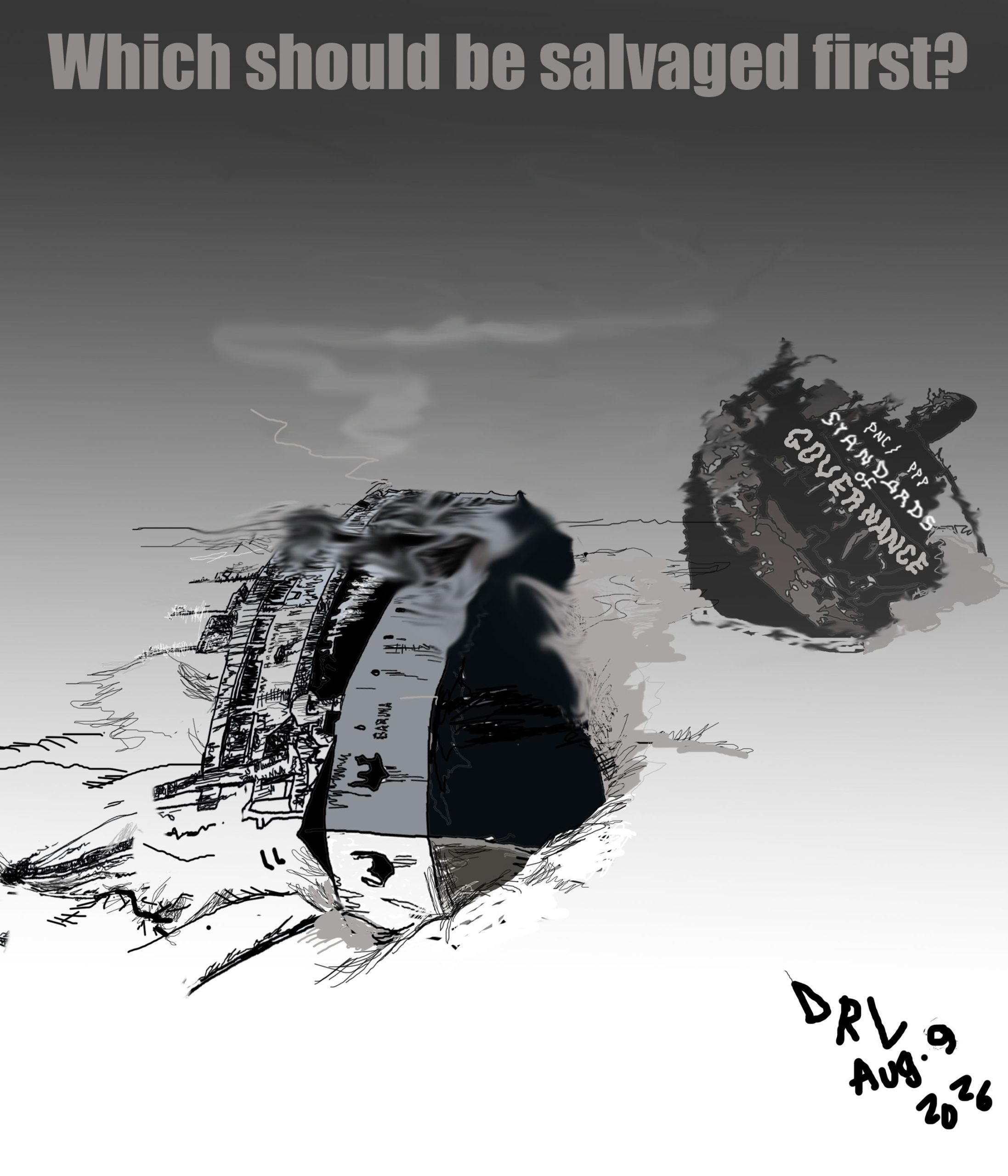
- MV Barima tragedy… Internal records expose months of warnings, request for urgent repairs
- Colombia quake death toll tops 250 as rescuers race to find survivors
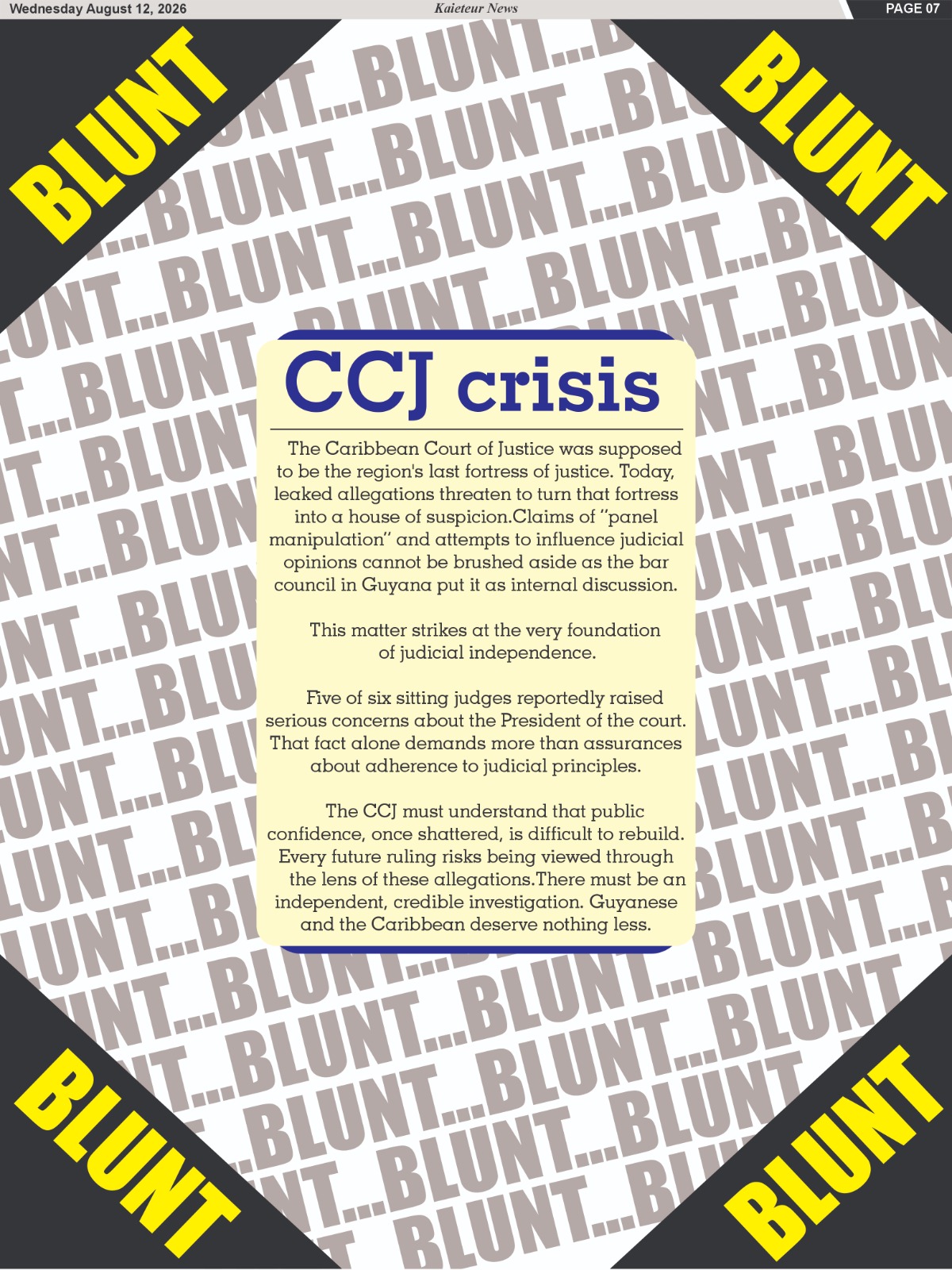
- Caribbean judiciaries rally behind CCJ as internal row erupts
The evil empire that is out to recolonise the world
(Kaieteur News) – There is a peculiar vanity among nations. It takes the form of the belief that history is something that happens elsewhere, to other people, in less fortunate geographies, preferably in languages we do not speak.
We congratulate ourselves on being on the right side of development. The state of our economies, our political systems. And then we stand aghast when the bill arrives, as if consequences were an unexpected surcharge rather than the central feature of the transaction.
We are now staring at that bill. The rising price of oil will move through our economies with the quiet efficiency of a contagion. It will touch transport, food, electricity, and the small humiliations of daily life. This consequence is not an accident of markets or the mischief of fate. It is, rather, the accumulated interest on a moral debt long ignored. We are, to put it plainly, the progenitors of our own misfortune.
For years the world has watched the destruction of Palestinian life with the detached curiosity of a spectator sport. The language employed has been one of “concern,” that most elastic of diplomatic euphemisms, stretched thin enough to cover inaction but never firm enough to restrain violence. Even as the carnage mounted, the machinery of international order—those grand institutions erected in the ashes of the Second World War—issued statements, convened sessions, and then adjourned to lunch.
The International Court of Justice, in its provisional measures, found it “plausible” that acts falling under the Genocide Convention were being committed and ordered that such acts be prevented. Plausible genocide, one might have thought, would occasion something more than polite applause and procedural delay. But plausibility, it seems, is not sufficiently theatrical to stir the conscience of states.
Likewise, the United Nations has warned repeatedly of catastrophic humanitarian conditions, with its officials describing Gaza in terms that recall the darker chapters of the twentieth century. It has used phrases like “uninhabitable,” “famine,” and “collective punishment.” These are not metaphors; they are diagnoses. Yet the response has been less that of a response to a global emergency. We summon international conferences to lament climate change but hold no grand assembly to debate the slaughter of innocent women and children in Gaza.
Even after Hamas released hostages and a ceasefire was agreed upon, the violence persisted. The Palestinians continue to be slaughtered. A handful of states severed diplomatic ties with Israel, but most countries, including Guyana, preferred the safer posture of rhetorical regret, a stance that allows one to appear humane without the inconvenience of acting humanely.
The complicity of the United States has been neither subtle nor reluctant. It has been, instead, methodical through military aid and diplomatic cover. Having perfected this arrangement, Washington now extends its reach toward Tehran.
Here in Guyana, the dissonance is particularly striking. Irfaan Ali has been swift to condemn Iranian’s attacks on those Gulf States hosting U.S. military bases that are being used to attack Iran. Yet there is a conspicuous reluctance to acknowledge that, under established principles of international law, states retain a right to self-defense against military aggression. The logic appears selective: it is improper for Iran to strike at installations used against it, but permissible for Israel to conduct operations across its borders, including in Lebanon.
This is not jurisprudence. The steps are familiar—condemn here, remain silent there, and always, always keep in rhythm with the prevailing power.
Meanwhile, the world’s selective indignation extends westward to Cuba, where decades of economic strangulation is now being tightened through a fuel embargo. Fuel shortages, blackouts, and scarcity are treated as unfortunate but acceptable side effects of geopolitical discipline.
And so we arrive at our present discomfort. Oil prices climb, supply chains tremble, and governments scramble to explain what they had no interest in preventing. The instability of the Middle East is in no small measure, the product of internal moral collapse. We chose expediency over justice, alignment over integrity, and silence over speech. The markets, being less sentimental, have responded accordingly.
The ghost of Adolf Hitler is often summoned as the ultimate symbol of historical evil, a convenient benchmark against which to measure our own virtue. But the comparison is useful only if it provokes recognition rather than denial. Genocide proceeds incrementally, rationalized at each step, until the sum of its parts becomes undeniable—except, of course, to those who prefer not to notice. Economic genocide is being committed by the Americans in Cuba; and human genocide in Palestine by Israel.
As for Donald Trump, he will, in due course, exit the stage. Empires, however, are less punctual in their departures. The damage done in the interim may prove more durable than any single administration.
We like to imagine that we are passengers on the ship of history, occasionally inconvenienced by rough seas. The truth is less flattering. We are the crew, and the course we have charted has led us directly into the storm. The rising cost of oil is merely the first wave breaking over the bow. The rest will follow, indifferent to our surprise.
(The views expressed in this article are those of the author and do not necessarily reflect the opinions of this newspaper.)
Share this:

Discover more from Kaieteur News
Subscribe to get the latest posts sent to your email.
Similar Articles

Blunt of the day
Sports

Features/Columnists

Sir. Ronald Sanders

The GHK Lall Column

Weekend Cartoon