Latest update April 20th, 2026 4:49 AM


Latest News
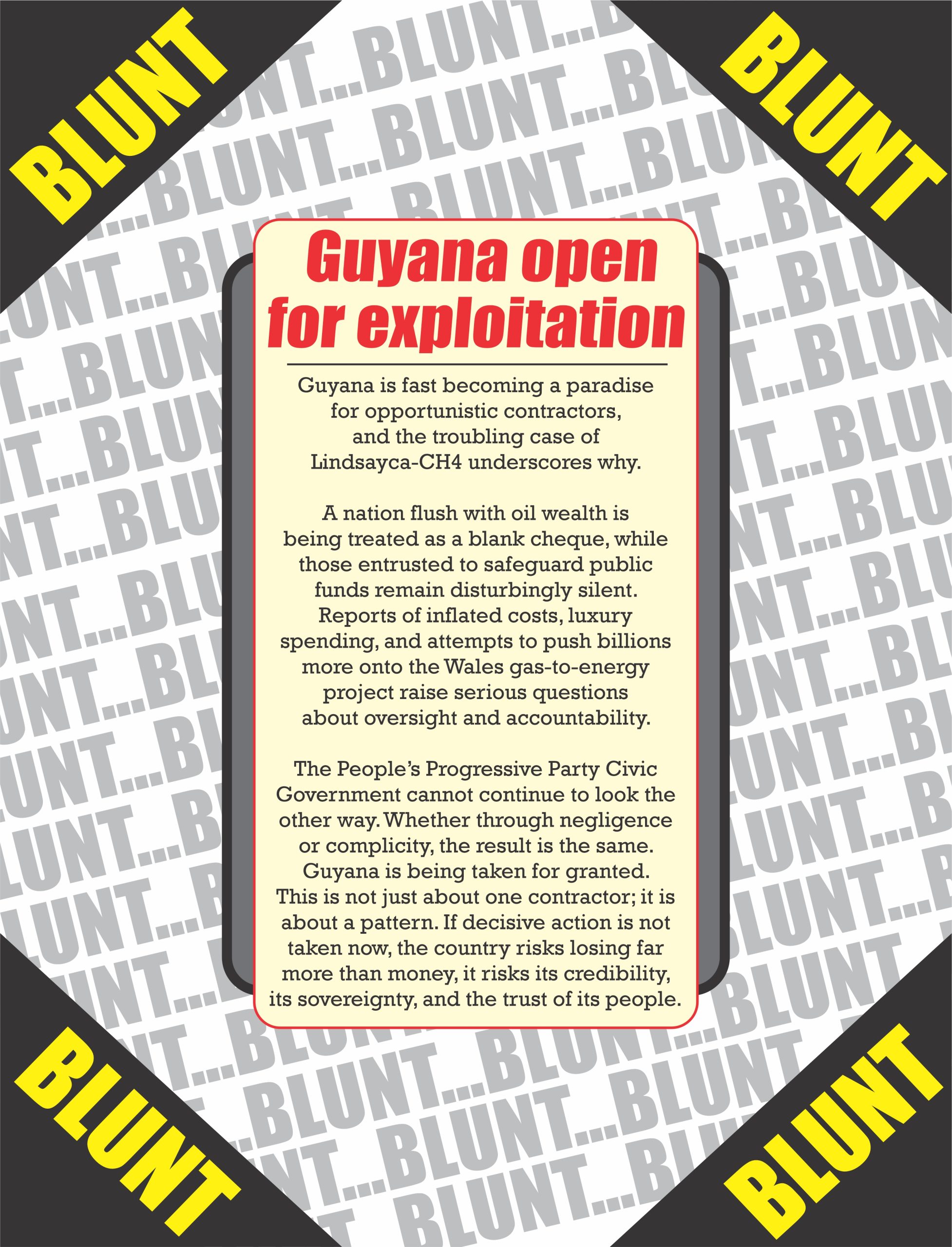
- Gas-to-Energy contractor sourcing materials, services at inflated costs from shell companies
- Guyana paid US$264.6M in debt servicing for 2025
- Iran vows retaliation after U.S. seizes ship near Strait of Hormuz
- Fire leaves family homeless after morning prayer
- Man kills drinking buddy in scuffle over $1000

THE BLUNT OF THE DAY
Sports

…West Ruimveldt, Charlestown and Santa Rosa keep title in sight Kaieteur Sports – The road to schoolboy football glory is heating up, and the Petra Organisation made sure Sunday was nothing...
Features/Columnists

(Kaieteur News) – Guyana’s Low Carbon Development Strategy (LCDS) has been internationally praised as an attempt to convert natural capital into financial capital without cutting down forests. The country’s vast tropical rainforest, covering more than 85% of national territory, functions as...
Sir. Ronald Sanders

By Sir Ronald Sanders (Kaieteur News) –As with all my commentaries, this one is strictly in my personal capacity, drawing on more than fifty years of engagement with Caribbean affairs and a lifelong commitment to the cause of regional integration. I do not speak on behalf of any government or...
The GHK Lall Column
Kaieteur News – It’s one of those situations crying out for help. The best I can do, other than offering professional help, is to raise an alarm about a case that is worrying in all of its elements. It’s the Saga of Elizabth Shivpersaud. If this distressed, shorthanded, hollow-eyed,...
Weekend Cartoon


FRONT PAGE COMMENT
Mar 18, 2026 Front Page Comment, News
(Kaieteur News) – In Senegal, decisive leadership has sent a thunderous message that contracts are not sacred when they are manifestly unjust. Prime Minister Ousmane Sonko has moved to cancel 71 mining agreements, from gas to gold placing the national interest above paper promises.
In Guyana, the refrain is different. Here, the doctrine of the “sanctity of contract” is recited like scripture. Yet many of the same political voices now invoking its holiness once denounced those very agreements as lopsided and injurious to the nation. What changed? Not the contracts. Only the custodians of power.
When leaders compromise themselves, they mortgage the future of their country. Compromise breeds vulnerability; vulnerability invites exploitation. And exploitation rarely announces itself openly. It operates in the shadows, the shadows of secret deals and corruption, and millions of the people’s wealth fritted away.
Those who resist are replaced and punished. The result is predictable: a nation rich in oil, gold, and resources, yet struggling to translate that wealth into widespread prosperity.
The tragedy is not only that the country’s assets are bartered for a pittance. It is that leadership itself becomes captive. The public interest is quietly traded for political survival. Play the game, or pay the price. Too many have chosen to play.
And so the people wait, watching wealth flow outward while hardship lingers at home.
But this cycle is not unbreakable. Exposure is its greatest enemy. Sunlight disrupts the quiet arrangements, the hidden bargains, the unspoken threats. Citizens cannot judge what they do not know; they cannot demand better if the truth is buried.
The time has come to lift the veil. We at this newspaper will do so. Because a contract that impoverishes a nation is not sacred, it is a betrayal.
Share this:
Discover more from Kaieteur News
Subscribe to get the latest posts sent to your email.
Similar Articles