Latest update November 18th, 2025 9:27 AM

Nov 18, 2025 Features / Columnists, Peeping Tom
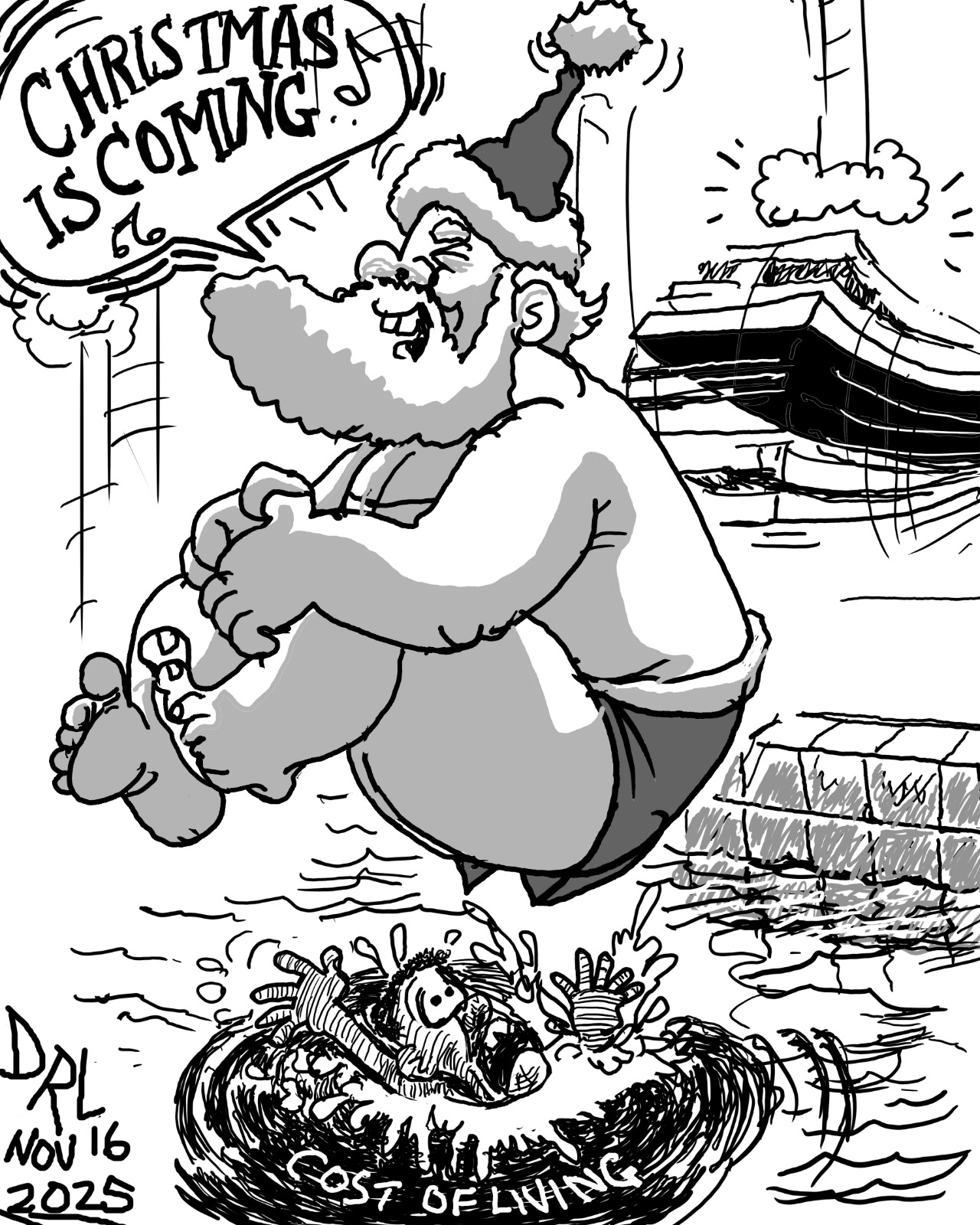
Kaieteur News – President Dr. Irfaan Ali’s recent announcement of a plan to transform Tiger Bay and its environs into Georgetown’s first “model neighbourhood” is, on the surface, a welcome and ambitious declaration. The vision of community love, fortified security, and rejuvenated public spaces is a siren song for any city plagued by urban decay.
Who could possibly argue with the ideals of pride, safety, and social welfare? Yet, for those familiar with the gritty, intractable reality of Tiger Bay, the President’s vision—long on aspiration and short on detail—invites not just hope, but a heavy dose of profound scepticism.
The ghost of past failures looms large over this new initiative. Those ghosts whisper a cautionary tale that this government would be foolish to ignore.
The fundamental question, the one the President’s announcement carefully sidestepped, is the most pressing: “How?” How does one conjure a model community from an area with a history as complex and challenging as Tiger Bay?
The area’s very name, likely borrowed from the notorious docks of Cardiff, hints at a past built on transient pleasures. While the sailors and their vices are long gone, they were replaced by a different, more entrenched set of problems from the 1970s onward: crime, drugs, and the profound challenge of widespread squatting.
This is the heart of the Tiger Bay conundrum. The area is now dominated by squatters who have occupied private lands, building a labyrinth of makeshift homes. This is not a new problem, and the current administration is not the first to wield the sword of revitalisation against it.
History provides a sobering lesson. The late President Mrs. Janet Jagan, in a well-intentioned effort, attempted to lift residents out of poverty by offering them house lots and financial assistance to relocate. The result was a policy nightmare. Many took the money and the land, yet never moved. When a few did depart, a new wave of squatters promptly filled the vacuum, like water finding its level. The Bharrat Jagdeo administration also tried its hand and met with similar, dispiriting failure.
Given this legacy, it is perplexing to understand the mechanics of President Ali’s plan. What will he do differently? The lands in question are not state lands; they are privately owned. This introduces a thicket of legal and ethical complications. Does the government plan to compulsorily acquire these lands, a costly and potentially contentious process? Or does it hope to negotiate with squatters who have, for decades, demonstrated a resilient resistance to relocation? The notion of “community love” seems a fragile tool against the hard realities of land ownership and dispossession.
The President’s vision includes “improved public spaces” and recreational facilities. This pledge betrays a startling disregard for the geography of Tiger Bay and adjoining Kingston. Where, precisely, will these spaces be built? There are no vacant fields waiting for the laying of a cricket pitch or the planting of football field. Every square foot is accounted for, either by a shack, a business, or roadways. To create such spaces would require the very same relocation of residents that has proven impossible in the past. The plan, in its current vague form, appears to be an architectural blueprint without a designated plot of land.
The uncomfortable truth, which successive governments have been reluctant to utter, is that the only viable model for a truly transformed Tiger Bay likely involves the large-scale, permanent relocation of its current residents. This is a political hot potato of the highest order, fraught with the risk of appearing anti-poor or heavy-handed.
Yet, layering programmes for “social welfare” and “community pride” onto a foundation of illegal land occupation and overcrowding is like applying a fresh coat of paint to a termite-infested house. The structural decay remains, and it will inevitably break through.
And even if the Herculean task of relocation were to be miraculously achieved, the cycle of squatting poses an insurmountable challenge. We know, from bitter experience, that if the current squatters are moved, new ones will inevitably move in, drawn by the vacuum and the proximity to the city. Without a permanent, credible security and administrative presence to prevent re-encroachment—a costly and endless commitment—any transformation will be fleeting.
Therefore, while President Ali’s heart may be in the right place, his plan, as announced, feels dangerously detached from reality. It ignores the hard lessons of history and the tangible, physical constraints of the community it seeks to uplift.
(The views expressed in this article are those of the author and do not necessarily reflect the opinions of this newspaper.)
Subscribe to get the latest posts sent to your email.
Your children are starving, and you giving away their food to an already fat pussycat.
Nov 18, 2025
Kaieteur Sports – The Guyana Boxing Association (GBA) has confirmed that star pugilists Desmond Amsterdam and Keevin Allicock will represent Guyana at the 2025 IBA Men’s Elite World...Nov 18, 2025
Kaieteur News – President Dr. Irfaan Ali’s recent announcement of a plan to transform Tiger Bay and its environs into Georgetown’s first “model neighbourhood” is, on the surface, a welcome and ambitious declaration. The vision of community love, fortified security, and rejuvenated...Nov 09, 2025
For the powerful, sovereignty is a sword; for the small, it must remain a shield By Sir Ronald Sanders (Kaieteur News) – Sovereignty is supposedly the cornerstone of international order: the formal declaration that every state has the right to govern itself, protect its territory, and determine...Nov 18, 2025
Kaieteur News – Guyanese are put on notice. Offering a bribe to a cop is a crime. The taking of a bribe by a cop, or the demanding of one, is a crime. Guyanese also heard about “zero tolerance” and being subject to the “full force of the law.” Taking all of this in hand,...Freedom of speech is our core value at Kaieteur News. If the letter/e-mail you sent was not published, and you believe that its contents were not libellous, let us know, please contact us by phone or email.
Feel free to send us your comments and/or criticisms.
Contact: 624-6456; 225-8452; 225-8458; 225-8463; 225-8465; 225-8473 or 225-8491.
Or by Email: glennlall2000@gmail.com / kaieteurnews@yahoo.com