Latest update April 1st, 2026 12:40 AM


Latest News
“Sovereignty” – A Plaything of the Powerful?
For the powerful, sovereignty is a sword; for the small, it must remain a shield
By Sir Ronald Sanders
(Kaieteur News) – Sovereignty is supposedly the cornerstone of international order: the formal declaration that every state has the right to govern itself, protect its territory, and determine its own destiny. Yet the charters of the United Nations and the Organization of American States proclaim not the idea of sovereignty in general, but the specific principle of sovereign equality among states. In law, all states are equal in sovereignty; in practice, they are not. Sovereignty is both a right and a capacity, and while every nation possesses the right, not all have the means to exercise it freely. In the real world, only powerful states are truly sovereign; weak countries are sovereign only by permission, or by strong collective action.

Ronald Sanders
Since the Peace of Westphalia in 1648, the idea that all states are equal before international law has been celebrated as the great equalizer of nations. Yet power, not law, defines the boundaries of freedom. Great powers decide when intervention is justified, which states may possess certain technologies, and what constitutes legitimate governance. They regularly exempt themselves from the rules they enforce on others.
The problem is not new; it has only changed form. The international system was built to preserve order among the strong, not to guarantee equality for the weak. Law follows power, not the reverse. When powerful states act beyond the limits of law – in military action, sanctions, or financial coercion – they are not punished. For smaller states, however, the slightest deviation invites reproach, blacklisting, or exclusion.
Post-colonial scholars have long argued that sovereignty itself was conceived in imperial terms. As Professor Antony Anghie showed, European powers defined “civilized” peoples as sovereign and the rest as subjects of tutelage. The legacy of that hierarchy endures. The instruments may have changed -development loans, debt conditions, trade rules, and aid regimes – but the logic remains: some states may act freely, others only when allowed.
Today’s international financial and regulatory structures often reproduce this inequality. The Caribbean knows this well, beginning with the OECD’s 1998 Harmful Tax Competition initiative, whose standards were imposed on small states, for what it called “harmful tax practices”. This was followed by the European Union’s “list of non-cooperative jurisdictions” (launched in 2016 and updated regularly), under which several Caribbean countries have been repeatedly coerced through black and grey lists until they surrendered to imposed standards.
Ratings agencies, sanctions committees, and multilateral lenders now exercise power once wielded by colonial administrators. The result is what might be called conditional sovereignty: a state’s independence is respected only so long as it conforms to standards set by the mighty.
Political scientist Stephen Krasner famously called this system one of “organized hypocrisy.” Powerful states claim to respect sovereignty, yet they violate it whenever their interests demand. In practice, sovereignty has become graduated; strong for some, weak for others. The powerful decide the exception; they determine when the rules do not apply.
This inequality extends to international institutions. The veto power in the UN Security Council, the dominance of rich states in global financial governance, and the persistent asymmetries in trade negotiations and climate-change talks all demonstrate that sovereignty’s equality is largely nominal. The architecture of international law was never designed to redistribute power; only to manage it.
However, for small and vulnerable states, especially in the Caribbean and Pacific, the status of “sovereign state” is both precious and precarious. It is not a tool of dominance but a shield of existence – a fragile protection against neglect or coercion. As the late Caribbean statesman, Sir Shridath Ramphal, taught, for small states sovereignty is no licence of power but a shield of survival. For powerful states, sovereignty is a sword; for small states it is a shield.
Small states face the paradox of dependence: they must engage the global system to survive, but doing so often requires concessions that erode their autonomy. Economic vulnerability, limited military capacity, and exposure to climate and financial shocks all constrain the practical meaning of sovereignty. Yet it is precisely because of these vulnerabilities that sovereignty matters most. It affirms the moral equality of nations even when material equality is impossible. That is why Article 2 (1) of the UN Charter is of such importance; it affirms that “the Organization is based on the principle of the sovereign equality of all of its Members.” While the principle is often ignored, its proclamation is the lifeline that gives small states legitimacy in the international system.
In the contemporary world, the emerging concepts of digital sovereignty, including Artificial Intelligence (AI); climate sovereignty; and food sovereignty represent new efforts to establish dominion in spaces dominated by transnational corporations and major powers. The campaigns by small states, led by Antigua and Barbuda’s Prime Minister, Gaston Browne, for a Multidimensional Vulnerability Index – adopted by the UN General Assembly in August 2024 – and for recognition of rights in the International Court of Justice’s 2025 climate advisory opinion are examples of how law can be reclaimed as an instrument of equality, not subordination.
Sovereignty, therefore, must always be claimed by small states but the exercise of it must be strengthened through collective action. Individual sovereignty is easily quashed by the tools available to larger powers. For small states, survival depends on cooperation, not confrontation; on collective strength, not solitary assertion. Regional integration, whether through CARICOM, the OECS, or the Alliance of Small Island States, transforms weakness into influence by speaking with one voice on global issues such as climate change, debt, and development finance. Yet, even with this understanding, some small states continue to weaken themselves and the collectives to which they belong by seeking or accepting convenient alliances with powerful countries for short-term gains.
However, in a world where power determines outcomes, small states should rally together in solidarity and common cause. They should use their legitimacy to persuade, to bargain, and to survive. The Caribbean’s history of decolonization, democratic resilience, and commitment to international law gives it a standing that is not measured in weapons or wealth. When that collective standing is exercised consistently and coherently, small countries give themselves a chance to exist in dignity with their culture and identity intact.
The inequality of sovereignty remains the central contradiction of our time: a doctrine that proclaims equality but operates through hierarchy. The challenge for small states is not merely to survive within that system, but to insist that law must restrain power, not be bent to serve it.
Sovereignty, in its truest sense, is the freedom to choose one’s path without coercion. For the powerful, that freedom is assumed; for the small, it must be defended. All small states – in every global and regional organization – must understand that the success of such defence depends on collective action, jointly devised.
(The author is the Ambassador of Antigua and Barbuda to the United States and the OAS, and Dean of the OAS Ambassadors accredited to the OAS. Responses and previous commentaries: www.sirronaldsanders.com)
Discover more from Kaieteur News
Subscribe to get the latest posts sent to your email.
Similar Articles
One thought on “ “Sovereignty” – A Plaything of the Powerful? ”

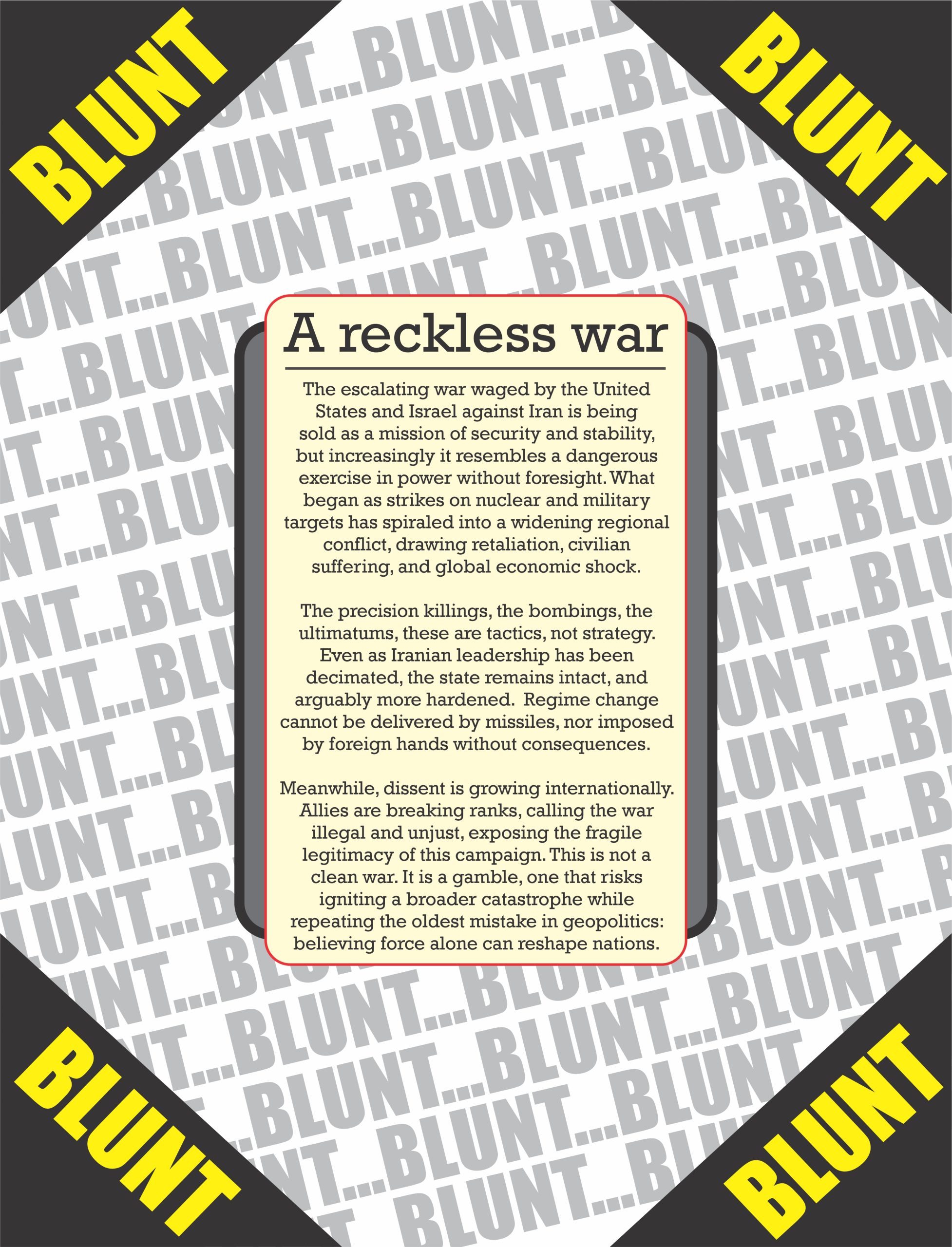
THE BLUNT OF THE DAY
Sports
Features/Columnists

Sir. Ronald Sanders

The GHK Lall Column

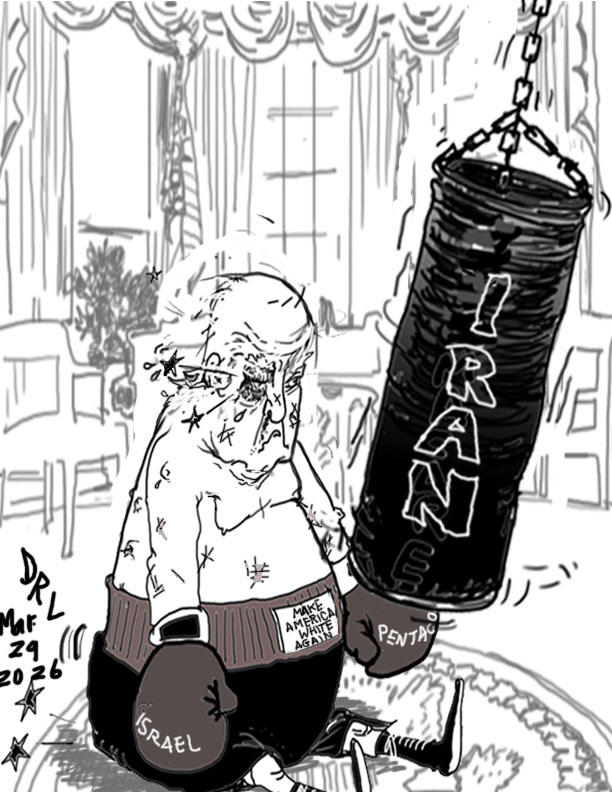
Weekend Cartoon


Thanks for This important Piece of Information, on The Sovereignty of Nations! We’ll Said!
It’s An Extremely Sad Reality!
I couldn’t have said it Better!