Latest update October 2nd, 2026 10:27 AM


Latest News
- Chinese businessman confesses to killing boy, 6, over US$3M dispute with parents
- Guyana’s oil reserves drop below 11B barrels – Exxon says
- Mazaruni prison officers rescue miner after boat mishap
- NIS pensioners allegedly owed arrears since 2021
- ‘Calls grow for Karimbaksh to go’ – Opposition parties, several groups urge independent probe into rape allegations
15,000 Guyanese still trapped in poverty
— UN report exposes inequality in oil-rich nation
(Kaieteur News) – Despite Guyana’s rapid rise as one of the world’s fastest-growing oil economies, more than 15,000 citizens or 1.8 percent of the population remain trapped in multidimensional poverty, according to the latest United Nations Development Programme’s (UNDP) 2025 Global Multidimensional Poverty Index (MPI).

President Irfaan Ali
The report, which analysed data from Guyana’s 2019–2020 national survey, found that while the country’s economy has expanded dramatically due to oil revenues, deep pockets of deprivation persist. An additional 54,000 people (6.5%) were classified as “vulnerable to multidimensional poverty.”
MPI, is an index that measures the percentage of households in a country deprived along three dimensions monetary poverty, education, and basic infrastructure services to capture a more complete picture of poverty. According to the World Bank the Multidimensional Poverty Measure (MPM) seeks to understand poverty beyond monetary deprivations (which remain the focal point of the World Bank’s monitoring of global poverty) by including access to education and basic infrastructure along with the monetary headcount ratio at the $3.00 international poverty line.
According to the UNDP, Guyana’s MPI value is 0.007, with an average deprivation intensity of 39.3 percent, lower than Belize (0.017) and Suriname (0.011), but still significant given Guyana’s booming resource sector. The index captures deprivations across three dimensions monetary poverty, education, and basic infrastructure offering a broader view than income alone. It shows that, for many households, poor access to education, healthcare, and essential services compounds the struggle to escape poverty.
Globally, about 18 in every 100 people face multidimensional poverty, the report noted. For Guyana, the UNDP findings serve as a reminder that economic growth has yet to translate into equitable prosperity. Experts warn that without targeted investments in education, housing, and social infrastructure, the gap between the oil-rich and the underprivileged will continue to widen.
At his inauguration President Irfaan Ali had declared war on poverty, underscoring that Guyana, a nation blessed with oil, gold, bauxite, and other resources, should not be poor in living standards. For his second term, Ali said that his administration will launch a national crusade against poverty. “Not just the visible poverty in our streets, but the structural roots and hidden burdens that keep families from rising. We will fight it, reduce it, and ultimately eradicate it,” President Ali said. According to Ali, the key to delivering on these commitments lies in building a highly efficient, service-oriented public service. He spoke about refashioning a public service that delivers more online services and one that places the citizen at the centre of every action. He also reiterated his promise to dismantle bottlenecks that frustrate citizens and modernise the systems.

The Government of Guyana has periodically distributed cash grants to citizens.
Meanwhile, the UNDP report states that the climate crisis is fundamentally changing global poverty, noting that it has left more people than ever at risk of poverty and less likely to escape it. According to the UNDP report, inequalities have worsened while prospects for sustainable development recede. “Climate shocks continue to grow in frequency and intensity, leaving a lengthening trail of human suffering and deprivation. Climate-related disasters pushed around 32 million people from their homes and communities in 2022 alone. Poverty, once seen as mainly a standalone socioeconomic concern, is now inextricably linked with planetary pressures. Without ambitious efforts to mitigate climate fallout, the number of people in extreme monetary poverty could nearly double by 2050,” the report added.
According to the UNDP, poverty and climate shocks create a double burden. Poverty drives exposure to climate hazards. These, in turn, reinforce and prolong poverty. “This interconnectedness is a defining characteristic of the Anthropocene, an era in which human activity has so fundamentally altered the Earth’s systems that environmental and social problems can only be resolved together.”
The 2025 Global Multidimensional Poverty Index (MPI) report, for the first time, overlays data on climate hazards and multidimensional poverty to assess how exposed poor people are to climate shocks.
Since 2010, the global MPI has measured acute multidimensional poverty across more than 100 developing countries. It gauges progress on the first Sustainable Development Goal (SDG) on ending poverty as well as interconnected deprivations across SDGs on hunger, health, education, clean water and sanitation, energy and housing. This current report helps to close a longstanding gap in evidence on the links between climate hazards and poverty. It finds that most people in poverty are exposed to at least one climate hazard; many confront several at the same time, especially in sub-Saharan Africa and South Asia. Lower-middle-income countries have the highest shares and numbers of people in poverty exposed to such risks.
The intertwining of climate and poverty risks is likely to intensify in the future. By the end of this century, countries expected to experience the greatest temperature hikes are those that already have higher multidimensional poverty levels. This report makes a compelling case for addressing a double burden that may only worsen. It is time to move from recognising the risks to resolving them.
Share this:

Discover more from Kaieteur News
Subscribe to get the latest posts sent to your email.
Similar Articles
One thought on “15,000 Guyanese still trapped in poverty”
Website Hits

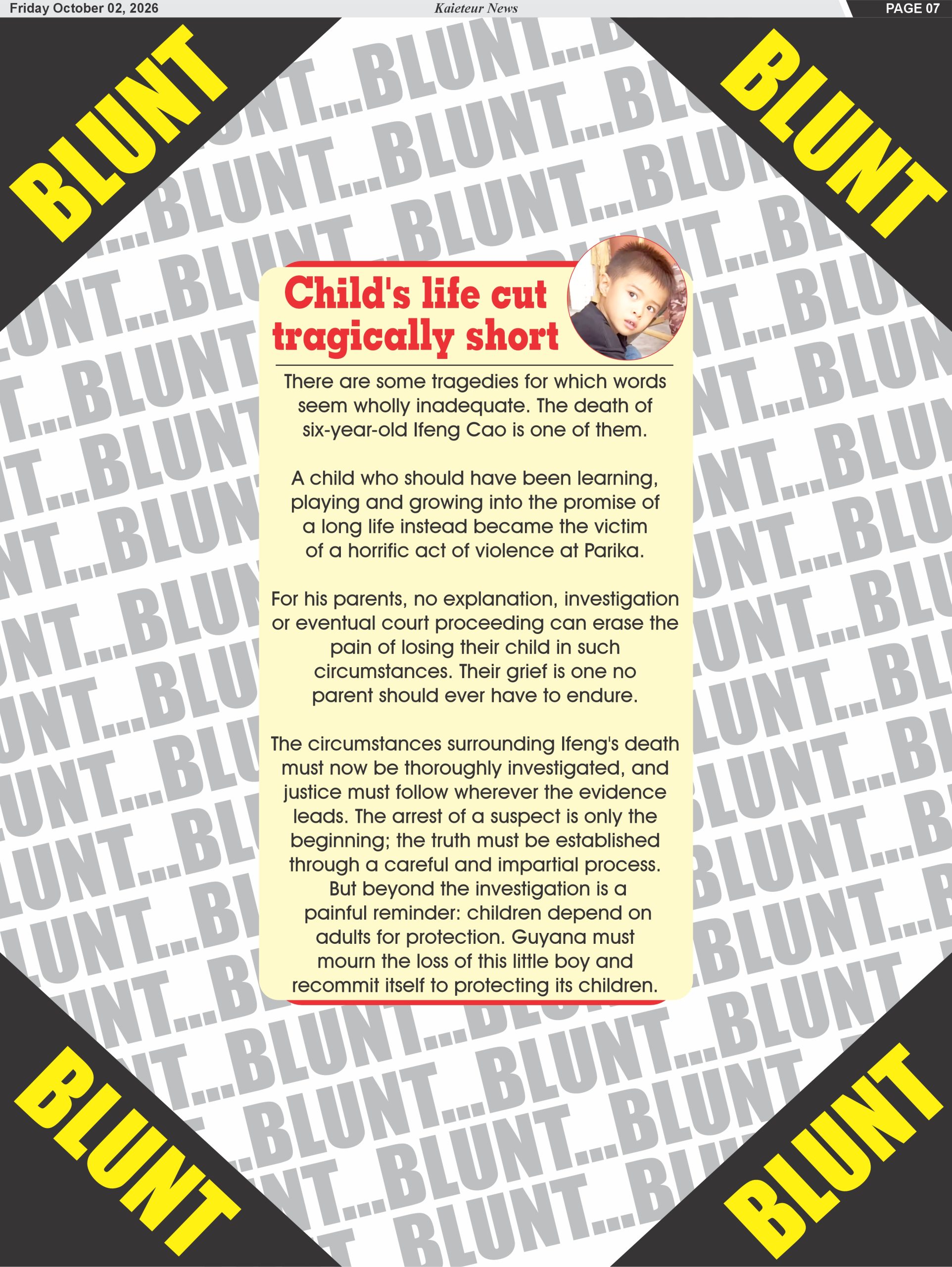
Blunt of the day
Sports

Features/Columnists

Sir. Ronald Sanders

The GHK Lall Column

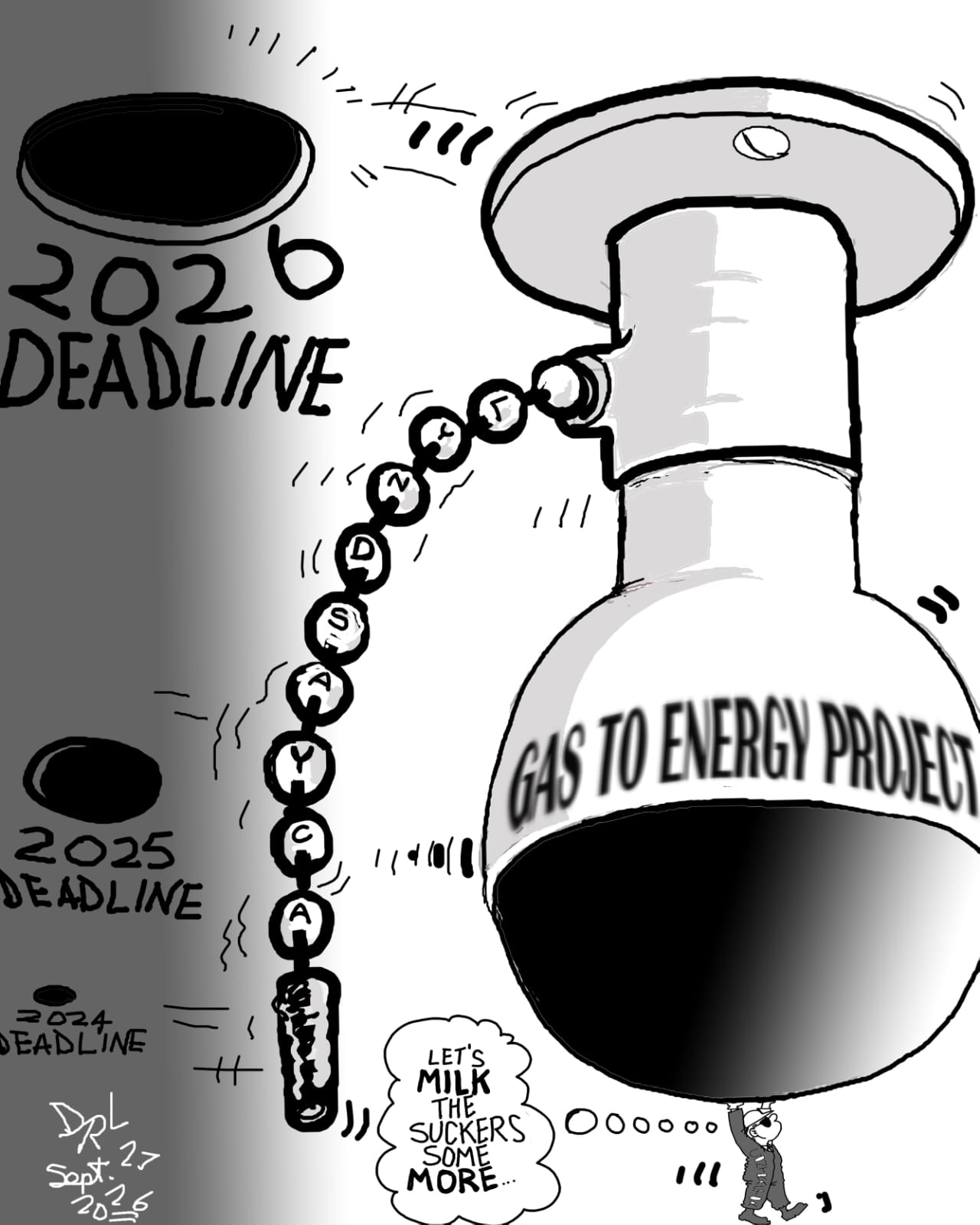
Weekend Cartoon


I have hope that Guyana’s Prez Ali will wage war on poverty and succeed God Willing. It took 23 years of past dictatorship for Guyana to hit rock bottom poverty, its going to take time and continued good leadership to bring Guyana to being a developed country InShahAllah.. Let’s allow The prep to do his job. Besides that survey was back in 1919- 20..