Latest update August 22nd, 2026 10:20 AM



Latest News
- Govt. should have already had plans in place to finance future oil projects – Opposition Leader
- GECOM defends authority as WIN challenges opposition representation
- Iran threatens military response to U.S. sanctions
- Govt., Exxon welcome 5th FPSO to Guyana
- WIN turns to court as Region 10 leadership standoff drags on
Celebrate Whistleblowers
By Dr. Telford Layne Jr. PsyD, MSc. Postgrad, BSc.
(Kaieteur News) – Whistleblowers are often treated as troublemakers because they reveal what institutions would rather keep hidden. Yet in unhealthy organisations, governments, churches, corporations, schools, hospitals, and professional bodies, the person who exposes wrongdoing may be one of the few people still protecting the ethical integrity of the institution.

Dr. Telford Layne Jr.
Childhood experiences influence adulthood profoundly. A child who grew up feeling powerless becomes an adult who desperately needs control. Someone who experienced humiliation become exceptionally sensitive to criticism. A person who learned that vulnerability was dangerous develop an intense need to appear strong. Someone raised in an environment where affection depended upon obedience later expect unquestioning loyalty from employees, followers, colleagues, congregations, or citizens.
Most people who experience childhood adversity do not become abusive or unethical adults. Unresolved psychological conflicts sometimes interact dangerously with power, entitlement and weak accountability. A wounded person without power primarily hurts themselves or those immediately around them. A wounded person with enormous institutional power potentially harms thousands.
This is why ethical systems cannot depend upon the psychological maturity or goodwill of leaders. They require checks, independent oversight, transparency, accountability—and people willing to speak when those safeguards fail.
Powerful Institutions Fear Whistleblowers
Unethical systems rarely survive because everybody believes in what they are doing. They survive because enough people remain silent. Employees see misconduct but fear losing their jobs. Professionals observe violations but fear losing promotions. Political officials know something is wrong but fear being removed from the inner circle. Church members witness abuse but fear being labelled rebellious. Civil servants see irregularities but worry about victimisation. Colleagues remain silent because “everybody knows how things work around here.” Eventually, silence becomes part of the institution’s culture.
Psychologically, this produces normalisation of deviance: behaviour that once would have shocked people gradually becomes accepted because it happens repeatedly without meaningful consequences.
The whistleblower interrupts that process.
They say: This is happening. This is wrong. People are being harmed. Someone must be accountable.
Whistleblower Breaks a Psychological Contract of Silence
Dysfunctional organisations operate remarkably like dysfunctional families. In an unhealthy family there may be an unspoken rule: Whatever happens inside this house stays inside this house. Institutions can develop the same mentality. Protect the organisation. Protect the leader. Protect the party. Protect the church. Protect the profession. Protect the reputation. Who protects the victim?
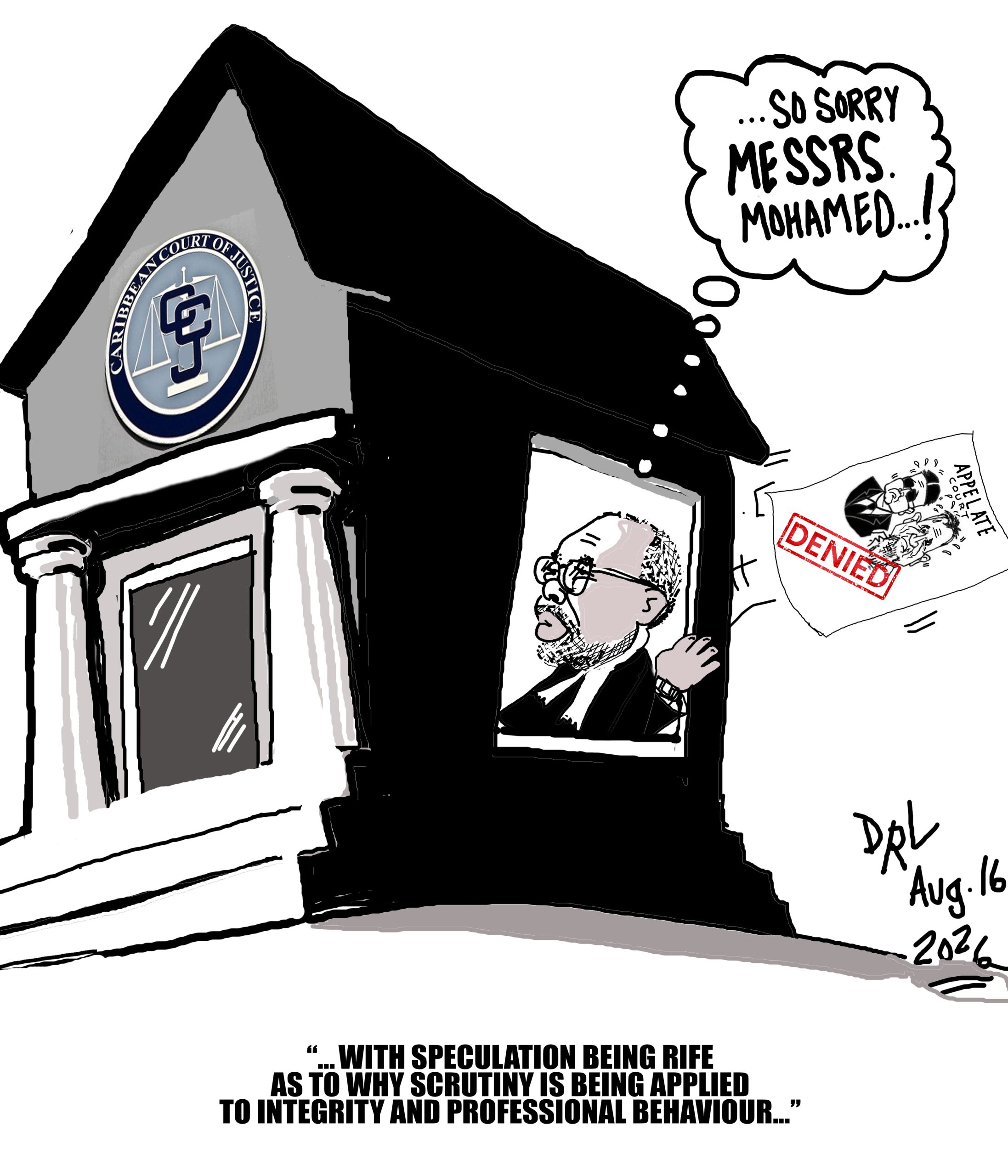
When institutional loyalty becomes more important than truth, loyalty itself becomes corrupted. Look at all those individual and institution that condemn the leaker of the CCJ email. They are massively corrupt. Ethical loyalty does not mean protecting wrongdoing. Sometimes the most loyal person in an organisation is precisely the person willing to expose conduct that is destroying it.
Whistleblowers Are Attacked Instead of the Wrongdoing
Once wrongdoing is exposed, an institution faces two choices. It can investigate the allegation. Or it can attack the person making it. Dysfunctional organisations frequently choose the second. The whistleblower may suddenly be described as: disloyal, unstable, disgruntled, difficult, politically motivated, attention-seeking, incompetent, bitter, or dishonest.
Notice what has happened psychologically. The conversation moves from: “Is the allegation true?” to: “What is wrong with the whistleblower?” This is a powerful diversion. Whether a whistleblower is likeable, angry, politically sympathetic, emotionally distressed, ambitious or imperfect does not determine whether their evidence is true. The proper ethical question remains: What does the evidence show?
Institutional Betrayal
Whistleblowing also exposes something deeper: institutional betrayal. People enter organisations believing certain rules exist. Employees expect employment policies to protect them. Citizens expect public institutions to act according to law. Patients trust healthcare systems. Congregants trust religious leadership. Students trust educational institutions.
When the institution violates those expectations—and then protects those responsible—the psychological damage can exceed the original wrongdoing. People learn: Truth does not matter. Connections matter. Power determines morality. Rules apply differently depending upon who you are. That lesson is devastating to organisational culture and eventually to society itself.
Whistleblowing Is Bigger Than Exposing Corruption
Whistleblowers protect something societies cannot easily measure: collective moral boundaries. Every healthy society needs boundaries separating acceptable behaviour from unacceptable behaviour. When corruption, abuse, fraud, exploitation, harassment or deception occurs without consequences, those boundaries move. Yesterday’s scandal becomes today’s practice. Today’s practice becomes tomorrow’s culture. And eventually a generation grows up believing: “This is simply how the world works.” Whistleblowers challenge that moral deterioration. They remind society that something becoming common does not make it ethical.
Power Without Accountability Become Psychologically Dangerous
Power itself is not pathological. Society needs presidents, ministers, judges, executives, pastors, professors, police officers, doctors, psychologists, managers and administrators.
The danger is power without accountability. The psychologically mature leader can tolerate questions. The insecure leader experience questions as humiliation. The mature leader can admit: “I was wrong.” The narcissistically defended organisation may insist: “We can never be wrong.” Healthy leadership distinguishes disagreement from betrayal. Authoritarian leadership frequently confuses the two.
This is precisely why societies should never depend upon leaders being emotionally healthy enough to regulate themselves. Systems must regulate power. Whistleblowers are one part of that regulatory structure.
The Psychological Cost of Whistleblowing
Society frequently celebrates whistleblowers only after history vindicates them. Living through whistleblowing can be very different.
People may lose friendships, careers, income, status, professional networks and social belonging. They may experience anxiety, hypervigilance, insomnia, isolation, depression or prolonged stress.
The greatest psychological injury may come from discovering that people who privately admitted the wrongdoing existed suddenly deny everything publicly. The whistleblower then confronts two realities simultaneously: the original wrongdoing and the betrayal of people who knew the truth. For this reason, whistleblowers need more than applause.
They need appropriate legal protection, confidential reporting mechanisms, independent investigations, protection from retaliation, access to psychological support and institutions capable of distinguishing legitimate disclosures from malicious or knowingly false accusations.
Serious allegations require serious investigation. Therefore, two principles must coexist: Protect the person who raises a credible concern. And: Protect the accused person’s right to a fair investigation. Justice requires both. The objective of whistling blowing must remain truth and accountability, not destruction.
Wounded to Mature Leadership
The greatest lesson is that institutions need psychologically mature leaders. Mature leaders do not need everyone around them to agree with them. They can tolerate criticism without retaliation. They can acknowledge mistakes without experiencing accountability as annihilation. They understand that authority is stewardship rather than ownership. They welcome systems that constrain their power because they understand something fundamental:
No human being should be trusted with unlimited power—not even themselves. That is psychological maturity.
A Society Needs People Who Refuse to Become Silent There will always be powerful incentives to remain quiet. A salary. A promotion. Political access. Professional status. Religious acceptance. Social belonging. Fear. But every major system of wrongdoing depends upon one psychological condition: enough good people deciding that speaking is too expensive. Whistleblowers disturb that calculation. They force institutions to confront what secrecy allowed them to avoid.
Sometimes one person saying “No—this is wrong” gives twenty frightened people permission to admit that they knew it was wrong too. That is why whistleblowers matter.
They are not inherently heroes, and every allegation must still be tested against evidence. But societies that systematically punish people for revealing credible wrongdoing create something far more dangerous than individual corruption. They create organised silence.
And when wounded children acquire adult power inside systems where nobody is permitted to challenge them, personal dysfunction can become institutional behaviour.
That requires independent institutions, ethical professionals, investigative journalism, strong oversight, due process, transparent governance—and courageous people willing to speak when everyone else has been taught to look away.
Whistleblowing is not about betrayal. At its ethical best, whistleblowing is the refusal to betray truth, justice, human dignity and the people institutions were created to serve. I am a whistleblower. You should become one too.
Share this:

Discover more from Kaieteur News
Subscribe to get the latest posts sent to your email.
Similar Articles
hits

Blunt of the day
Sports

Features/Columnists

Sir. Ronald Sanders

The GHK Lall Column

Weekend Cartoon