Latest update June 2nd, 2026 12:36 AM


Latest News
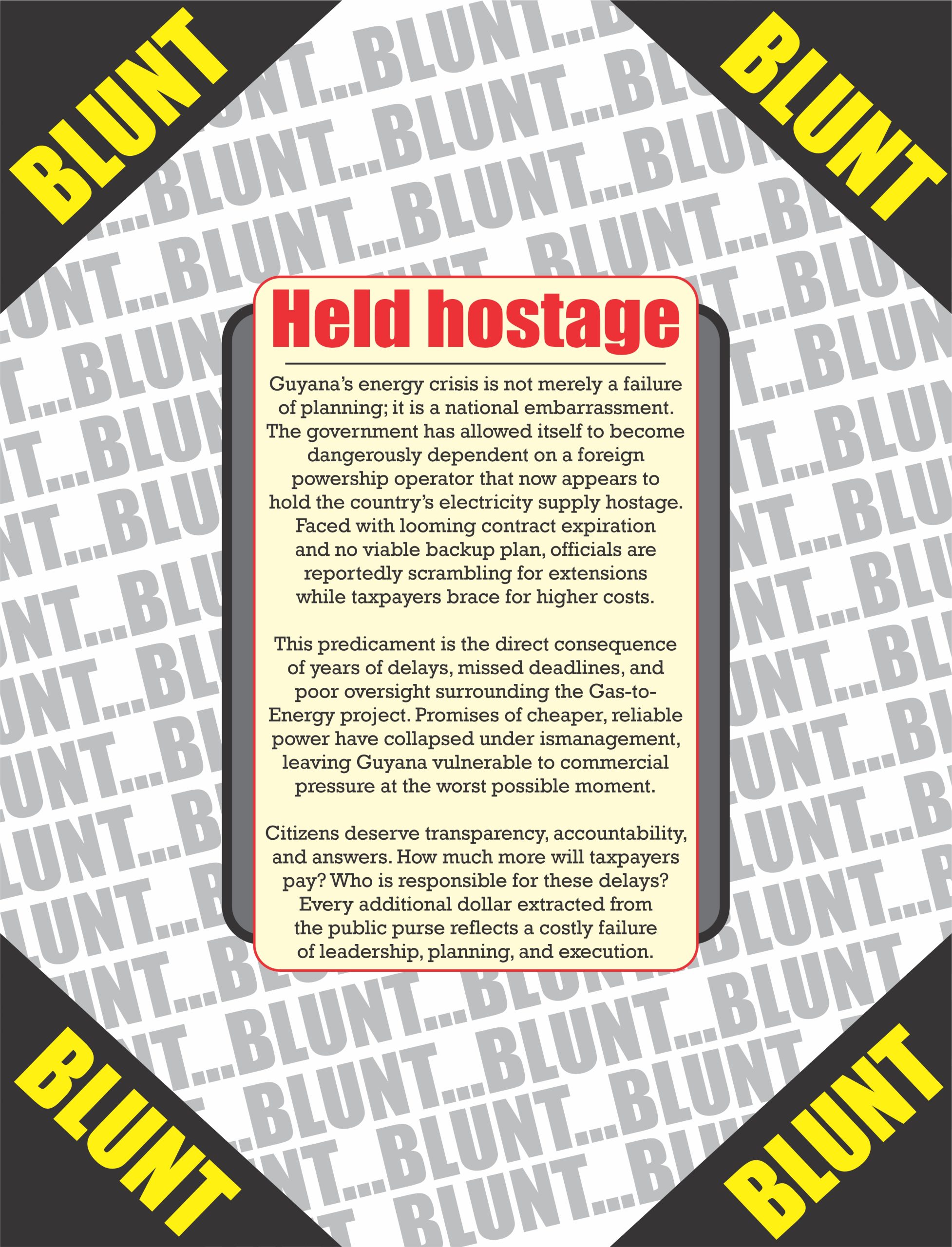
- ‘Pay $3.4M more daily or face blackouts’ – Powership company demands
- France eyes deepwater port in Guyana to expand European trade
- Eyebrows raised over $24M water ambulance price tag
- Iran warns Israeli attacks in Lebanon and Gaza threaten U.S. ceasefire talks
- France requests UN Security Council emergency meeting on Lebanon after Israel captures Beaufort Castle
Protect vulnerable groups from effects of COVID-19 pandemic – PAHO Director
Washington D.C., May 19, 2020 (PAHO)—The Director of the Pan American Health Organization, Carissa F. Etienne, has warned of the effects of the COVID-19 pandemic on groups such as poor and indigenous people in the Americas, saying, “If we want to slow the spread of the pandemic and put our region on a path to recovery, we must protect vulnerable groups from COVID-19.”

Dr. Carissa F. Etienne (Caricom)
“The virus is surging across our region. We are increasingly worried about the poor and other vulnerable groups at greatest risk of illness and death from the virus. The recent spike in cases and fatalities is partly due to the virus taking root in these groups,” she said in a press briefing from PAHO headquarters Monday.
More than two million cases and more than 121,000 deaths due to COVID-19 were reported in the Americas as of May 18 – a 14 percent increase in both cases and deaths from last week.
Dr. Etienne called for improved access to effective public health measures, the strengthening of health system capacity to better serve vulnerable populations and for strong social and economic protection.
“During a pandemic, we must overcome the structural inequalities that limit access to services. This means establishing mechanisms that support universal access to health regardless of income, pooling resources with the private and not for profit sector, eliminating payment at point of service and setting up emergency hospitals that add surge capacity where it is most needed.”
COVID-19 impact in certain communities
In the Amazon basin, among both isolated villages of indigenous groups and densely populated cities such as Manaus, Iquitos and Leticia, the incidence of COVID-19 is twice as high as in other provinces in the same countries. “Without immediate action, these communities will face a disproportional impact,” she said.
Vulnerable communities in large cities are also hard hit by the pandemic, where “poor social and economic conditions provide a fertile breeding ground for COVID-19” along with the economic impact of people losing their jobs.
Women, who make up 70% of the health workforce in the Americas, are also vulnerable, as they are on the frontlines and disproportionately affected by COVID 19, Dr. Etienne noted. In addition, they face income disparity, inadequate access to health services and are often subject to gender-based violence.
“Far too often, we fail to prioritize the health and wellbeing of the most vulnerable among us. This must change if we want to stop the spread of COVID-19 and be ready to face future pandemics,” Dr. Etienne said.
“People of African descent in Latin America struggle to access appropriate care in normal circumstances, a reflection of structural discrimination and racial inequity, which put them at greater danger of contracting COVID-19 and facing the most severe consequences of the disease,” the PAHO’s director said.
Migrants in temporary settlements and prisoners in crowded jails with poor sanitation are also in vulnerable situations and seeing higher rates of spread of COVID-19, she said. Reaching them is a special challenge that countries must face, she indicated.
An important vulnerable group consists of people with underlying health conditions like heart disease, diabetes and obesity, who “are particularly susceptible to hospitalization, severe illness and death due to COVID-19” and face disruptions in treatment for their diseases because health systems are overwhelmed, she said. This risk group accounts for around 221 million people in the Americas, she said.
She continued, “It is only by ensuring human rights for all, when all peoples have universal access to health and it’s socioeconomic determinants, when we guarantee social protection for the vulnerable, and when our economic development addresses the eradication of poverty and the achievement of the sustainable development goals only then will the world be prepared to face future pandemics. But we need to begin this work now.”
Share this:

Discover more from Kaieteur News
Subscribe to get the latest posts sent to your email.
Similar Articles

THE BLUNT OF THE DAY
Sports

Features/Columnists

Sir. Ronald Sanders

The GHK Lall Column

Weekend Cartoon