Latest update August 17th, 2026 10:20 AM



Latest News
- Two Australian firms now hold 770 km² gold lands in Guyana
- Mayor demands answers as Linden grid breaks under industrial weight
- Colombian president asks Trump to suspend tariffs to help earthquake recovery
- $6.6B Bath Hospital must deliver more than ‘grand ceremonies’ – Opposition Leader says
- Fast-growing Guyana still depends on private planes for medevac
Caribbean leaders’ high-level meeting to examine law to reduce NCDs
Caribbean authorities are being urged to adopt effective laws and regulations that can contribute to reducing the burden of Non Communicable Diseases [NCDs] and their risk factors as well as their social and economic consequences.
Calls, in this regard, are being made by the Pan American Health Organization/World Health Organization [PAHO/WHO].
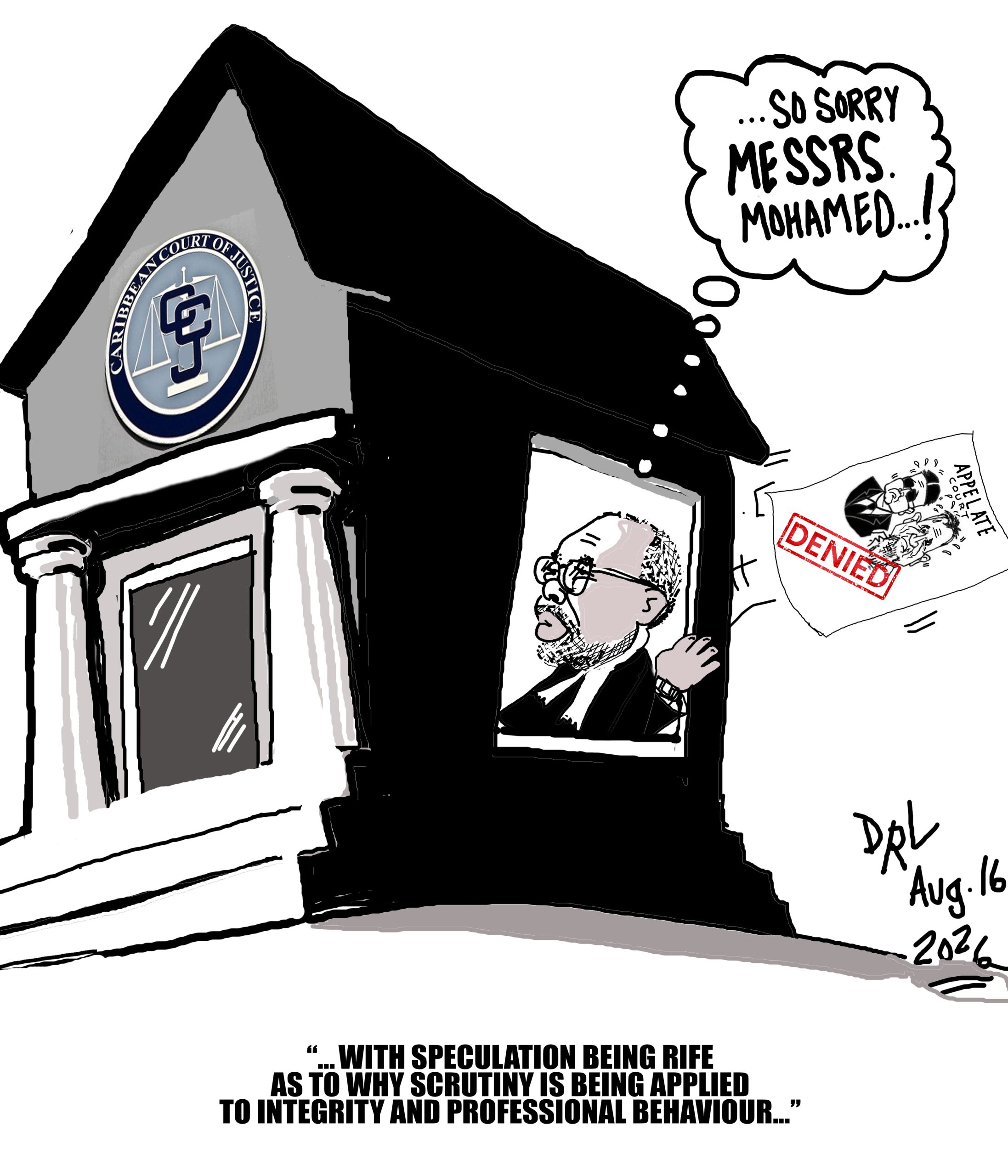
With this in mind, Government Ministers from different sectors will meet today with academicians, judges from the Caribbean Court of Justice [CCJ], Food and Agriculture Organisation [FAO], representatives of the CARICOM Secretariat, organs and institutions and civil society. This is in order to discuss how the use of laws and regulations can help reduce NCDs. NCDs are said to account for three out of four deaths in Caribbean, Guyana being no exception. Moreover, Senior Minister of Public Health, Ms. Volda Lawrence, will adequately represent Guyana.
It has been deduced that NCDs including: cardiovascular disease, diabetes, cancer, and chronic respiratory diseases, together with their four shared risk factors – tobacco use, harmful use of alcohol, unhealthy diet, and physical inactivity – are the leading causes of death, illness and disability in the Caribbean.
It has also been ascertained that high rates of NCDs are the reason that people in the Caribbean have a greater probability of dying prematurely [before age 70] than people from any other sub-region of the Americas.
The meeting, which will take place in Port of Spain, will bring members of the CCJ Academy of Law together with representatives of relevant CARICOM organs and institutions, sub-regional partners, and international organisations to discuss policies and strategies for using the law as a powerful tool to address NCDs.
It is expected that efforts will be made to focus particularly on tobacco control legislation and laws and regulations that can help prevent obesity.
The meeting is being organised by PAHO/WHO, the Caribbean Court of Justice, Academy of Law and FAO.
Although progress remains insufficient, there are examples of best practices in the Caribbean that could to be up-scaled, PAHO/WHO has observed. Those that have been highlighted include: taxes on sugar-sweetened beverages, bans on the sale of sugary beverages in schools, and progress on tobacco control legislation in several countries.
Moreover, Caribbean heads of government and other CARICOM leaders have repeatedly called for expanding such measures to help reduce NCDs.
Representatives of Guyana, Suriname, and Trinidad and Tobago will present their countries’ experiences and lessons learned in using laws and regulations to address NCDs. Other subjects will include the role of community law in addressing NCDs, how to mobilise political will to advance the use of legal measures, and how to harmonise policy approaches to face this challenge.
Among the presenters at the high-level meeting, on the use of law to tackle NCDs as a “critical step to accelerate progress in the Caribbean” are: Sir George Alleyne, PAHO Director Emeritus; Sir Dennis Bryon, CCJ President; Dr. Terrance Deyalsingh, Minister of Health of Trinidad and Tobago; Mrs. Volda Lawrence, Minister of Health of Guyana; Mr. Patrick Pengel, Minister of Health of Suriname, Chair of the CARICOM Council for Human and Social Development [COHSOD]; Mrs. Paula Gopee-Scoon, Minister of Trade and Industry of Trinidad and Tobago, Chair of the Council of Trade and Economic Development [COTED]; Justice Winston Anderson, CCJ Judge; Dr. Douglas Slater, Assistant Secretary-General, CARICOM Directorate for Human and Social Development; Mr. Joseph Cox, Assistant Secretary-General, CARICOM Directorate for Trade and Economic Integration; Dr. Corlita Babb-Schaefer, CARICOM General Counsel; Ambassador Courtenay Rattray, Permanent Mission of Jamaica to the United Nations; Sir Trevor Hassel, President, Healthy Caribbean Coalition; Dr. James Hospedales, Executive Director, Caribbean Public Health Agency [CARPHA]; Mr. Barton Clarke, Executive Director, Caribbean Agricultural Research and Development Institute [CARDI]; Mr. Deryck Omar, Chief Executive Officer, CARICOM Regional Organisation for Standards and Quality [CROSQ]; Dr. David Berry, Dean, Faculty of Law, University of the West Indies, Cave Hill Campus, Barbados and Dr. Leighton Jackson, Dean, Faculty of Law, University of the West Indies, Mona Campus, Jamaica.
Share this:

Discover more from Kaieteur News
Subscribe to get the latest posts sent to your email.
Similar Articles

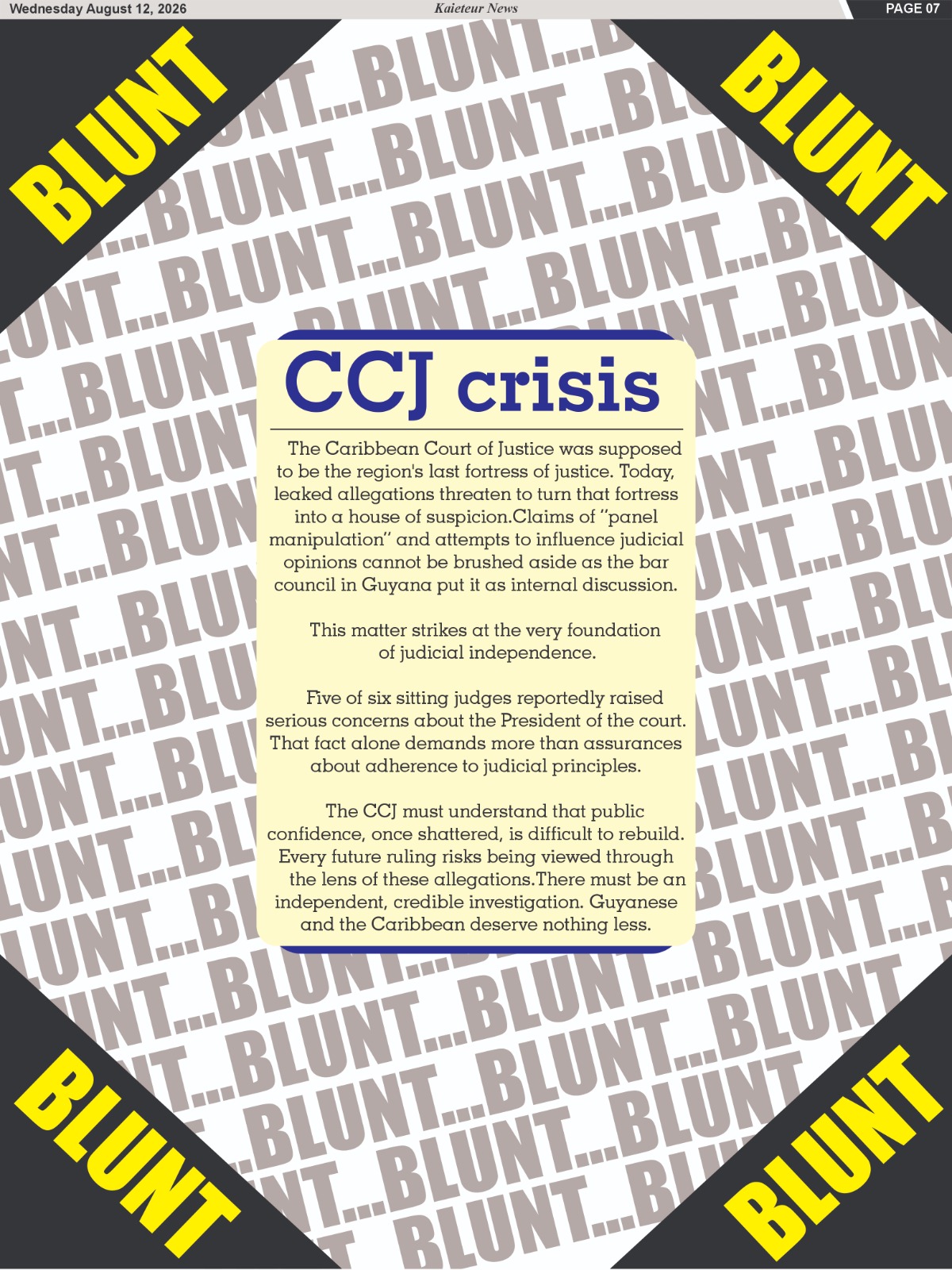
Blunt of the day
Sports
Features/Columnists

Sir. Ronald Sanders

The GHK Lall Column

Weekend Cartoon