Latest update August 17th, 2026 10:20 AM



Latest News
- Two Australian firms now hold 770 km² gold lands in Guyana
- Mayor demands answers as Linden grid breaks under industrial weight
- Colombian president asks Trump to suspend tariffs to help earthquake recovery
- $6.6B Bath Hospital must deliver more than ‘grand ceremonies’ – Opposition Leader says
- Fast-growing Guyana still depends on private planes for medevac
‘CCJ President’s response fails to answer key questions in judicial crisis’ – Ram
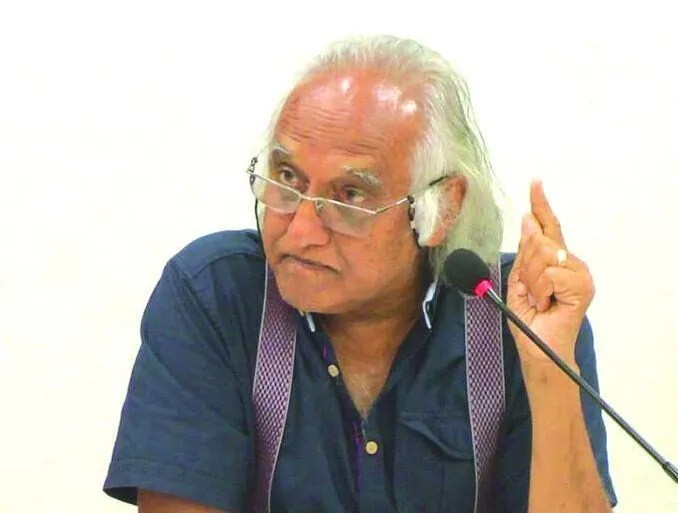
(Kaieteur News) – Chartered accountant and attorney Christopher Ram has questioned whether Caribbean Court of Justice (CCJ) President Justice Winston Anderson has gone far enough in addressing the serious allegations that have plunged the regional court into an unprecedented internal crisis.
In a column published Saturday, Ram said Anderson’s lengthy public response to allegations made by five of the Court’s six other sitting judges was an important development, but argued that the statement “cannot be the final word” on a controversy that has already damaged the integrity and perceived impartiality of the region’s apex court.
Chartered accountant, Christopher Ram
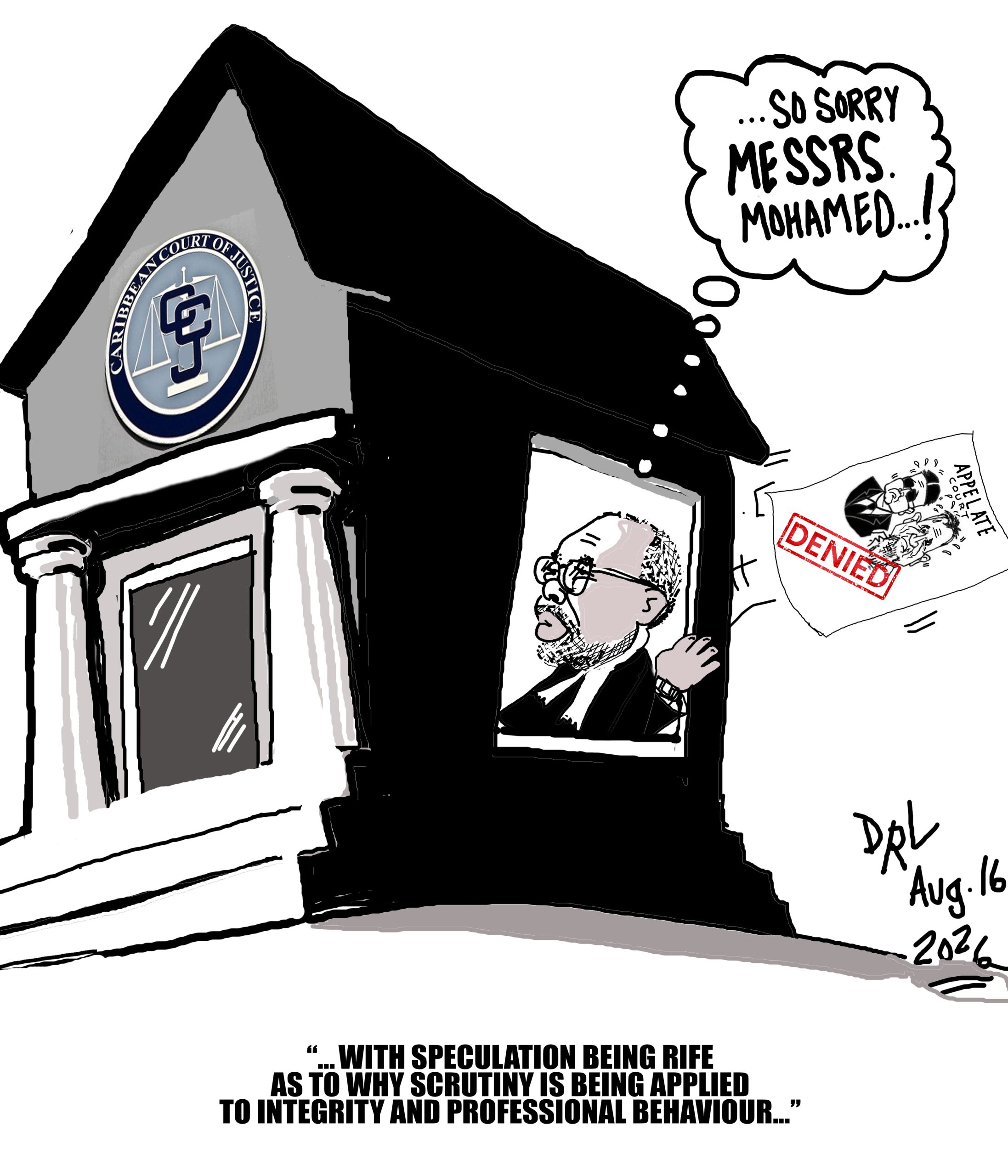
The controversy erupted after leaked internal correspondence revealed deep divisions among the CCJ judges, with five judges raising allegations including authoritarian leadership, interference in judicial deliberations and manipulation of judicial panels. Justice Peter Jamadar reportedly raised concerns about an alleged attempt to influence colleagues during deliberations in the extradition matter involving Opposition Leader Azruddin Mohamed and his father, Nazar Mohamed.
Anderson has rejected allegations that he attempted to influence judicial outcomes, describing such suggestions as unfounded. He has also stressed that the judges were unanimous in the final disposition of the Mohamed appeal.
But Ram argues that unanimity in the final judgment does not, by itself, resolve questions about what occurred during the deliberative process.
MOHAMEDS’ CASE UNDER SPOTLIGHT
The Mohamed extradition case has become one of the most sensitive aspects of the controversy because of its political implications in Guyana.
On 29th July, the CCJ dismissed the appeal brought by Azruddin and Nazar Mohamed and allowed extradition proceedings to continue in Guyana. The court lifted the stay which had previously halted the proceedings.
The ruling came after the CCJ had earlier intervened in March and granted an interim stay while the Mohameds challenged aspects of the extradition process.

CCJ president, Justice Winston Anderson
It was against this backdrop that allegations concerning the internal handling of the case became particularly significant.
Ram contends that Anderson’s response does not directly address Justice Jamadar’s specific allegation that the CCJ president attempted to influence colleagues who held views different from his during deliberations.
“The unanimity in the eventual result,” Ram argues, “does not answer an allegation about the integrity of the process by which that result was reached.”
The distinction, he suggests, is fundamental.
A court’s credibility depends not only on the correctness of its decisions but also on the integrity and independence of the process through which those decisions are reached.
GUYANA’S JUDICIAL APPOINTMENTS
But Ram identified another issue as being of even greater concern to Guyana — Anderson’s involvement in discussions surrounding the appointment of the country’s Chancellor and Chief Justice.
According to Ram, Anderson has acknowledged that in October 2025 he privately sought to encourage agreement between President Irfaan Ali and then Opposition Leader Aubrey Norton on the substantive appointments to the two highest judicial offices in Guyana.
Anderson has reportedly conceded that another approach would have been preferable and that he could have confined himself to public commentary, as his predecessors had done.
For Ram, that admission raises serious questions about the proper limits of the office of CCJ President.
He questions whether the head of Guyana’s final appellate court should have intervened privately in a constitutional process involving the president and opposition leader of a member state.
Ram also argues that Anderson has not adequately addressed more specific allegations made by Norton concerning what was discussed during their interaction.
Norton had alleged that Anderson sought his agreement to particular judicial appointments, referred to negotiations involving then Acting Chancellor Yonette Cummings-Edwards and indicated that the President and others were awaiting the swearing-in of proposed appointees.
Those claims have not been independently established, but Ram argues that their omission from Anderson’s response is significant.
The attorney is also demanding greater clarity from President Ali.
Ram says Ali must explain his role in the discussions with Anderson.
Among the questions he believes the President should answer are who initiated the discussions, what was discussed, what Ali understood Anderson’s role to be and whether Attorney General Anil Nandlall was consulted.
For Ram, this is not simply a matter concerning personalities.
He argues that the episode raises a fundamental constitutional question about the separation between the Executive and Judiciary.
“If the President was prepared to engage the head of Guyana’s final appellate court in such an intervention at the apex of the judicial system,” Ram argues, “Guyanese are entitled to ask where he believes the boundary lies between legitimate executive action and interference with the Judiciary.”
REGIONAL JUDICIARIES
The controversy has already generated a wider regional response.
Heads of judiciary from several Caribbean jurisdictions, including Guyana, Barbados, The Bahamas, Belize, Jamaica and Trinidad and Tobago, issued a joint statement expressing support for the CCJ and stressing the importance of public confidence in the court.
However, they declined to comment on the substance of the allegations made by the judges, instead expressing grave concern over the leak of confidential correspondence.
That approach has not satisfied Ram.
He questions why the breach of confidentiality has received such prominent attention when the correspondence exposed allegations that, if substantiated, could have profound implications for the functioning of the region’s highest court.
The Guyana Trades Union Congress has gone further, calling for an independent investigation into the crisis, including the allegations surrounding panel assignments, judicial deliberations and safeguards against political or administrative influence.
PUBLIC CONFIDENCE
Ram also pointed to an uncomfortable historical connection.
Anderson was the lone dissenting judge in the CCJ’s 2018 six-to-one decision upholding Guyana’s constitutional term-limit provisions.
Ram stresses that the dissent itself is not evidence of political bias.
However, he argued that Anderson’s subsequent acknowledged intervention in Guyana’s political discussions over judicial appointments inevitably causes that earlier history to be viewed differently.
The issue, he says, is one of public perception.
The CCJ itself has maintained that its judges are guided by the Bangalore Principles of Judicial Conduct and has reaffirmed its commitment to independence, impartiality, integrity and public confidence.
But Ram believes public confidence cannot be restored simply by declarations of institutional integrity.
The controversy has also cast an unwanted spotlight on Guyana’s acting chancellor and chief justice.
Ram makes clear that nothing disclosed in the controversy establishes wrongdoing by either judicial officer.
However, he argues that the episode demonstrates why the appointment process should have been insulated from any intervention that could create questions about political or judicial influence.
For Ram, the central issue is therefore much larger than the Mohamed extradition case.
It is about whether the Caribbean’s final court can maintain the confidence of the public when five of its sitting judges have raised serious concerns about the administration of the institution.
Anderson’s response may have rejected the allegations and provided explanations for some of the controversy.
But Ram says important questions remain unanswered.
The CCJ President’s statement, he concludes, is “welcome but incomplete” and cannot be the final word.
Share this:

Discover more from Kaieteur News
Subscribe to get the latest posts sent to your email.
Similar Articles
hits

Blunt of the day

Sports

Features/Columnists

Sir. Ronald Sanders

The GHK Lall Column

Weekend Cartoon