Latest update July 29th, 2026 2:28 AM



Latest News
- Captain, crew members charged with 72 counts of murder
- Weeping captain: ‘we don’t deserve this’ says vessel was unfit to sail
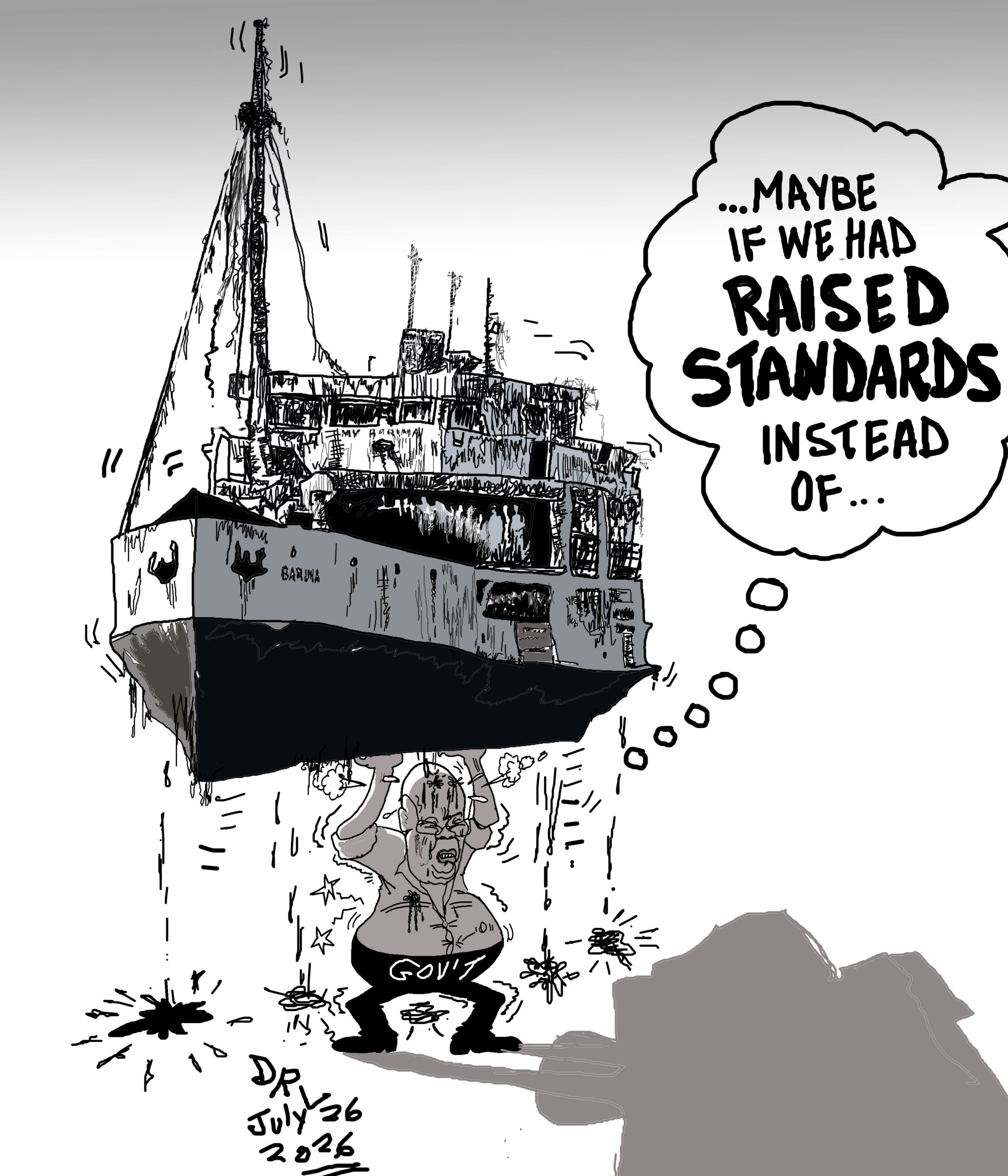
- Mohamed’s offer to raise MV Barima, pushes Govt. to say victims’ relatives will decide
- Guyana’s predictable fiscal regime will work for you’ – Dr. Singh tells investors at COTA
- Chinese Enterprises Association donates relief supplies to CDC for families affected by MV Barima tragedy
U.S. reinstates sanctions on Iranian oil sales after LNG, oil tanker attacks
(Reuters) – The United States on Tuesday re-imposed sanctions on Iranian oil, as a U.S. official warned that Iran’s attacks on vessels in the Strait of Hormuz were “wholly unacceptable” and would be met with consequences.
Oil prices were up more than 5% following the announcement. The U.S. Treasury had authorized last month Iran oil sales until August 21, as part of the fragile agreement between Tehran and Washington. Tuesday’s revocation cuts that wind-down period to an end date of July 17.
The U.S. move came after three tankers reported being struck by unknown projectiles in and near the Strait of Hormuz in recent days, the British navy-affiliated agency UKMTO said in a report. There was no immediate comment from Tehran, or any claim of responsibility.
The U.S. official said negotiators continued to work in good faith toward a final agreement with Iran despite the latest escalation.

3D-printed oil pump jacks, Iranian flag, and a rising stock graph appear in this illustration taken March 2, 2026. REUTERS/Dado Ruvic/Illustration
The attacks and the U.S. response threaten to put the diplomatic understanding between Washington and Tehran on shaky ground, raising the risk that further retaliation could derail negotiations over a broader agreement.
Another U.S. official, speaking on condition of anonymity, said initial indications were that Iran fired at three commercial vessels.
The Strait of Hormuz, a narrow waterway between Iran and Oman, is one of the world’s most important energy choke points. Roughly a fifth of global oil and liquefied natural gas shipments passed through the strait each day before the war.
Any prolonged disruption could push up energy prices and increase pressure on consumers and governments already facing higher fuel costs.
Oil exports remain a critical source of revenue for Iran, providing billions of dollars in hard currency that help fund government spending and support an economy weakened by years of U.S. sanctions.
Despite restrictions, Tehran has managed to expand shipments in recent years, largely to China, making oil sales one of the country’s most important economic lifelines.
Oil prices have fallen steeply since the agreement was struck last month. Bob McNally, president of Rapidan Energy Group, said the developments “signal that the ceasefire is not as solid and durable as the oil market has chosen to assume,” and added that “the oil market has some risk pricing to do.”
While traffic through the strait has picked up in the last week, it remains spotty, ranging between one-third and one-fifth of its pre-war levels.
Washington’s decision to pull the license came with a warning to Iran that its actions in the strait were “wholly unacceptable” and would be met with consequences. The White House granted the license in June, easing decades-old sanctions as part of an agreement to reopen the strait.
“This is not a small step by Washington,” said Brett Erickson, managing principal at Obsidian Risk Advisors. The revoked license “was one of the concessions Iran needed to justify lifting its blockade over the Strait of Hormuz.”
The U.S. Navy-led Joint Maritime Information Center (JMIC) on Tuesday raised the threat level to transit the strait to “severe” from “substantial” following the attacks, citing deliberate hostile action likely under current conditions, the first time the threat level has been set at that severe status since June 15.
“The recent confirmed incidents highlight that the threat environment remains heightened and warrants extreme vigilance,” JMIC said in a note, adding that mariners should expect continued naval presence, congestion along transit routes, and more intense hailing by the Islamic Revolutionary Guard Corps.
It is unclear whether the attacks will lead to another full-scale interruption of shipping traffic through the strait, which prior to joint U.S.-Israeli attacks on Iran on February 28, was used to transit about one-fifth of the world’s oil and gas supplies.
QATAR, SAUDI ARABIA BLAME IRAN
The Al Rekayyat tanker, loaded with liquefied natural gas, was hit on its port side, one source said, with another briefed on the matter adding the vessel was at risk of exploding due to a fire in its room. The crew were safe and were being evacuated.
Qatar’s foreign ministry said Tehran bore full legal responsibility for the attack, and summoned the deputy Iranian ambassador to protest targeting of the tanker.
It is the first time an LNG ship from Qatar, a mediator in talks between the United States and Iran, has been struck since the start of the Iran war on February 28.
Nakilat (QGTS.QA), opens new tab, also known as Qatar Gas Transport Company Ltd, which owns the Al Rekayyat tanker, did not respond to requests for comment, nor did QatarEnergy, Qatar’s international media office, and U.S. Central Command.
The Saudi-flagged Wedyan supertanker was also damaged off Oman’s coast while transiting the strait. Saudi Arabia’s foreign ministry condemned the attacks, saying it holds Iran fully responsible for the damage to the Wedyan, which is owned and managed by Saudi shipping firm Bahri (4030.SE), opens new tab. The firm did not respond to requests for comment.
Commercial vessels using uncoordinated routes with Iran or tampering with the ship’s tracking face risks and disrupt Iran’s efforts to facilitate safe passage in the Strait, Iran’s Foreign Ministry spokesperson said, adding that the country was working on fulfilling its commitments.
About 16 vessels transited through the Strait of Hormuz on Tuesday, the lowest in nearly three weeks, data from ship tracking service Kpler showed.
Traffic through the strait has averaged 25 to 40 ships sailing daily in the last week, far lower than the daily average of 125 sailings before the conflict began.
“The start stop nature of the re-opening of Hormuz is continuing to inject volatility into Middle Eastern tanker markets since it is leading to the irregular flow of tankers through Hormuz in both directions,” ship broker BRS said in a report this week.
There was no claim of responsibility for the attacks. A U.S. official, speaking on condition of anonymity, said initial indications were that Iran had fired at two commercial vessels.
In another incident later on Tuesday, a tanker was struck by a drone while transiting the strait, sustaining minor damage, but was able to sail to its next port of call, British Navy-affiliated agency UKMTO said in a report.
Average daily rates to load a ship inside the Gulf reached almost $300,000 a day, up from below $200,000 a day last week due to more sailings.
President Donald Trump said Monday the United States would either reach a deal with Iran or “finish the job,” renewing his threat of military action as Tehran projects defiance following the funeral.
Talks to reach a final deal won’t start if U.S. threats continue, Iran’s foreign minister said on Tuesday.
Share this:

Discover more from Kaieteur News
Subscribe to get the latest posts sent to your email.
Similar Articles

Blunt of the day
Sports

Features/Columnists

Sir. Ronald Sanders

The GHK Lall Column

Weekend Cartoon