Latest update September 19th, 2026 10:20 AM


Latest News
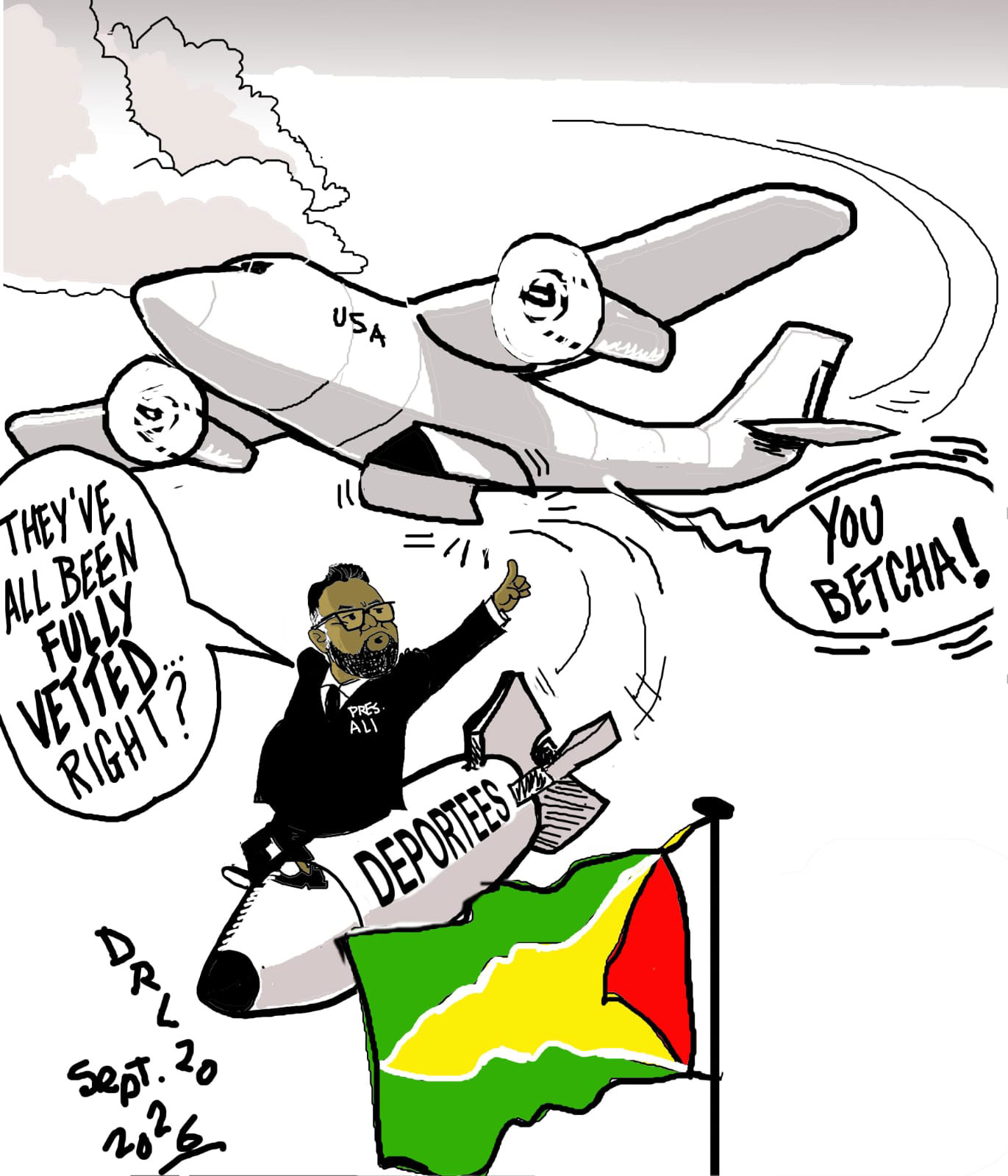
- Fear of return to home countries, diplomatic hurdles lead U.S. deportees to Guyana – sources
- Guyana’s 2026 oil earnings forecast jumps from US$2.8B to US$6.5B
- Sod turned for construction of new $1.3 billion New Amsterdam Market
- Iranians rally in biggest show of defiance against U.S. since war began
- APNU says 2020 election fraud trial exposing PPP/C’s own irregularities
The PNCR and City Hall should be rejoicing
(Kaieteur News) – You would be surprised by just how many persons are of the view that it is central government’s responsibility to take care of the streets in the country. This is not so at all.
It is central government’s responsibility to take care of public roads. It is the responsibility of town councils to maintain streets within municipalities, excluding those designated as public roads, while neighbourhood democratic councils are tasked with looking after village and community roads.
This basic distinction is often overlooked. And that misunderstanding is at the heart of the current debate surrounding the government’s recent decision to designate an additional 21 streets in Georgetown as public roads.
It is therefore surprising that one of the opposition parties, A Partnership for National Unity (APNU), has raised concerns suggesting that something sinister may be afoot in relation to this move.
To be fair, it is understandable why many members of the public hold the mistaken belief that the government should build and maintain all streets in the city. For decades, the condition of Georgetown’s streets has been poor, and in many cases, outright deplorable. The City Council, which bears responsibility for these streets, has done such a dismal job over the past 50 years that citizens have come to associate neglect with central government rather than with City Hall.
This perception did not develop overnight. It is the result of years of visible deterioration—potholes left unattended, drainage issues ignored, and roads falling into disrepair. When people drive daily on damaged streets, it is only natural that they look to the most visible authority—the central government—for answers and solutions.
However, the reality is that the City Council, which has long been under the control of the People’s National Congress Reform (PNCR), the main party within APNU, must bear responsibility for this prolonged neglect. Given this context, one would expect both the PNCR and City Hall to welcome, rather than criticize, the government’s decision to assume responsibility for an additional 21 streets.
After all, this move effectively reduces the burden on a municipal system that has clearly struggled to meet its obligations. It should be seen as relief, not cause for alarm.
In fact, for years now, it is the central government that has been stepping in to do what City Hall should have been doing all along: repairing and rehabilitating streets across the city. Through various initiatives, including its community roads programme, the government has invested heavily in improving road infrastructure not just in Georgetown, but across Guyana.
Without these interventions, the state of the city’s streets would likely have been far worse. One could argue, only half-jokingly, that without government action, some roads might have become so riddled with potholes that a visitor could be forgiven for thinking the city had been subjected to an aerial bombardment.
Against this backdrop, the claim by APNU that there is something “sinister” about the designation of these streets as public roads appears to be an overreaction. There is a clear and practical explanation: the government is stepping in where local authorities have failed.
That said, there may be some merit in examining which streets have been designated. A public road is generally understood to be a major artery—one that facilitates significant traffic flow and connects key parts of the city. In this regard, it is entirely reasonable that streets such as Middle Street, Vlissengen Road, Cane View Avenue, Aubrey Barker Road, Lamaha Street, the Eastern Highway, and Camp Street are included. These are well-known thoroughfares that serve as critical links within the urban road network.
However, questions may arise regarding some of the other streets on the list. Not all appear to meet the standard of a major artery. This raises a legitimate point as to whether these are being reclassified because they already function as key routes, or because there are plans to upgrade them into such?
If the latter is the case, then the decision could be part of a broader strategy to improve the city’s infrastructure and traffic flow. But if not, then greater clarity from the authorities would help to address public concerns and avoid unnecessary speculation.
Ultimately, this situation points to the ongoing weakness of local government bodies. Many municipalities and neighbourhood democratic councils across the country are cash-strapped and have consistently underperformed. Their inability to effectively manage basic responsibilities, such as road maintenance, has forced central government to intervene repeatedly.
Given this reality, a stronger case can be made for central government to relieve local authorities entirely of responsibility for streets. If these bodies lack the resources or, capacity to perform their duties, then it may be more efficient for a single, better-equipped authority to take over.
Some may even go further and suggest that these local authorities, in their current form, should be dissolved altogether. That may be a drastic proposal, but it reflects growing frustration with institutions that have, for too long, failed to deliver for the people they are meant to serve.
At the very least, the designation of these 21 streets should prompt a serious national conversation about the future of local governance in Guyana.
(The views expressed in this article are those of the author and do not necessarily reflect the opinions of this newspaper.)
Share this:

Discover more from Kaieteur News
Subscribe to get the latest posts sent to your email.
Similar Articles
One thought on “The PNCR and City Hall should be rejoicing”
Website Hits

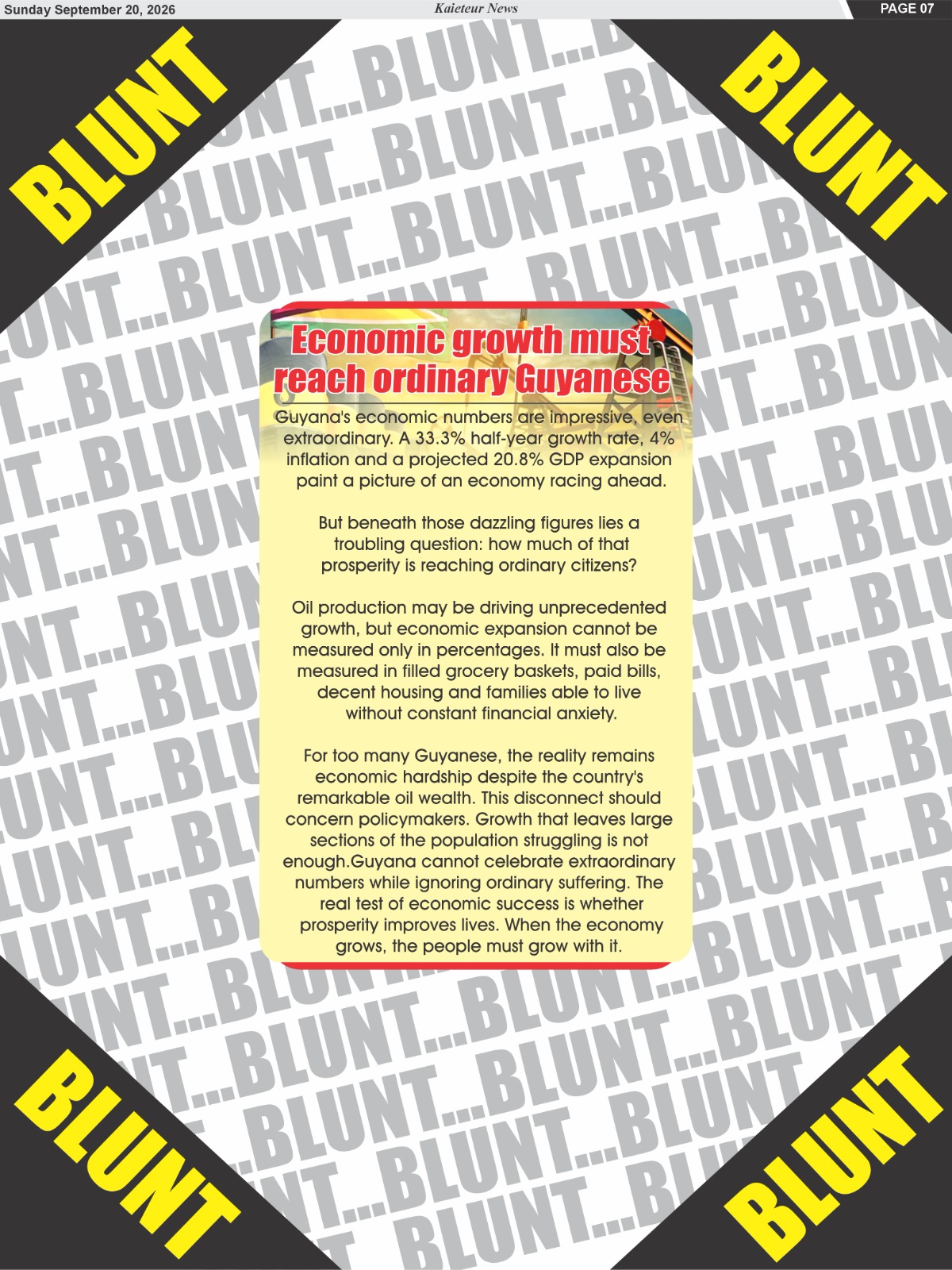
Blunt of the day
Sports

Features/Columnists

Sir. Ronald Sanders

The GHK Lall Column

Weekend Cartoon


The government should shoulder more responsibilities in Georgetown due to the miserable & deplorable state of the city caused by an incompetent M& CC!!!
THIS HAS BEEN AN ONGONG SERIOUS PROMBLEM FOR ‘DONKEY YEARS’ AND IT’S A BAD REFLECTION ON THE GOVERNMENT AND COUNTRY!!!