Latest update October 4th, 2026 10:35 AM


Latest News
- Controversial U.S. company in running for Amaila hydro project
- 40 citizens, 4 organisations appeal EPA’s no-EIA decision on Kurupung uranium project
- Israeli air attack on Gaza City apartment kills at least five
- CANU finds uncustomed alcohol at Windsor Estates property
- Govt. still reviewing Exxon’s 8th Stabroek project
Guyana leaving US$9M a day on the table
…as oil windfall surges amid Middle East conflict
(Kaieteur News) – Guyana could gain at least U.S.$9M more daily from ExxonMobil if the government of Guyana (GoG) applies a 25% windfall tax on the profits being earned by the energy giant as oil prices continue to climb in light of the ongoing war in Iran.
The conflict in the Middle East has resulted in oil prices soaring past U.S. $100 per barrel for the first time since 2022.
At the beginning of the year, Finance Minister, Dr. Ashni Singh estimated inflows from the sector at an average of just $59 a barrel.
Currently, Guyana is producing an average of 900,000 barrels per day (bpd), meaning that Exxon is generating a whopping U.S.$40 extra on each barrel. In other words, the Stabroek Block is now generating U.S.$36M more daily than was anticipated by government.

Trinidadian Energy Expert and International Consultant, Anthony Paul
By applying just 25% tax to the excess profits, Guyana could earn U.S.$9M more daily from the windfall profits being enjoyed by Exxon or U.S.$270M a month.
Even if Guyana opts to benefit from half of the excess profits being generated and apply a 50% windfall tax, Guyana will benefit from a whopping U.S.$18M more daily or $540M if oil prices remain at US$100 per barrel.
Trinidadian Energy Expert and International Consultant, Anthony Paul previously pointed out that windfall taxes do not violate petroleum contracts.
He pointed out, “Since all contracts must abide by national law and since such an instrument does not violate existing contracts, Windfall Profits Taxes provide a simple and fair mechanism to ensure that countries get their just dues.”
The Energy Expert explained that oil companies do not produce oil; nature does. The role of the oil companies is simply to extract the resource.
To this end, he reasoned, “Nature blesses countries with it. Once the oil company removes it, that asset is gone forever. For this reason, countries should realise that they are not just innocent bystanders to the business venture of oil and gas.”
In fact, the energy expert described the role of countries as “active contributors,” providing their natural heritage as an asset in the business. This, he noted, makes countries co-investors with a contractor, so that both can make money.
He was keen to note that stabilisation clauses in contracts are based on an agreed economic model which contemplates a rate of return to the contractor, based on a projected price or pricing formula for the commodity on an agreed market.
However, Paul explained that when the price of the commodity is far higher than the projected price in the economic model, the extra profit is referred to as a windfall. To this end, he noted, “Since the market conditions are generally beyond the control of the producer, it is the commodity itself that creates the higher revenue, not any action of the contractor.”
It has therefore become customary in jurisdictions around the world, including developed countries, to introduce a Windfall Profits Tax to ensure that the owner of the resource gets a bigger share of the profit, in line with the disproportionate contribution the resource makes to the increased revenue, the Energy Expert said.
Further, “Since all contracts must abide by national law and since such an instrument does not violate existing contracts, Windfall Profits Taxes provide a simple and fair mechanism to ensure that countries get their just dues,” Paul noted.
Last week, former Finance Minister, Winston Jordan called on government to commence negotiations with the operator of the Stabroek Block to implement a windfall tax.
Jordan explained that the ongoing conflict in Iran is likely to impact the cost of various items and materials, causing greater financial strain on government.
He said, “After all it’s the government who will also have to bear the brunt of the cost side where everything that the government will now import will carry extra cost for which the oil companies will benefit. The roads, they drive on the road and don’t pay anything. It’s the government who will have to buy bitumen and maintain those roads and import whatever they need to build the roads or the factories and kinds of things so it’s not unreasonable for the government to say that they need to benefit from part of this super profit that you are making.”
Share this:

Discover more from Kaieteur News
Subscribe to get the latest posts sent to your email.
Similar Articles
Website Hits

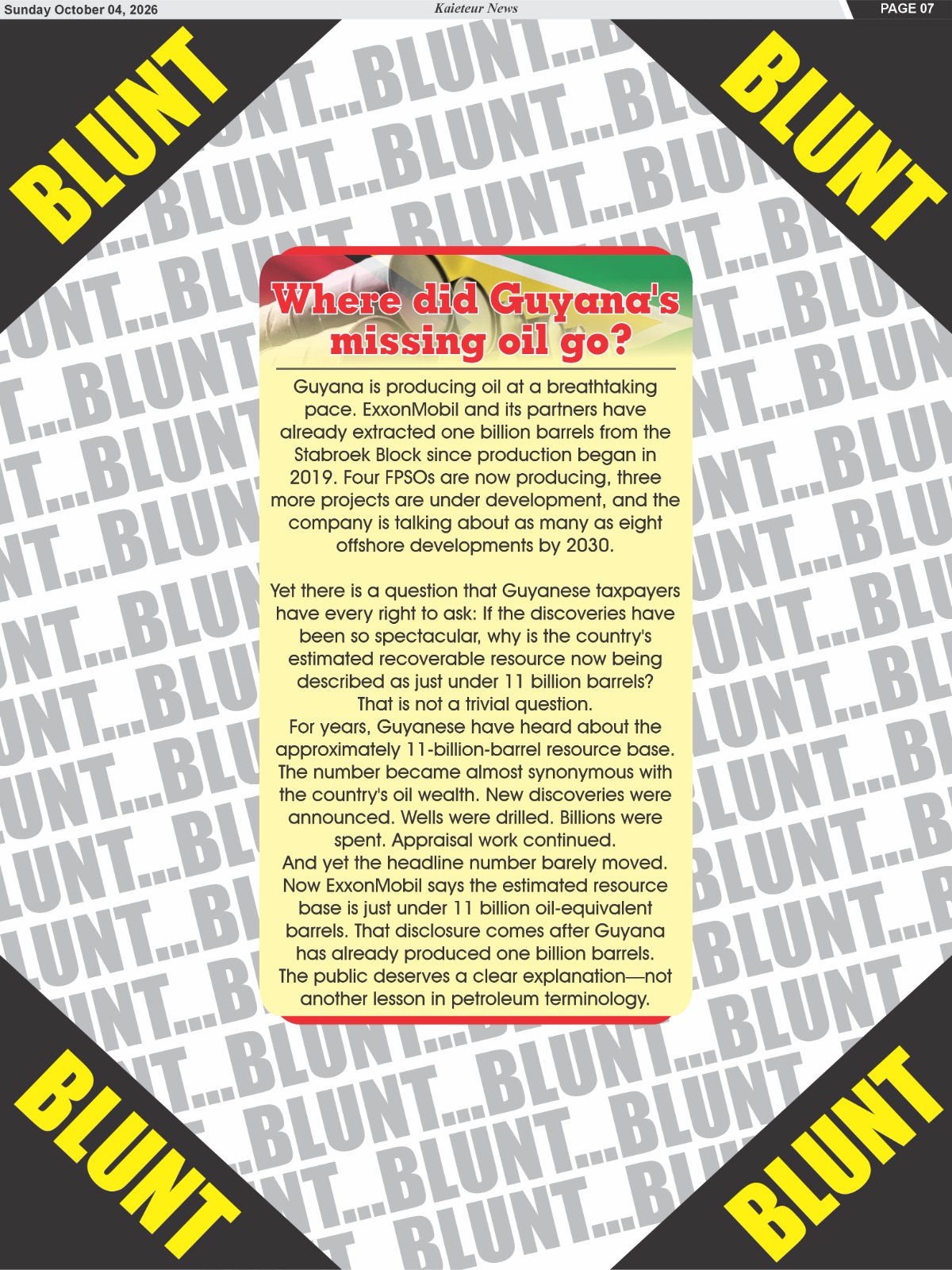
Blunt of the day
Sports
Features/Columnists

Sir. Ronald Sanders

The GHK Lall Column

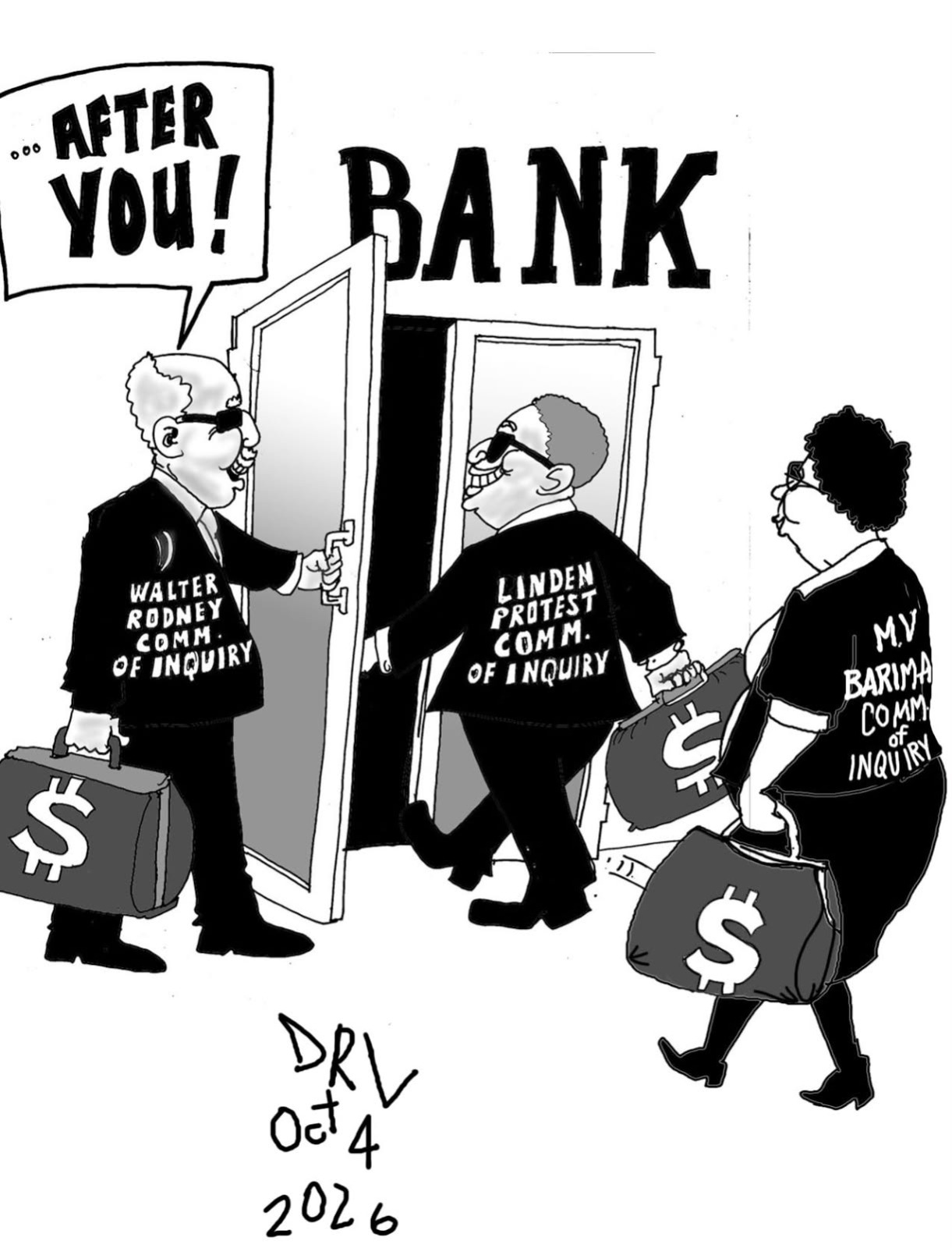
Weekend Cartoon