Latest update September 3rd, 2026 10:25 AM


Rubio to hold talks with CARICOM leaders
…Sanders calls for strategic alignment, constructive reset
(Kaieteur News) – As United States Secretary of State Marco Rubio prepares to sit down with Caribbean leaders in St. Kitts and Nevis on Wednesday, one senior regional diplomat is making it clear: this moment must be about recalibration, not confrontation.
Antigua and Barbuda’s Ambassador to Washington, Ronald Sanders, says Rubio’s visit should be treated as “consequential”—an opportunity to deliberately renew and rebalance relations between the United States and the 15-member Caribbean Community (CARICOM).
“The U.S. and the Caribbean Community are not strangers testing first principles,” Sanders wrote in his weekend column published by this newspaper on Sunday. “Geography binds us. Trade sustains us. Security concerns connect us. Migration links our families.”

Antigua and Barbuda’s Ambassador to Washington, Ronald Sanders
But he warned that while the relationship has never been broken, it now requires careful recalibration amid mounting tensions over migration policy, regional security, and Washington’s hardening posture toward Cuba and Venezuela. Rubio’s talks in St. Kitts are expected to focus on regional security, migration controls, drug trafficking and economic resilience. According to U.S. State Department spokesman Tommy Pigott, the Secretary will reaffirm Washington’s commitment to “enhancing stability and prosperity” across the hemisphere.
A Reuters article said that Rubio will hold talks with Caribbean leaders on regional security, and efforts to counter migration and drug trafficking as Washington seeks to ramp up pressure on Cuba’s leaders while seeking to steer Venezuela in the wake of the operation to seize President Nicolas Maduro.
“During his visit, the secretary will reaffirm the United States’ commitment to working with CARICOM member states to enhance stability and prosperity in our hemisphere,” State Department spokesman Tommy Pigott said in a statement on Monday, referring to the Caribbean Community that comprises 15 member states and five associated members.
Discussions would also cover economic growth, health and energy security, Pigott said. Rubio, the son of Cuban exiles, has been a leading voice in the Trump administration’s pressure campaigns directed at the left-wing leaders of Venezuela and Cuba, which are not CARICOM members.
Trump officials have been pressing an interim administration in Caracas to allow U.S. firms access to oil and to instigate reforms since the U.S. military launched an attack on Venezuela on January 3, seizing Maduro and his wife and killing dozens of people, including 32 Cuban bodyguards. The U.S. is preventing oil shipments from reaching Cuba, worsening an existing energy shortage, and Trump has urged the island’s communist leaders to reach a deal to ease the growing humanitarian crisis.

U.S. Secretary of State, Marco Rubio
Meanwhile, Sanders said that Ribio’s presence should be treated as consequential, noting that it would offer an opportunity to recalibrate the relationship between the United States and the fifteen Member States of CARICOM that has never been broken — but now requires deliberate renewal. “The U.S. and the Caribbean Community are not strangers testing first principles. Geography binds us. Trade sustains us. Security concerns connect us. Migration links our families. For decades, cooperation between Washington and Caribbean capitals has been steady, pragmatic, and grounded in mutual interest,” Sanders wrote in his weekend column published in this newspaper on Sunday.
He said Secretary Rubio has spoken forcefully about sovereignty, economic resilience, border control, and the dangers of surrendering national agency to external forces. “Caribbean leaders understand that language instinctively. Our region’s modern history is rooted in claiming our legal entitlement to sovereignty, building viable economies out of colonial inheritances, and defending democratic institutions in societies small in size but firm in conviction,” Sanders who was recently appointed chancellor of the University of Guyana said.
He added, that there are no communist political movements steering CARICOM governments. “There are no ideological crusades underway in the Caribbean. Our politics are practical. Across administrations and across party lines, Caribbean governments have pursued market-driven economies tempered by social responsibility. We rely on private enterprise, welcome investment, and maintain deep commercial ties with the United States, which remains our largest trading partner. With the exception of Guyana and Trinidad and Tobago, whose energy exports alter the arithmetic, the United States enjoys consistent trade surpluses in goods — and substantial commercial advantages overall — with most CARICOM member states,” Sir Ron said.
He said that American goods fill Caribbean ports, noting that American companies operate profitably in our economies. “American visitors enjoy our tourism industries. Cooperation in drug interdiction and in combating organised crime has been structured and ongoing under the Caribbean Basin Security Initiative. These are not the markers of strained relations. They are the foundations of a long partnership. Yet strain has emerged, and it must be acknowledged honestly if recalibration is to occur.”
Migration policy
According to Sanders one present source of tension is U.S. migration policy regarding refugees and deportees. He said every CARICOM country has consistently accepted the return of its own nationals deported from the United States. “We have cooperated in verifying nationality, issuing travel documents, and facilitating lawful repatriation. That cooperation is not in dispute. The unease arises when small states are asked to accept – and bear the cost of maintaining – persons who are not their nationals. For large countries, absorbing additional populations may be an administrative challenge. For small island and coastal states with limited fiscal space, small land mass, and tightly interwoven social systems, the impact can be magnified. Integration involves housing, health services, education, employment, community stability, and — above all — security vetting in environments that do not possess the investigative reach of larger nations.”
Sanders said the issue, therefore, is not unwillingness to cooperate. It is proportionality. It is capacity. And it is risk. “Secretary Rubio has argued that the United States must strengthen its own resilience by securing supply chains, reinforcing borders, and deepening cooperation with reliable partners. The Caribbean is not a distant theatre in that strategy; it is America’s immediate neighbourhood.
A stable, economically viable, and security-aligned CARICOM reduces irregular migration pressures, strengthens maritime domain awareness in a region through which illicit trafficking flows. Further, it offers trusted nodes for supply-chain diversification close to U.S. shores. Therefore, investment in Caribbean resilience is not charity. It is strategic depth. In a world in which major powers contest for influence, proximity and partnership still matter.”
The diplomat said if progress is to be made on migration cooperation, it must be built on clarity and reciprocity — clear legal frameworks, strict vetting standards, limited and manageable numbers, and arrangements that do not leave small states with open-ended financial or social obligations. Sustainable cooperation cannot rest on imbalance.
Alignment
To this end, Sanders said Rubio’s meeting with CARICOM leaders in St. Kitts, the most constructive conversation will not revolve around pressure. It will revolve around alignment. “The United States seeks secure borders, resilient supply chains, and stable neighbours — and it has them in CARICOM. For its part, CARICOM seeks economic growth, climate resilience, and security against organised crime. Clearly, the U.S. and CARICOM objectives are not contradictory. They are complementary.”
“Expanded cooperation on maritime security and intelligence-sharing would strengthen both American and Caribbean safety. Structured labour mobility pathways could meet workforce needs in the United States while supporting development in Caribbean economies. Resilient regional supply chains could integrate Caribbean production rather than bypass it. Transparent, mutually agreed migration frameworks could remove uncertainty and build trust. Meaningful support for climate adaptation and energy resilience would reinforce stability in America’s immediate neighbourhood,” Sanders added.
He said none of this requires either side to abandon its principles. It requires both sides to apply them with balance. “The Caribbean does not seek confrontation with the United States. Nor does it seek dependency. What it seeks — and has always sought — is partnership rooted in mutual respect and mutual benefit. If Secretary Rubio attends the CARICOM Summit, our leaders should be pragmatic, forward-looking, and prepared for empathetic and candid engagement. The moment calls for statesmanship. The United States and the Caribbean have cooperated for generations — in trade, in security, in disaster response, and in shared democratic values. That record is solid. The meeting in St. Kitts offers the chance to strengthen their cooperation for a new era. That opportunity should be seized.”
Share this:

Discover more from Kaieteur News
Subscribe to get the latest posts sent to your email.
Similar Articles
One thought on “Rubio to hold talks with CARICOM leaders”
Website Hits

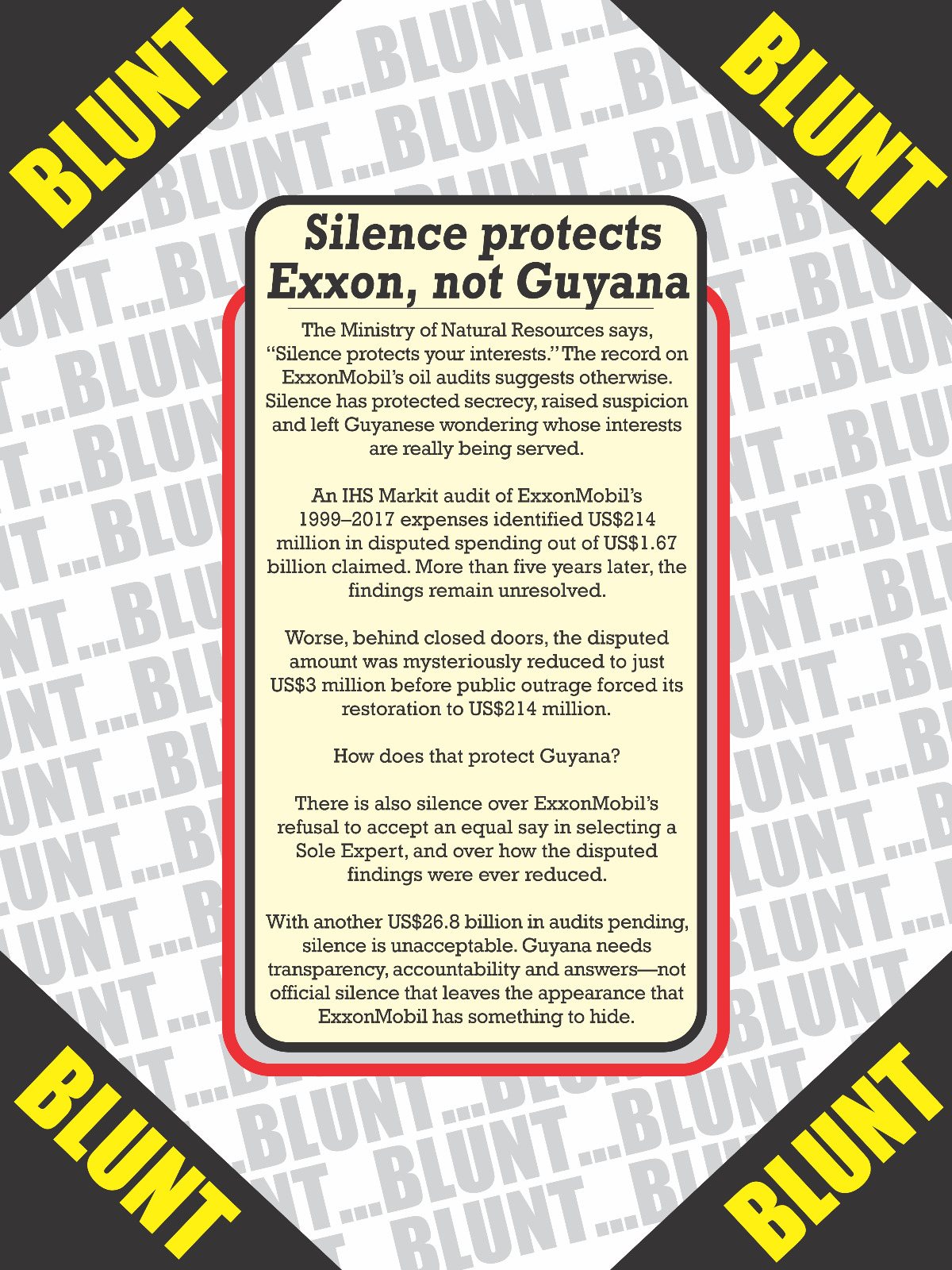
Blunt of the day
Sports
Features/Columnists

Sir. Ronald Sanders

The GHK Lall Column

Weekend Cartoon


Well, it will be in St. Kitts. Should he come to Guyana, keep him off the
HEROES HIGHWAY. Guyana does not want the man, the US Secretary of
State, Marco Rubio to have a concussion.