Latest update July 29th, 2026 2:28 AM



Latest News
- Captain, crew members charged with 72 counts of murder
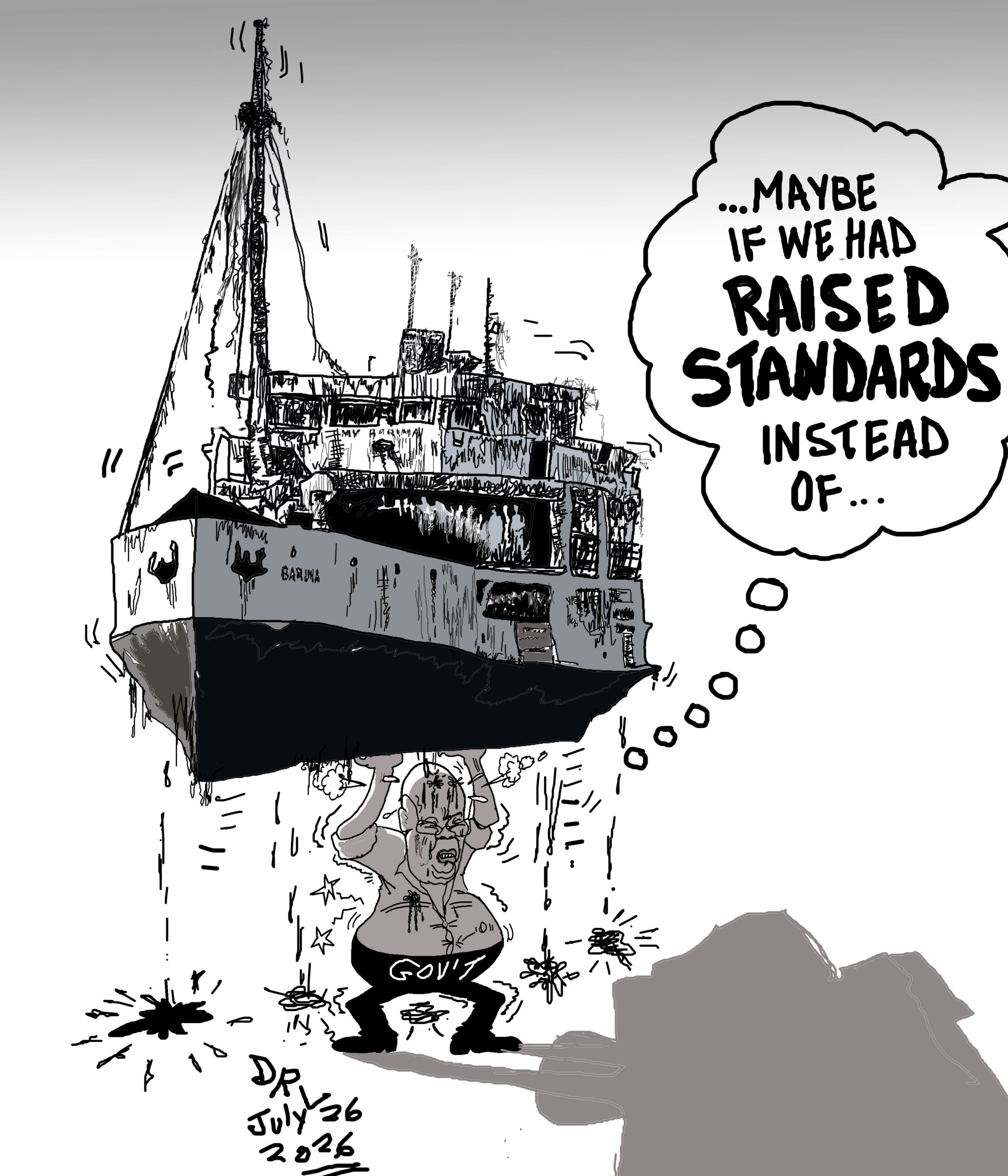
- Weeping captain: ‘we don’t deserve this’ says vessel was unfit to sail
- Mohamed’s offer to raise MV Barima, pushes Govt. to say victims’ relatives will decide
- Guyana’s predictable fiscal regime will work for you’ – Dr. Singh tells investors at COTA
- Chinese Enterprises Association donates relief supplies to CDC for families affected by MV Barima tragedy
Food prices remain high globally – World Bank
– says Latin America one of the regions hardest hit
Kaieteur News – Domestic food price inflation remains high around the world, the World Bank said in its latest food security update.
According to the bank information from the latest month between February 2023 and May 2023 for which food price inflation data are available shows high inflation in most low- and middle-income countries, with inflation higher than 5% in 61.1% of low-income countries, 79.1% of lower-middle-income countries, and 70% of upper-middle-income countries, with many experiencing double-digit inflation.
In addition, 78.9% of high-income countries are experiencing high food price inflation, the bank said, noting too that most-affected countries are in Africa, North America, Latin America, South Asia, Europe, and Central Asia. In real terms, food price inflation exceeded overall inflation in 79.8% of the 163 countries where data is available.
 The agricultural and cereal price indices closed 4% and 12% lower, respectively, while export price indices closed at the same level as two weeks ago. The decline in the cereal price index was primarily driven by a sharp decline in maize prices which dropped by 21% compared to 2 weeks ago. Wheat prices also declined by 3% while rice prices increased by 1% over the same period. On a year-on-year basis, maize and wheat prices are both about 19% lower while rice prices are 16% higher. Maize prices are 4% lower, while wheat and rice prices are 1%, and 3% higher, respectively, than in January 2021. (See “pink sheet” data for agricultural commodity and food commodity prices indices, updated monthly.)
The July 2023 edition of the Agricultural Market Information System (AMIS) Market Monitor highlights geopolitical tensions that threaten the Black Sea Grain Initiative, including the collapse of the Nova Kakhovka dam and damage to the ammonia pipeline between Russia and Ukraine. The flooding and disruption of irrigation, along with the demand to reopen the pipeline, are increasing tensions and could lead to termination of the agreement, ultimately reducing Black Sea exports and undermining Ukraine’s production incentives. On June 6, 2023, the catastrophic collapse of the Kakhovka dam in southeastern Ukraine resulted in extensive flooding, posing a threat to drinking water supplies and raising concerns for agricultural areas that rely on the reservoir for irrigation. The Kakhovka dam and reservoir are crucial for agriculture, providing water through major irrigation canals to more than 500,000 hectares of farmland. The reservoir irrigates vast croplands that produce grains, oilseeds, vegetables, and fruits. The dam’s collapse has caused significant flooding downstream, affecting more than 40,000 hectares of land and numerous towns and villages. Although the flooded agricultural area is relatively small, disconnection of the irrigation canals upstream has led to water scarcity for summer and winter crops, with implications for Ukraine’s agricultural exports.
The Organization for Economic Cooperation and Development–Food and Agriculture Organization (OECD-FAO) Agricultural Outlook 2023-2032, a 10-year assessment of agricultural commodity and fish markets at global, regional, and national levels, highlighted the threat to global food security from the surge in agricultural input prices in recent years. One of the key concerns raised in the report is global food insecurity resulting from the surge in agricultural input prices in recent years. The outlook suggests that rising fertilizer costs can lead to higher food prices. Using the Aglink-Cosimo modeling approach, the report estimates that, for every 1 percent increase in fertilizer prices, agricultural commodity prices will rise by 0.2 percent. The impact is more significant for crops that depend directly on fertilizers than for livestock products, except for poultry and pork, which heavily rely on compound feed. The outlook’s medium-term projections are based on the assumption that current policies will remain in place and that consumer preferences and production technology will evolve as expected, although uncertainties related to environmental, social, geopolitical, and economic developments could influence projections. Following Russia’s invasion of Ukraine, trade-related policies imposed by countries have surged. The global food crisis has been partially made worse by the growing number of food trade restrictions put in place by countries with a goal of increasing domestic supply and reducing prices. As of June 5, 2023, twenty countries have implemented 27 food export bans, and 10 have implemented 14 export-limiting measures.
US$30B
Meanwhile, as part of a comprehensive, global response to the food security crisis, in April 2022 the World Bank announced that it is making up to US$30 billion available over a period of 15 months, including $12 billion in new projects. The financing is to scale up short- and long-term responses along four themes to boost food and nutrition security, reduce risks, and strengthen food systems: (i) support producers and consumers, (ii) facilitate increased trade in food and trade inputs, (iii) support vulnerable households, and (iv) invest in sustainable food and nutrition security.
The Bank has achieved its target of making $30 billion commitment for food and nutrition security response. Between April to December 2022, the Bank’s food and nutrition security commitments in new lending have passed the $12 billion mark – with almost half for Africa, which is one of the hardest hit regions by the food crisis.
Share this:

Discover more from Kaieteur News
Subscribe to get the latest posts sent to your email.
Similar Articles

Blunt of the day
Sports

Features/Columnists

Sir. Ronald Sanders

The GHK Lall Column

Weekend Cartoon