Latest update August 30th, 2026 10:40 AM


Latest News
- Guyana was ‘conned’ out of billions by failure to ring-fence Exxon’s projects – Glenn Lall
- ‘Guyanese must get bigger share of new oil projects’ – Norton
- Trump: US strikes deal to take control of Venezuela’s 65B barrels of oil
- Govt. deliberately trying to destroy Linden community – Norton
- Govt. still silent 15 days after MV Barima salvage tender closes – Mahipaul
Those hands that fed us all
Kaieteur News – Perhaps, just perhaps, the greatest compliment which has been paid to the East Indian presence in the Caribbean was paid by the novelist George Lamming. Of East Indians (Indians) he had this to say, “For those Indian hands – whether in British Guiana or Trinidad – have fed all of us. They are, perhaps, our only jewels of a true native thrift and industry. They have taught us by example the value of money; for they respect money as only people with a high sense of communal responsibility can.”
But he did not end there, “And so there can be no section of citizens with any greater claim to the citadels of power in our land.” The idea of Indian claims to political power, however, has been vigorously contested.
Race relations in the pre-Independence era in Trinidad and Tobago and British Guiana were inflamed more by the fear of Indian political ascendency than by differences between the main ethnic groups. Many writers have disingenuously sought to source racial tensions to these differences which originated in the colonial encounter.
Lamming did not ignore or downgrade the significance of these differences. He said, “I could not be so foolish to think there are no differences between these two races [Africans and Indians]. They made a different journey to the Caribbean; their heritage was different; their psychological encounter with White authority had different reverberations.”
In his Foreword to Walter Rodney’s he advances a claim that Rodney did not make but which he credits Rodney with calling attention to. In addressing the labour experience that Indians shared with Africans, Lamming suggests that indentureship condemned the Indians to “a history of humiliation almost indistinguishable from the memories of African slavery.”
Others have made the error of conflating indentureship with slavery. But that is not what Lamming was suggesting. He was not equating the institution of slavery with Indian indentureship. He was highlighting only the severity of the labour experience of Indians which he viewed as almost indistinguishable from that of the memories of slavery. But he did not equate the two; he described indentureship as semi-slavery.
Indians came as indentured workers to the Caribbean. They came to work on the sugar plantations. But for Lamming this was not simply an economic activity; for Lamming agriculture was culture and farmers and fishers were cultural workers.
He emphasised this idea at the 2014 Barbadian Lecture Series. His talk was entitled “Big Grain Rice and Beyond. In that lecture he sought to restore culture to (Agri)culture.
Lamming pointed out that the original meaning of culture was tied to food and feeding. It had to do with the tending of plants and the caring of animals.”
The first and essential meaning of “culture”, according to Lamming, is therefore “the means whereby men and women feed themselves, clothe and shelter themselves, the means by which they achieve and reproduce their material existence. No food, no life; no food, no books; no food, no religion; no food; no philosophy; no food, no politics; no food, no performing arts because no one is exempt from the demands of the material life.”
For Lamming culture has its roots in agriculture and has not lost its sense of nurturing, feeding and cultivating. Thus he had a much wider understanding of culture than is presently understood in the Caribbean.
When Lamming therefore speaks to the Indian hands which fed us all, he is not simply denoting the economic contributions of Indians. He is also making reference to the wider cultural contributions of Indians to the their feeding, nurturing, cultivating and reproducing of their religion, music, dance, dress traditions and other cultural practices.
By such acclaim alone, Indian culture should enjoy greater recognition in the West Indies. It must be treated as an integral element of West Indian culture. It must neither be subsumed by the larger cultural expressions nor treated as merely as an alien sub-culture of the Region. That much is owed to Lamming who died this week.
(The views expressed in this article are those of the author and do not necessarily reflect the opinions of this newspaper.)
Share this:

Discover more from Kaieteur News
Subscribe to get the latest posts sent to your email.
Similar Articles
hits

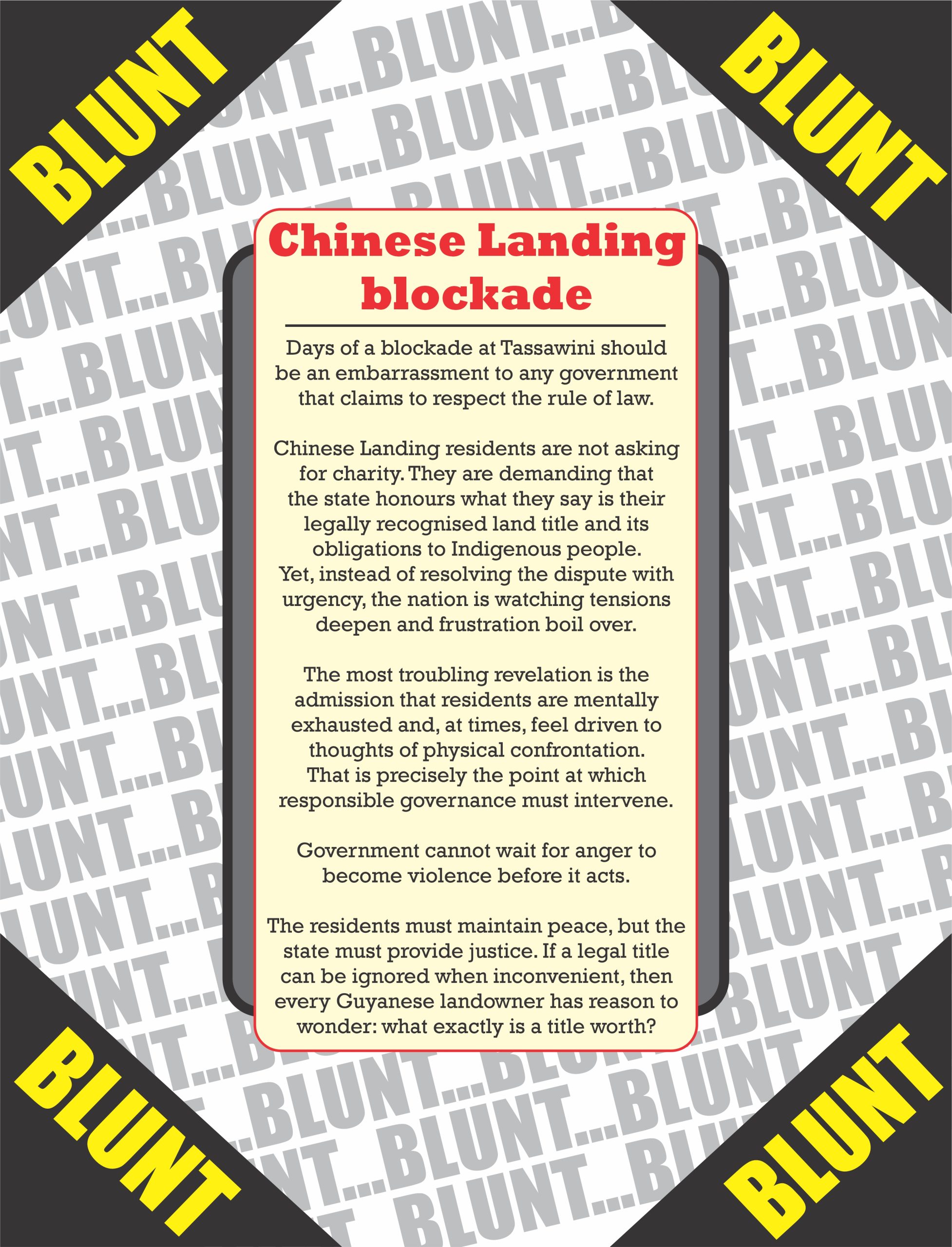
Blunt of the day
Sports

Features/Columnists

Sir. Ronald Sanders

The GHK Lall Column

Weekend Cartoon


