Latest update July 29th, 2026 12:30 AM



Latest News
- Captain, crew members charged with 72 counts of murder
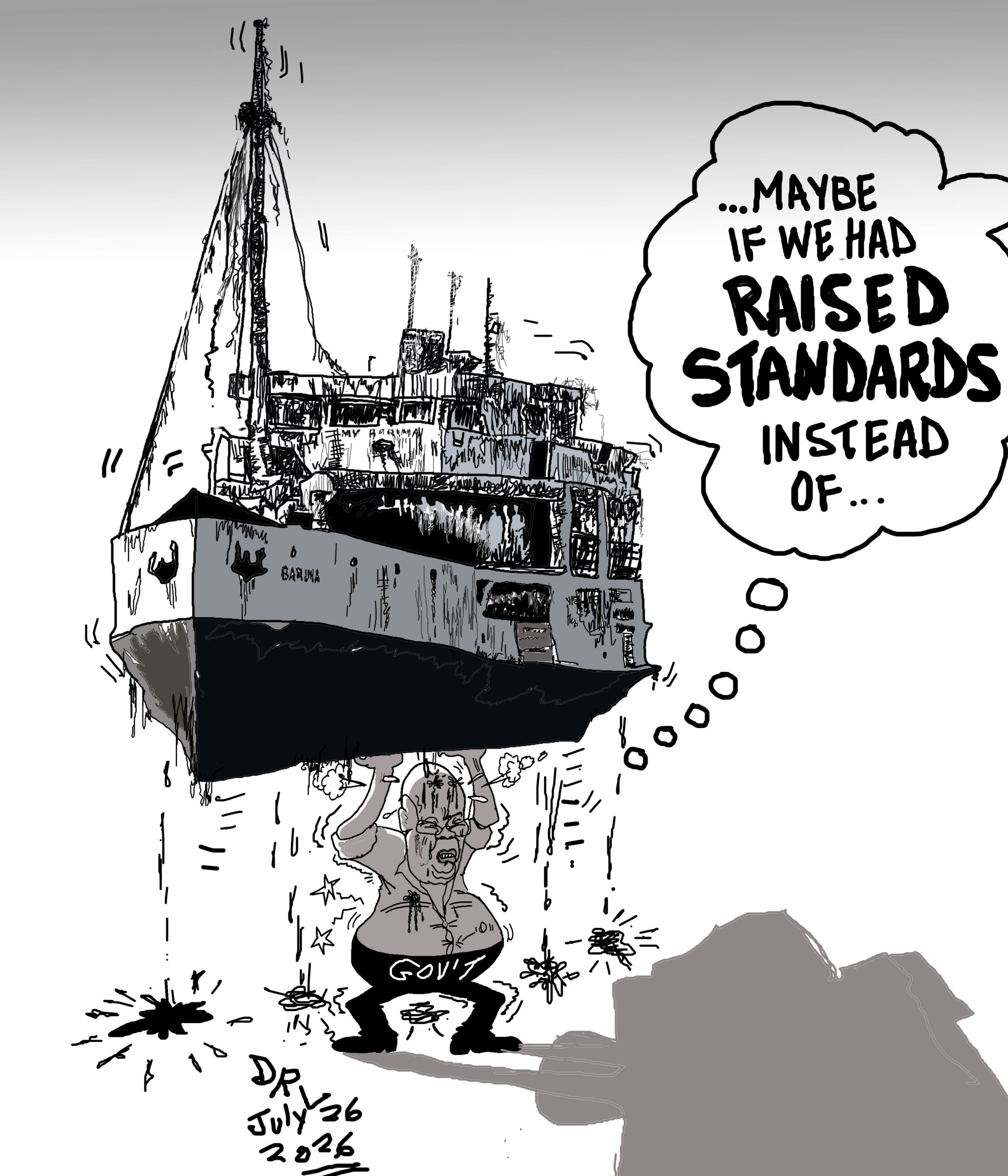
- Weeping captain: ‘we don’t deserve this’ says vessel was unfit to sail
- Mohamed’s offer to raise MV Barima, pushes Govt. to say victims’ relatives will decide
- Guyana’s predictable fiscal regime will work for you’ – Dr. Singh tells investors at COTA
- Chinese Enterprises Association donates relief supplies to CDC for families affected by MV Barima tragedy
Govt.’s ‘no’ to a Labour Ministry is a further rejection of the working class – Rohee

Former Minister of Home Affairs, Clement Rohee
Former Minister of Home Affairs, Clement Rohee thinks that it is imperative, from a class perspective, to examine the APNU+ AFC Government’s rejection of an Opposition Motion that resolved to secure the re-establish of the Ministry of Labour.
He said that such an examination will find that the government is showing contempt for the working class.
Rohee recalled that in the 1950’s and 1960’s, trade unions traditionally constituted the base of political parties in the English-speaking Caribbean countries and Guyana was no different.
He said that the PNC’s base came mainly from the urban black working class. Its trade union arm was the Guyana Labour Union (GLU).
Rohee went into deep history about economic, social and political crises that came to head in the late 1970’s to mid 1980’s. He said that the trade union movement came under tremendous pressure from the working people in general and the working class in particular.
He went deeper into speaking about a “strong black bureaucratic and comprador-bourgeoisie (that) emerged became entrenched and took full control of the state sector.”
Rohee said that the awarding and splitting of government contracts as well as the establishment of the so-called Knowledge Sharing Institutes (KSIs) and consumer cooperatives became infested with “corruption of unspeakable proportions with PNC middlemen using every opportunity to make a dollar.”
Rohee said that having taken full control of the state sector, the black bureaucratic bourgeoisie then moved to capture the leadership of the PNC.
“Having gained control of both state and party apparatus and armed with an anti-working class ideology they launched persistent attacks on the workers and the unions of their choice. Burnham and the PNC’s pro-working class orientation soon became a thing of the past; the party was transformed into one representing the black bourgeoisie and petit bourgeoisie.”
Rohee chronicled that battles between the black bourgeoisie, the working people and their trade unions – demanding the withdrawal of anti-working class policies – became the order of the day.
The former Minister said that the militancy of a section of the trade movement eventually led to a breakaway of five unions from the GTUC and the emergence of the Federation of Independent Trade Unions (FITUG). “And the TUC under Joseph Pollydore began flexing its muscles in the face of mounting pressures on the working people.”
Rohee said that the industrial and political struggle had merged once again as it did before in the 1940’s and 50’s. A revolutionary situation had emerged signaling the imminent downfall of the PNC.”
Rohee said that the regime only fell in 1992 and the PPP came to power to “rescue the working class”.
The former Minister said that the PPP/C administration gave added prominence to the trade union movement. The Ministry of Labour’s role was enhanced and four pieces of progressive labour-related Bills were passed in the National Assembly during the Cheddi Jagan administration. These are: The Termination of Employment and Severance Pay Bill, the Prevention of Discrimination Bill, the Occupational Safety and Health Bill, the Trade Union Recognition Bill and a policy establishing a National Minimum Wage.
Further, Rohee said that during Dr Jagan’s tenure, wages and salaries were increased and budget allocations were readjusted increasing allocations for health and education.
However, Rohee recalled that following Dr. Jagan’s death, relations between the government and the Public Service Union went into a tailspin. He said that a public servants strike in 1999 lasting for 57 days resulted in a tribunal being established and the awarding of a 58 per cent increase in salaries in two tranches, over a 16-month period for public servants.
Rohee admitted that throughout its 23 years in office, there has been a see-sawing in industrial climate between the PPP/C government and the trade unions.
He said nevertheless “the relationship between workers representatives and government remained stable, balanced and mutually respectful. And with the appointment of every cabinet following five successive elections, the PPP/C ensured that at the helm of the Ministry of Labour there was always a senior and experienced member of Cabinet”.
Rohee continued, “It is from this historic perspective that the decision by the Granger administration to vote down a call for the re-establishment of the Ministry of Labour must be seen.”
He said that effectively, “we have returned to the Burnham/Hoyte era where a Black bureaucratic and petit bourgeoisie is back in power, but the more dangerous aspect is, it is now in bed with the hierarchy of the military and police. It is this civilian/military alliance that abhors any association or engagement with trade unions. Their objective is to shun the unions and weaken labour’s bargaining power through a vibrant Ministry of Labour.”
Rohee used the closure of sugar estates as an example to his argument.
“To them, to sit at the negotiating table with workers’ representatives is humiliating and nothing more than nuisance value. In essence, it closely resembles a pro-militaristic way of conducting government business.”
He continued, “If we are to examine this approach in terms of form and content, then it is apposite to recall how former American President Barack Obama put it in a recent address to a gathering in South Africa commemorating the birth centenary of Nelson Mandela;
‘Strongman politics are ascendant, suddenly, whereby elections and some pretense of democracy is maintained – the form of it – but those in power seek to undermine every institution or norm that gives democracy meaning.”
Rohee was adamant that the APNU+AFC’s vote against the Opposition motion calling for the re-establishment of the Ministry of Labour has nothing to do with “political mischief.” He said that “on the contrary, what it did was to signal, in no uncertain terms, a return to ‘strongman politics’ in Guyana.”
Share this:

Discover more from Kaieteur News
Subscribe to get the latest posts sent to your email.
Similar Articles

Blunt of the day
Sports
Features/Columnists

Sir. Ronald Sanders

The GHK Lall Column

Weekend Cartoon