Latest update July 29th, 2026 2:28 AM



Latest News
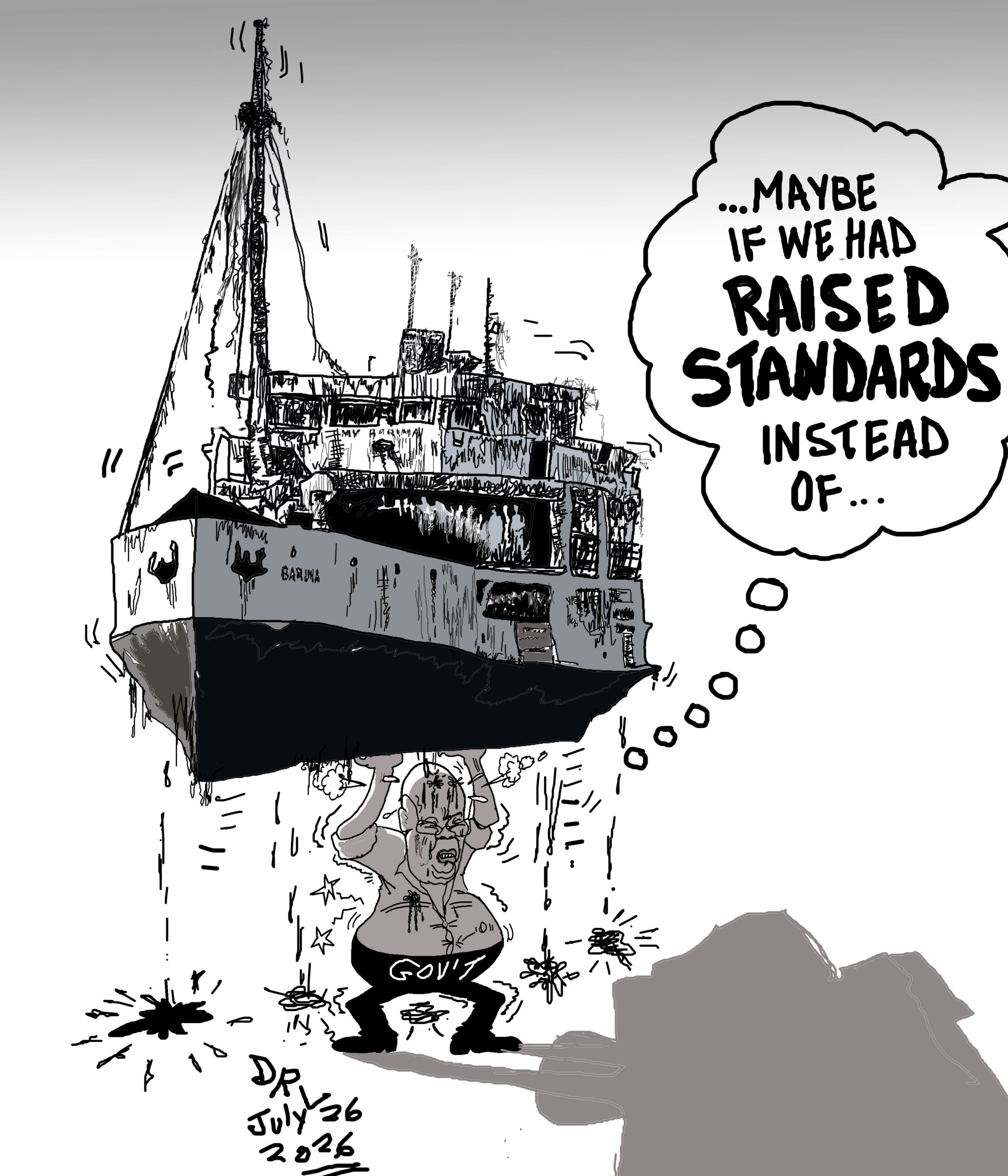
- Captain, crew members charged with 72 counts of murder
- Weeping captain: ‘we don’t deserve this’ says vessel was unfit to sail
- Mohamed’s offer to raise MV Barima, pushes Govt. to say victims’ relatives will decide
- Guyana’s predictable fiscal regime will work for you’ – Dr. Singh tells investors at COTA
- Chinese Enterprises Association donates relief supplies to CDC for families affected by MV Barima tragedy
Kidney failure patient shares his journey to a better life
By Sharmain Grainger

A smiling Kiran Haridyal continues to do well almost three years after kidney transplant surgery.
There are things that can happen during the course of life that can literally change our very existence. Some can be for the better and then there are those we simply wish we never had to encounter.
Among the latter is becoming so gravely ill that you are dependent on another human being to save your life. By being dependent, I don’t merely mean on the skills of a medical practitioner, but rather, the only way to survive is if someone is willing to donate one of their active organs to you.
There are some among us who understand such an existence all too well. Among them is 29-year-old Kiran Haridyal, who recently shared his journey to a changed way of life with me.
It all started back in 2014 when he worked as a supervisor at the Uitvlugt, West Coast Demerara Guyana Sugar Corporation Estate. He recalled having constant and severe headaches which one day became too much to bear.
“One day I was in the backdam and I just couldn’t take it anymore, so when I came out I went straight to the [Estate’s] health centre,” Haridyal recalled. The first observation of the health worker who attended to Haridyal was that his pressure was extremely high. In fact, his pressure remained significantly high even after the administration of medication that should have addressed this problem.
Alarmed by this development, a decision was made to rush Haridyal to the West Demerara Regional Hospital, where he was further attended to. His pressure soon after started to normalise and he was sent away. But the headaches continued.
Of course this was a bother to the young man, whose income was earned by going into the fields, sometimes under the blazing sun. The headaches were essentially preventing him from being as productive as he wanted to be.
Moreover, Haridyal decided he needed find out what the root cause of his problem was, so that it could be properly addressed. This saw him heading to the city to a privately-operated hospital, where he underwent some tests. It was following those tests that he was furnished with the daunting news that he was suffering from kidney failure.
Essentially, kidney failure is a condition whereby the kidneys no longer work. When the kidneys don’t work it means the body has no means of regulating the blood pressure, electrolyte balance, and catering to the production of red blood cells. In other words, kidney failure is a death sentence.
But this was all new to Haridyal. “I had never heard about kidney failure before; I never had a family member with kidney problems…I didn’t know anything about it,” Haridyal recounted.
Though bewildered, he wanted to avail his anatomy to medical practitioners to do whatever was necessary to fix his kidney failure problem.
Haridyal vividly remembers being hospitalised for about a month at the private hospital. However, the only recommendation after that period of hospitalisation was that he would be required to undergo dialysis, not for a week or a month, but for the rest of his days, which would in fact be limited because of his condition.
Of course he started to find out more about this affliction that the medical practitioners were assigning to him. For a period he might have flirted with the idea that his diagnosis was probably incorrect, because after all, he didn’t have the swelling and most other symptoms associated with patients who were suffering with kidney failure and required dialysis.
“I took self discharge, but I continued to use the same medication they gave me, and I went about trying to get back to my normal life…I even went back to work,” Haridyal recounted.
But there were still some concerns in the back of his mind about his health. As such, Haridyal decided to visit the Georgetown Public Hospital Corporation [GPHC] to seek some further answers. There he met a female Cuban doctor, who was able to explain a great deal about kidney failure to him.
Since the condition was in the early stage, the doctor, according to Haridyal, attempted to undertake a technique which entailed him being administered post-kidney transplant medication in the hope that his condition would revert to normalcy. There was a glimmer of hope as the medication seemed to indeed normalise the functions of kidneys. However, there were days that his condition simply fluctuated.
“I kept using the medication for a couple of months, some days things were back to normal and some days it wasn’t, until eventually I just started to get sicker and sicker,” Haridyal related.
Among the noticeable symptoms that he started to develop were: swelling feet, the inability to pass urine, loss of appetite, sleepless nights, and he was constantly nauseated. By the end of 2014, Haridyal had no choice but to start dialysis at the GPHC. But even with dialysis, he disclosed, “I could feel in my body that I was becoming increasingly weak.”
At this stage, Haridyal remembered the doctor informing him that his only other option would be to undergo a kidney transplant operation. But in order to do this, he would need someone who was willing to donate one of their two working kidneys to him. At the time, he recalled the only institution performing kidney transplant surgeries was a privately-operated hospital.
Desperate to hang on to life, Haridyal enquired about the procedure and learnt that the cost was astronomical. Even with the support of his family members, he couldn’t meet the cost of $7 million. He however wasn’t prepared to give up and die just yet.
“I started to raise funds…I got from my family members, went to companies and whoever would give, but I still couldn’t meet the $7 million,” Haridyal recounted.
However, just when he was beginning to think that it was a hopeless pursuit, he got word that the GPHC had sent a doctor abroad to be trained as a Kidney Transplant Surgeon who was likely to return shortly with skills on par with that offered at the private hospital. He learnt too that the surgery would be at no cost to him.
“I decided I would continue my dialysis and wait until this doctor returned,” Haridyal disclosed.
The doctor was Dr. Kishore Persaud, who returned with a wealth of kidney failure knowledge -enough to offer pre-transplant, transplant and post-transplant services.
Dr. Persaud upon his return conducted a number of tests on Haridyal and also saw that a transplant was his only chance of an extended and improved quality of life. And since Dr. Persaud had informed him that a family member would be the most suitable donor, Haridyal was soon bringing family member after family member to have their blood type tested to determine their suitability.
As if his condition was not daunting enough, Haridyal recalled his mother, father and brother undergoing tests which revealed that none of them were suitable candidates to donate an organ to him. Haridyal said this was in light of the fact that, “I am B+ (blood group), my brother is A+, my mother is AB+…my father is O and would have been suitable, but he was a diabetic, so he couldn’t give me a kidney anyway”.
His hope was restored when the ex-wife of one of his uncle’s opted to be tested too and was found to have the same blood type as Haridyal.
The next step was to have a cross-matching test done to determine the compatibility of the donor and recipient blood. This saw Haridyal returning to very private institution which was already doing transplant surgeries to have this service done. Of course this was at a cost of $1.4 million, but he had already raised enough money through his earlier fundraisers to cover this cost.
“They [hospital officials] immediately told me that there was a 50-50 chance of a match because the donor was not a blood relative, and if it didn’t match I can’t do the surgery and I can’t get a refund…We hoped and prayed and we did the blood test and when it came back it was a perfect match,” a beaming Haridyal revealed.
Tuesday, September 15, 2015, is a day that Haridyal remembers as easily as his own name, since it was the date allotted to him for surgery. He was one of two patients slated for kidney transplant surgeries on that date. In fact, the two would have been historic procedures for the hospital, since they were the first two to be conducted by a local kidney surgeon.
Although Haridyal’s major life-saving procedure was scheduled to be the second of the two, for some reason his was done first on the planned date. He would later learn that the other patient had become too sick and passed away even before he was operated on.
Even as he expressed gratitude that he was able to survive and undergo a successful operation, Haridyal revealed, “life after the transplant is 100 percent better than when I was on dialysis. I could eat as normal…I could go about doing things as normal.”
Although he still relies on several tablets and regular medical check-ups to keep his system working well and has been urged to be cautious around sick people, and even avoid too much sunlight, Haridyal sees this as a small price to pay for an improved quality of life.
Almost three years later, with a profession that keeps him away from direct sunlight, he continues to do well, and is willing to tell any renal failure patient that “it’s a way better life after transplant…”
In fact, falling prey to kidney failure has made Haridyal so health conscious that he has employed lifestyle changes to ensure that he could ward off, as far as possible, just about any chronic disease life can present.
Share this:

Discover more from Kaieteur News
Subscribe to get the latest posts sent to your email.
Similar Articles

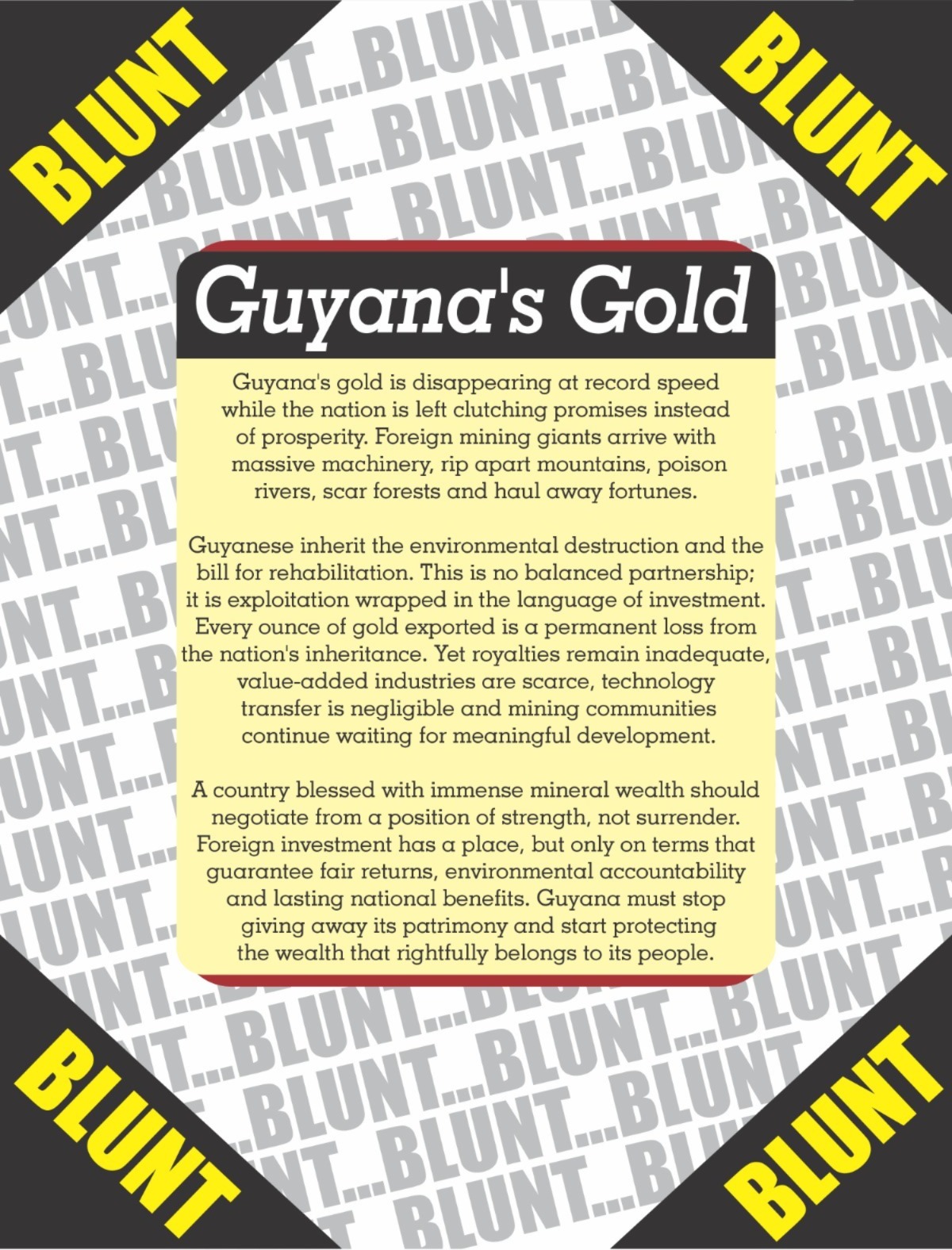
Blunt of the day
Sports
Features/Columnists

Sir. Ronald Sanders

The GHK Lall Column

Weekend Cartoon