Latest update July 28th, 2026 12:30 AM



Latest News
- Protest erupts in Parliament as opposition demands Edghill, Indar resign over MV Barima tragedy
- Govt. floats leaving MV Barima on seabed as memorial site
- Bodies of five victims of MV Barima tragedy still to be identified- Health Ministry
- ‘Driven Out by Despair’: Thousands of Cubans find refuge in Guyana
- $800,000 cash, jewelry missing as Angoy’s Avenue home robbed, set on fire
Guyanese now buying one tennis roll on credit in oil rich nation – vendors
By Khadidja Ba
(Kaieteur News) – In a nation currently hailed as home to one of the world’s fastest-growing economies, the reality on the ground tells a devastatingly different story. While billions of U.S. dollars from offshore oil operations and massive gold reserves pour past the country’s shores, ordinary citizens are finding themselves trapped in a cost-of-living crisis.
The economic strain has reached such a breaking point that Guyanese are now forced to ask for single tennis rolls, butter flaps and small pastries on credit just to survive the week.
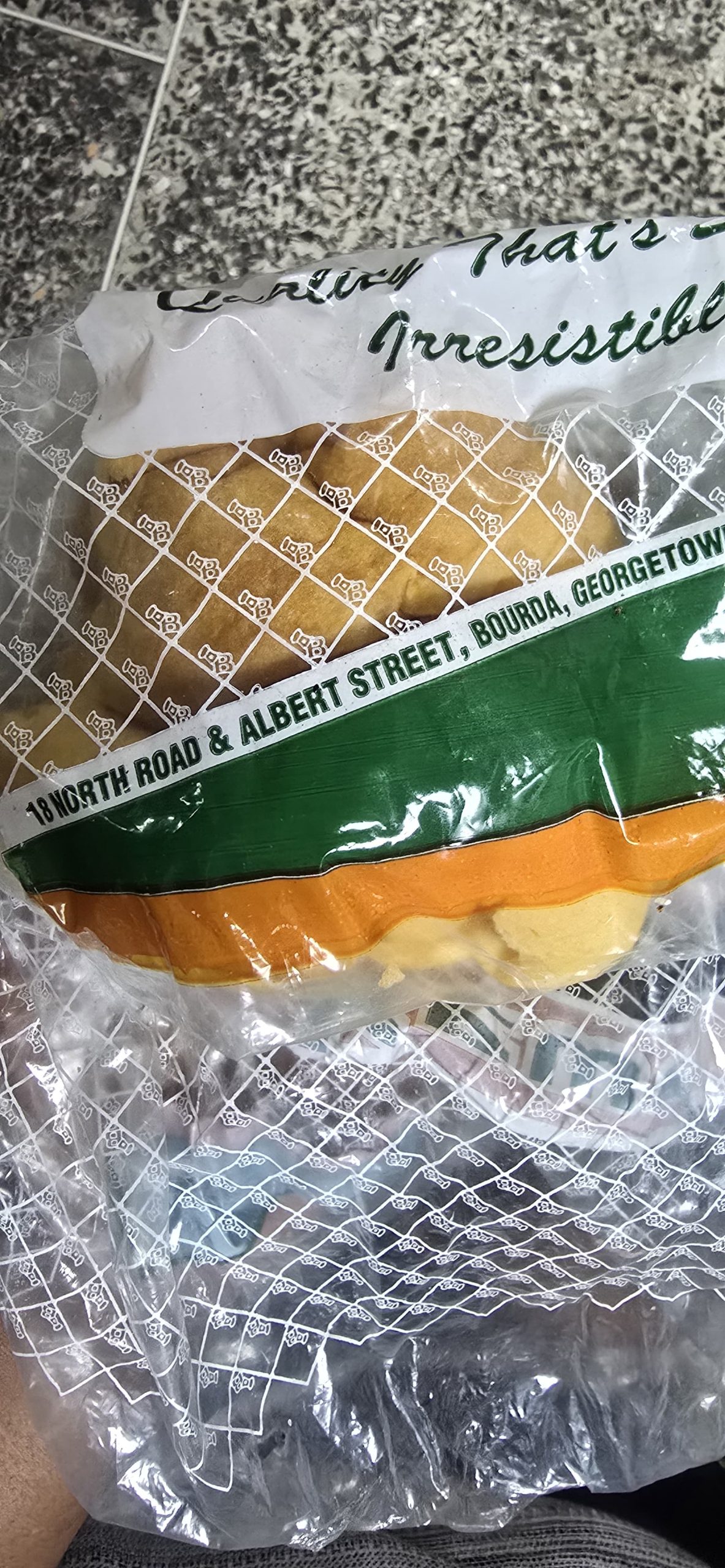
Vendors sell butterflaps for $100 each to help persons who cannot afford to buy a pack.
Recent financial disclosures indicate that Guyana’s Natural Resource Fund (NRF) amassed over US$3.25 billion by the end of 2025, with projections estimating a staggering US$2.79 billion in oil revenues for 2026 alone. Total national budget spending has soared to an unprecedented G$1.558 trillion (US$7.5 billion). Concurrently, foreign multinationals, predominantly Canadian mining entities, continue to extract tens of thousands of ounces of gold from the country’s interior. Yet, as global oil price volatility and regional supply constraints push local pump prices up by more than 12% at state-owned stations in recent weeks, the trickle-down effect has manifested not as wealth, but as crushing inflation.
Combined with a predatory, unregulated rental market where a basic one-bedroom apartment in Georgetown can cost between G$130,000 to G$250,000 a month, far exceeding the average public servant’s salary, working-class Guyanese are watching their disposable income and savings completely vanish.
The Small Shopkeepers Bearing the Burden
For the mom-and-pop shops who anchor Guyana’s working-class communities, the daily transactions at their counters serve as an unofficial, heartbreaking economic barometer.
One vendor located in ‘B’ Field Sophia, who asked to remain anonymous told Kaieteur News that there has been an alarming increase in requests for packaged tennis rolls and butterflaps, which usually come 4 or 6 in a pack to be sold individually. She sells a single tennis roll for G$40 and a butterflap for G$100. However, what she found most striking was that individuals now regularly request these basic items on credit, promising to pay on the weekends. “But I don’t trust on the weekend,” the vendor explained. “Weekend is for balancing up… yuh know how since people get pay weekly so they would come balance up then.”
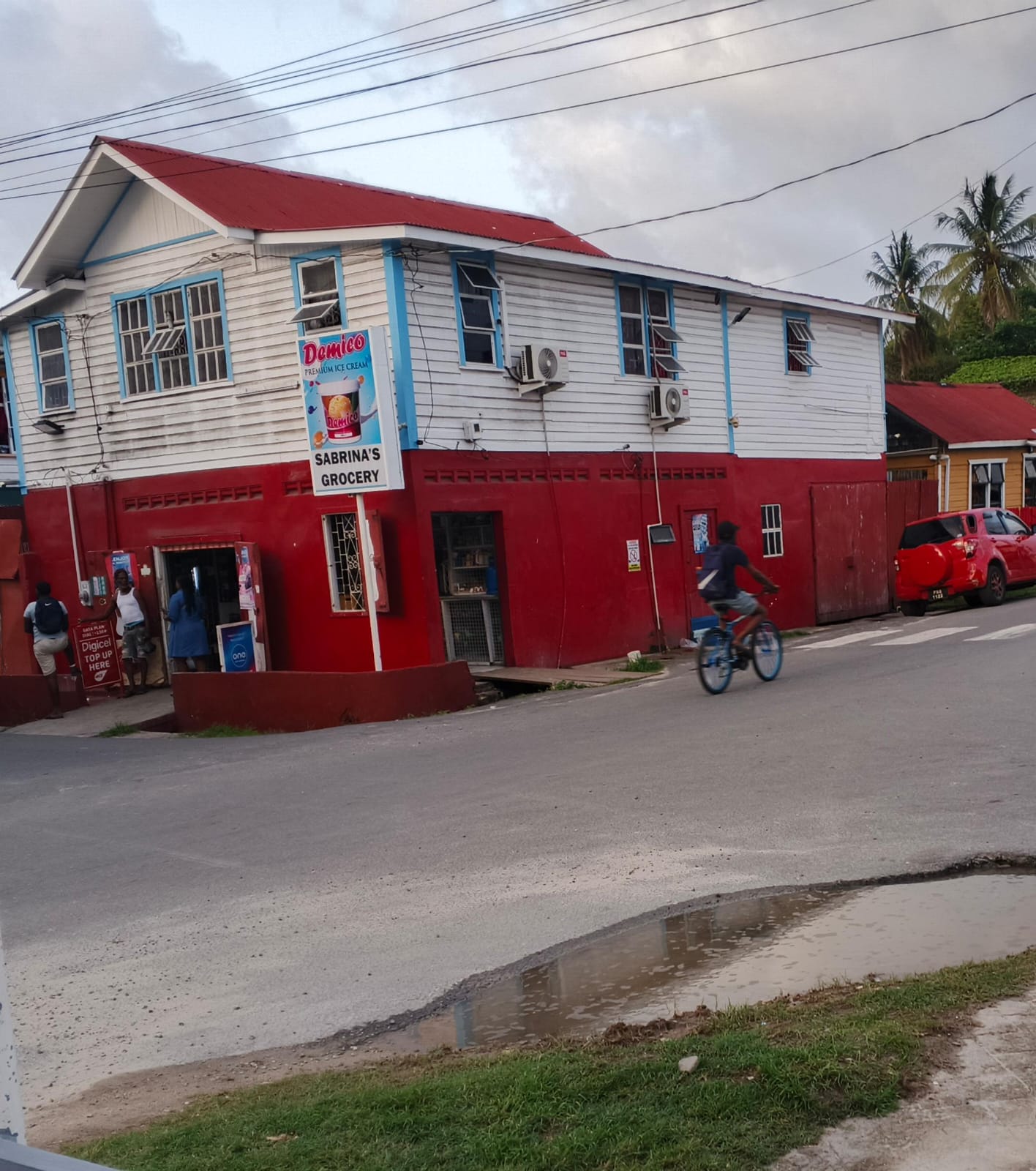
A mom-and-pop shop in Georgetown.
She remembered this level of desperation happening before, many years ago during deep economic depressions, but noted that now, people simply lack the financial means to afford anything extra.
“Greens raise, bus price raise, so food is nuff money to some people. One pound of ocrho is $300 in the market… so when you buy it, you gotta buy meat to stretch it. When you buy that, you gotta pay to go to market and so, and the bus man dem raising they price because remember price raise,” she lamented.
“I sell the butterflap each as $100 because it comes six in the pack and I usually sell it for $300, but usually the kids would come out with $100 fuh something to eat and they transp [transportation] money. Sometimes duhz all the money they have to eat, so Ize help them yuh know.”
Another vendor in Better Hope on the East Coast, who requested anonymity, shared a similar perspective. Having grown up in the rural countryside, she was familiar with structural poverty, but expressed shock at seeing it grip suburban communities so tightly. “I understand things tight, so however I could help out yuh know,” she told this publication. “Mostly is chirren does come fuh tennis roll, but sometimes the big people does come and Ize sell them too… me fadda always tell me doan fuss fuh give people food.” She confirmed, however, that while she accommodates tight budgets, she tries to manage cash upfront to keep her own head above water.
Stories of Survival Across Demerara
The economic desperation is not isolated to Sophia and Better Hope. Four other vendors across Georgetown spoke to Kaieteur News, painting a grim tapestry of survival in the era of “oil wealth.”
The Stabroek Market Pastry Seller
At the bustling Stabroek Market square in downtown Georgetown, “Uncle Michael”, who has operated a small glass pastry cart for twenty years, noted that his customer base is shifting toward extreme austerity.
“People used to buy three and four pine tarts one time,” Michael said. “Now, people in wukking clothes coming and buying one ‘dry dan’ with butter, one pine tart and them ting. They look you straight in yuh eye and ask if I can mark it down in a book till Friday. I have a book filled with G$40 and G$80 wuh owe. Ize doan wan say no. How can we be an oil giant when we cannot buy food without trussing?”
The Vreed-en-Hoop Corner Shop
Across the Demerara River in Vreed-en-Hoop, West Coast Demerara, Auntie Sharon runs a small grocery and roadside snackette. She connects the sudden drop in food purchases directly to the soaring cost of shelter and transportation, and expressed deep worry for the large families struggling under her nose.
“Rent on the West Coast used to be cheap, but now landlords are demanding ‘oil money’ prices from local people,” Sharon explained. “People paying G$80,000 for a bottom-house that used to rent for G$30,000. When they finish paying landlords and pay the increased minibus fares because gas went up at the pump, they are left with nothing.”
Sharon added heavily that she “feels it for them parents with nuff chirren because yeah the schools give food but wuh happen to after? When they come home from school in the afternoon, they stomach empty and the parents don’t have it. A mother came in here yesterday morning asking for two loose tennis rolls on credit fuh give her children and she come pay me d night after she get pay. I couldn’t tell her no. Why nobody nah gah money?”
The Mon Repos Market Stallholder
Further up the East Coast at Mon Repos, Devika, a vendor who sells local provisions and homemade bread, stated that the escalation of fuel prices in the past few weeks has broken the backs of regular shoppers.
Devika noted “I have to pass on whatever cost increase for me in stocks, even if it’s just a hundred or two hundred dollars. But to a family living on the edge, a hundred dollars is a prablem. I have regular customers, people wuh does come hay long, who now walk past my stall because they owe me from last week but meen too fussy over duh.”
The Linden Bus Park Snackette
Near the Linden bus park in Georgetown, Camille runs a small stall. She points out that the economic pressure has completely shifted consumer behavior.
“Nobody is buying a whole box of food anymore,” Camille observed. “Everything is half food. ‘Give me some butter in this roll,’ I neva had to think of price fuh butter by the spoon, or people I know wuh does eat a whole food now coming to ask fuh half cah duhz wuh they got cah remember they gotta catch bus and so?’ The math just isn’t adding up, them seh Guyana gah money but whey it deh?”
The heartbreaking narratives of these six vendors stand in striking contrast to the glowing economic data regularly published by international financial institutions.
While the Government of Guyana maintains that it is utilizing the multi-billion-dollar NRF withdrawals to fund long-term infrastructural transformation, such as new highways, bridges, and hospitals, the immediate reality for the working class remains a crisis of liquidity and purchasing power. With no statutory rent controls being enforced to protect citizens from skyrocketing housing costs, and external global conflicts driving up the baseline cost of imported commodities and domestic fuel, the “oil boom” remains a distant, abstract concept for those standing in line at mom-and-pop shops, hoping to secure their daily bread on credit.
Share this:

Discover more from Kaieteur News
Subscribe to get the latest posts sent to your email.
Similar Articles
6 thoughts on “Guyanese now buying one tennis roll on credit in oil rich nation – vendors”

Blunt of the day

Sports

Features/Columnists

Sir. Ronald Sanders

The GHK Lall Column

Weekend Cartoon



This is unbelievable. Is the writer insinuating more cash grants. Cash grants is the recipe for laziness.
Many employers complain of shortage of workers yet many complain of being unemployed. Something surely does not add up.
“ From the sweat of your brown you must eat bread”.
You can create opportunities for people but you cannot force them to grasp it.
How come no one is complaining about Bars, Night Clubs, Adult entertainment and Brand Name Garment and Shoes? People are been payed on Friday and they go to buy Tennis -Rolls on Credit Saturday Morning DRUNK!
Wow, Unbelievable in my Homeland! Peace to All Guyanese, Life 💪
During my “poor days” growing up, we could afford a BIG TENNIS ROLL/
BUTTER FLAP for one big gil.
Prior to that, a slice of cake for one cent- and glass of mauby- another cent.
Those were in British Guiana during the British Rule.
Independence though welcomed, brought us isolation, lack of resources in
every form from International community. Countries shunned Guyana under
Burnham, Cheddi. Cuba helped, So did China. We struggled as Guyanese
were resourceful then. Now, they depend on meager hand-outs by Government. A bunch of bora not a big gil anymore, like the 2 handfuls white belly shrimp that was also a big gil. Oil changed everything. The world is
running to Guyana. From every corner of the globe. And getting richer, whilst
Guyanese cannot afford a TENNIS ROLL or BUTTER FLAP with cash. Even
the children. I wonder what the Government is feeding our children in school?
Fresh coconut use to sell for $2.00 (GY) in the year 2000. Then it start jumping like it is in the Olympics. In 2020,it was GY $200.
In 2024 it was 300
In 2026 it is 400.
Can someone explain why.
And rents are immoral now! I’ve been asked to leave the house I rented for years so that the landlord can rent to the government to house cubans and indian doctors…
Life is getting harder in Giyana with this oil economy. Wealth is built AROUND guyanese not FOR Guyanese.