Latest update May 24th, 2026 12:45 AM


Latest News
- Independence cannot exist with Guyanese in economic bondage – Ram
- CNOOC with 12.5% stake in Stabroek Block raked in US$2.5B in 2025 while Guyana with 50% earned US$2.47B – financials
- Government launches ‘Eldorado Reimagined’ gold and jewelry brand
- Senegal to resize oil blocks to meet international standards
- President Ali threatens GuySuCo again for missing several targets
Guyana’s Opening Rounds at the ICJ: Brilliant and Thoughtful
Dear Editor,
The case concerning the validity of the 1899 Arbitral Award between Guyana and Venezuela is one of the most consequential territorial disputes presently before the International Court of Justice. At the center of Venezuela’s historical argument lies the famous “Mallet-Prevost Memorandum” — often called the “Severo Mallet-Prevost Letter.” Guyana’s legal team, led by distinguished international counsel including British jurists, systematically attacked the credibility, evidentiary value, and legal implications of that document before the Court. The British jurist eviscerated the foundational legs of the Venezuelan case. He was on target, hurling deadly Yorkers after Yorkers in the likes of the Jamaican duo, Patrick Paterson and Michael Holding.
Background: The 1899 Arbitral Award
The dispute concerns the Essequibo region, approximately two-thirds of Guyana’s national territory. In 1899, an international arbitral tribunal sitting in Paris issued an award delineating the boundary between Venezuela and then-United Kingdom Guiana. The tribunal consisted of:
- Two British arbitrators,
- Two American arbitrators representing Venezuela,
- A Russian jurist, Friedrich Martens, serving as President.
The Award overwhelmingly favoured British Guiana, though Venezuela did receive some territory near the Orinoco River. For over 60 years, Venezuela accepted the Award as legally binding and official maps reflected the boundary. Guyana’s lawyers repeatedly emphasize this point before the ICJ.
Who Was Severo Mallet-Prevost?
Severo Mallet-Prevost was one of the junior American lawyers representing Venezuela during the Paris arbitration. In 1949 — fifty years after the Award and after his death — a memorandum written by him was published posthumously. In it, he alleged that: The tribunal’s decision was the product of political compromise, that the Russian arbitrator Friedrich Martens pressured the American arbitrators, that there may have been improper behind-the-scenes dealings, and more importantly, that the Award was not purely judicial.
This memorandum became the intellectual foundation of Venezuela’s later claim that the 1899 Award was fraudulent or legally null and void. Venezuela relied heavily upon this memorandum when it revived its territorial claim in the 1960s, leading eventually to the Geneva Agreement of 1960.
The Core Argument Advanced by Guyana’s British Counsel:
Guyana’s legal team before the ICJ essentially “destroyed” the evidentiary weight of the Mallet-Prevost Memorandum using several major arguments: The Memorandum Is Hearsay and Not Contemporaneous. This is perhaps the strongest legal point. Further, Guyana’s counsel argued: that the memorandum was written decades after the arbitration; that it was not sworn testimony; that it was not produced during the arbitration; that it contains recollections rather than documentary proof, and that it was published only after Mallet-Prevost’s death in keeping with his wish.
International courts generally treat such evidence cautiously. Guyana’s lawyers emphasized that no contemporaneous diplomatic records, tribunal minutes, or correspondence corroborate the alleged conspiracy. What is the Legal Significance? Under international law, overturning a century-old arbitral award requires extremely compelling proof of fraud or corruption. Mere suspicions or retrospective allegations are insufficient to nullify a previous judgment.
Guyana’s lawyers also zeroed in on the Conduct of Venezuela After 1899, saying that such conduct Contradicts Its Current Claim. They argued that Venezuela’s own conduct after the Award is fatal to its present position. For decades Venezuela officially accepted the Award, participated in boundary commissions, published maps recognizing the boundary, and conducted diplomatic relations with Guyana consistent with the Award. These arguments invoke the legal doctrines of: Acquiescence, Estoppel, Recognition, and Stability of boundaries. These doctrines are extremely powerful in international law because courts prioritize certainty and territorial stability.
Guyana’s Key Point
If Venezuela truly believed the Award was fraudulent in 1899, why did it behave for decades as though it were valid? That question was pressed repeatedly before the ICJ. Was there any Evidence of Actual Fraud and did such evidence exists? Guyana’s British counsel carefully distinguished: Political compromise, from Legal fraud.
Even if arbitrators engaged in compromise — common in diplomacy and arbitration at the time — that does not automatically invalidate an award. Guyana argues Venezuela has failed to prove bribery, forged evidence, coercion, procedural illegality, and corruption sufficient to nullify the Award. This distinction is central to the Case: International tribunals historically tolerate a degree of diplomatic bargaining within arbitral processes, especially in the 19th century. Contemporary Reaction of Venezuela’s Own Lawyers Contradicts Mallet-Prevost. And one devastating point repeatedly highlighted is that immediately after the 1899 Award:
Venezuela’s own legal representatives publicly celebrated the outcome as a major victory.
Historical accounts show Venezuela retained control over the strategically vital Orinoco access area. Guyana’s counsel argued that if the tribunal had truly committed blatant fraud, why did Venezuela’s delegation praise the result at the time? This inconsistency severely weakens Venezuela’s reliance on the Memorandum. The broader jurisprudential argument requires “finality” as a condition for continuous International Stability. In this regard, Guyana’s counsel warned the ICJ that reopening century-old, settled borders based on posthumous allegations would destabilize the international system. Why? Because International law strongly protects finality of arbitral awards, territorial integrity, and stability of borders.
This principle is tied to the doctrine of uti possidetis juris — maintaining inherited colonial boundaries to prevent endless territorial conflict. The ICJ is very sensitive to this issue because many modern States depend on colonial-era boundary settlements.
But why is the Mallet-Prevost Memorandum so important to Venezuela and its claim? The answer is straightforward. It is because Venezuela’s modern legal position depends heavily upon portraying the 1899 Award as: tainted, politically manipulated, and fundamentally unjust. With out the memorandum, Venezuela’s legal case weakens considerably because the Award was internationally recognized, implemented for decades, and accepted by States’ practice. The Letter or Memorandum therefore, functions as Venezuela’s “foundational text” for reopening the dispute. And it is against this backdrop that Guyana’s lawyers appropriately targeted it directly and aggressively with vim, vigor, and vitality.
What of the Strategic Tone of Guyana’s Legal Team?
Observers noted that Guyana’s counsel did not merely defend the Award technically; they portrayed Venezuela’s case as: historically revisionist, unsupported by evidence, legally incoherent, and dangerous to international order. Some members of Guyana’s legal team reportedly described Venezuela’s submissions as “confusing,” “contradictory,” and unsupported by contemporaneous records. And that rhetorical strategy matters greatly before the ICJ because judges tend to favor: documentary continuity, state practice, and legal stability,
over speculative historical reconstruction.
The Likely Legal Reality
From a purely international-law perspective, Guyana presently appears to hold the stronger legal position because of the existence of the 1899 Award, its implementation, Venezuela’s long acquiescence, the evidentiary basis for fraud is terribly weak, and the practice of international courts strongly favouring territorial stability. The Mallet-Prevost Memorandum may have political and historical significance, but Guyana’s counsel is attempting to ensure that the ICJ treats it as legally insufficient to overturn a binding arbitral settlement. And that is the essence of the British lawyer’s strategy before the International Court of Justice.
Prof. Daniel K. Gibran
Share this:

Discover more from Kaieteur News
Subscribe to get the latest posts sent to your email.
Similar Articles

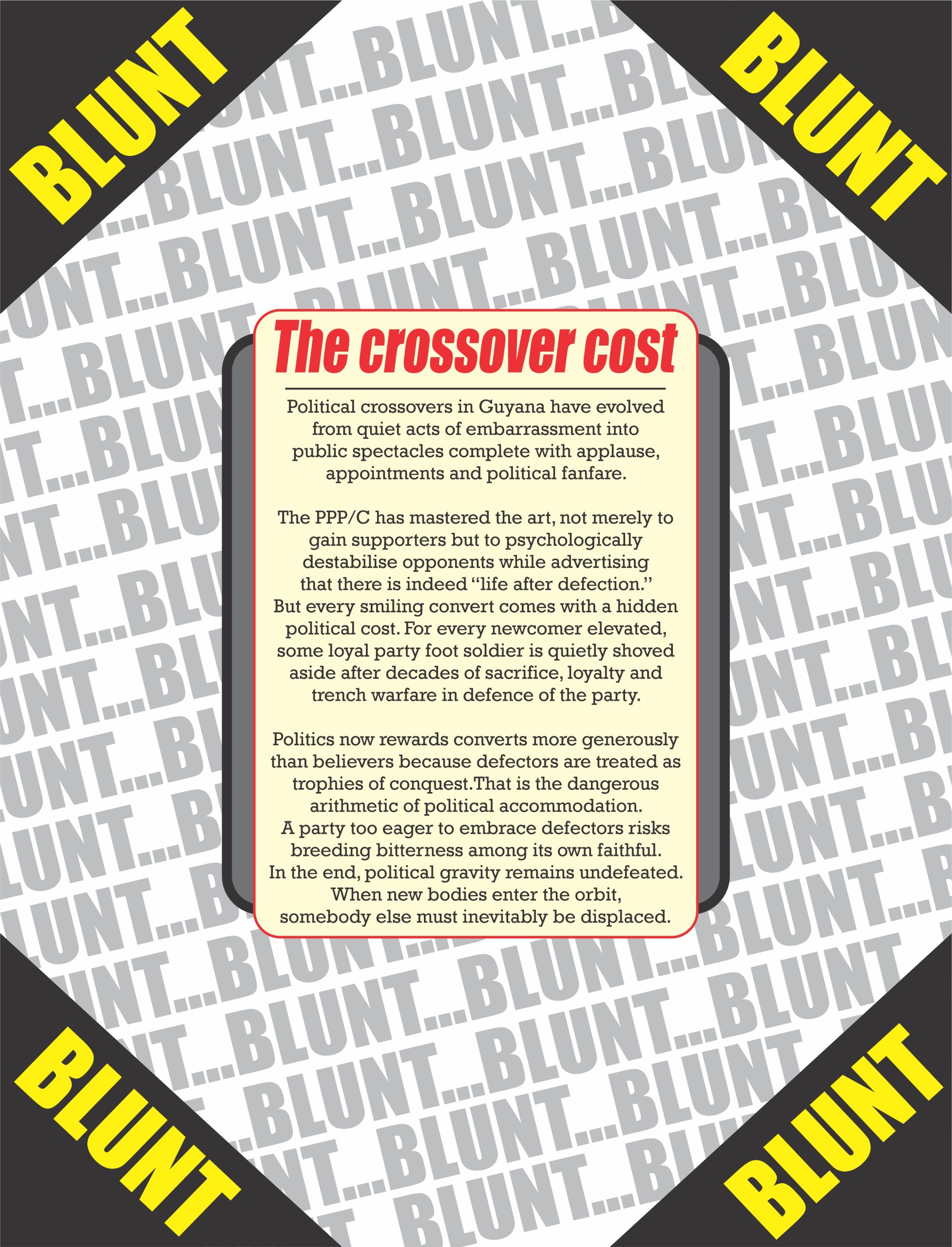
THE BLUNT OF THE DAY
Sports

Features/Columnists

Sir. Ronald Sanders

The GHK Lall Column

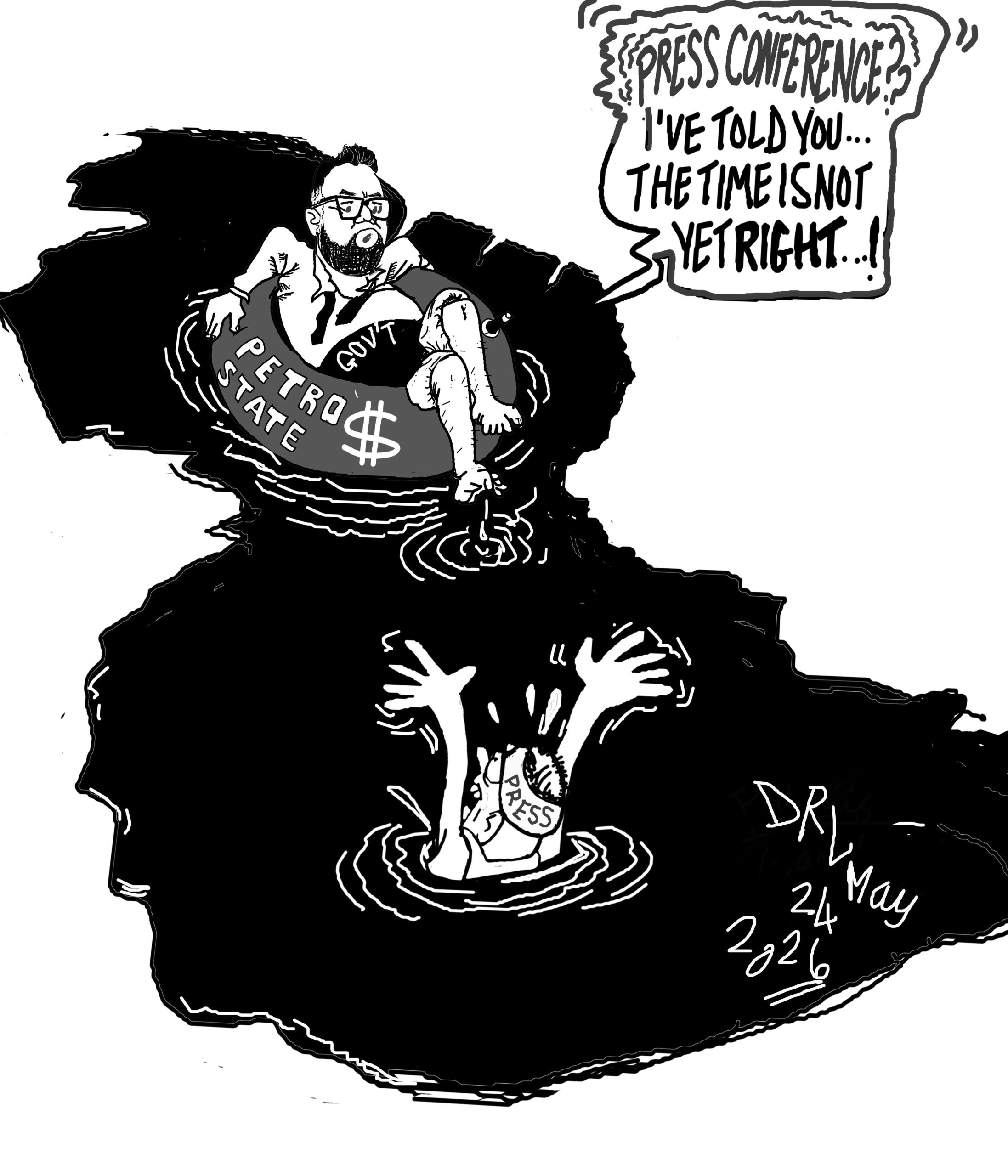
Weekend Cartoon