Latest update August 9th, 2026 12:45 AM



Latest News
- Govt. must now say what % oil profits Guyana is receiving as Exxon confirms full investment recovered – Opposition Leader
- US. Govt. to acquire bauxite mine in Guyana
- ‘Oil is not the curse, leadership is’ – Glenn Lall
- Iran says the strait won’t open until the U.S. ‘corrects’ its behaviour
- PM Phillips urges writers to tell Guyana’s stories truthfully
Guyana defends sovereignty at ICJ against Venezuela’s claims
(Kaieteur News) – In a historic opening statement at the International Court of Justice (ICJ) on Monday, Guyana’s Minister of Foreign Affairs and International Cooperation, Hugh Todd, characterised the territorial controversy with Venezuela as a matter of national survival, asserting that the case holds an “existential quality” for the Cooperative Republic of Guyana.
Leading a high-level delegation to the final oral hearings on the merits, Minister Todd argued that Venezuela’s claim threatens to dismember the nation by stripping away more than 70 per cent of its recognised sovereign territory. This land, he noted, has been recognised as an integral part of the country for more than 126 years, including the six decades since Guyana achieved independence.
Minister Todd focused on the profound human and emotional cost of the dispute, stating that for the Guyanese people, it is tragic even to think about having the country dismembered. He argued that losing the vast majority of the land would also mean losing its people, history, traditions, customs, and precious ecology, concluding that “Guyana would no longer be without them.” It is for this reason, and because of Guyana’s conviction in its rights under international law, that President Irfaan Ali mandated the delegation to lead these opening remarks and underscore the existential nature of the case for the Guyanese people.

Minister of Foreign Affairs and International Cooperation, Hugh Todd during his delivery at the ICJ
The legal core of Guyana’s submission is that the case is as “straightforward as it is consequential.” It concerns the title to nearly 160,000 square kilometers of territory, which was recognised as part of British Guyana by the award of a unanimous arbitral tribunal in October 1899. This tribunal consisted of five of the most eminent jurists of that era and was the result of an exhaustive legal process involving over 5,000 pages of written arguments and a hearing that lasted more than three months with over 200 hours of oral submissions. Todd asserted that the 1899 award and the 1905 boundary agreement are without question legally valid and binding, noting that Venezuela consistently respected the award in practice, maps, and legislation until 1962.
Minister Todd also addressed the “ominous growth” of Venezuela’s recent military activities, citing the construction of new bases, airfields, and the deployment of aircraft and heavy weapons to the border area. He reminded the court of Venezuela’s efforts to derail the case, including a 2023 national referendum seeking support to reject the court’s jurisdiction and formally incorporate the Essequibo. Despite provisional measures from the court prohibiting such steps, Todd noted that Venezuela proceeded to issue executive decrees and national legislation to reject the court’s authority, describing the claim as a “blight on our existence as a sovereign state.”
Following the minister, Ambassador Donnett Street addressed the court on the geographical and human context of the Essequibo. She emphasised that the claim is directed at the very heart of Guyana, encompassing six of the country’s ten administrative regions. For a small developing nation, she argued, the loss of nearly three-quarters of its territory would not be a mere border adjustment but the “effective destruction of the country.” She described the region as the “engine of our economic development,” citing its gold, bauxite, and manganese deposits, its agricultural significance in rice and cattle, and the potential for oil and gas in adjacent waters.
Ambassador Street further detailed the ecological and cultural treasures found within the region, most notably, the Iwokrama Rainforest, which she called the “green heart of Guyana” and one of the last four untouched tropical rainforests in the world. She highlighted the Essequibo River, the longest in Guyana at 1,014 kilometers, and its tributaries as the “arteries of our national life.” Most importantly, she spoke of the 313,175 people who live there, including nine Indigenous groups and descendants of African and Asian laborers. She noted that in the September 2025 elections, nine members of parliament were elected from the region, affirming that the people of the Essequibo identify completely with the sovereign state of Guyana.
Guyana’s advisor on borders and agent to the ICJ, Carl Greenidge, then provided a historical account of the territory, beginning with the arrival of the Dutch in 1598. He clarified that the Dutch were the first Europeans to establish themselves, founding the colony of Essequibo by 1616 and settling westward toward the Orinoco. Greenidge pointedly remarked that the Spanish were “nowhere to be found” east of the Orinoco, with their nearest outpost over 650 kilometers away. He traced the transfer of the colonies to Great Britain via the 1814 Convention of London and the subsequent commissioning of the Schomburg Line survey in the 1830s, led by the distinguished geographer Robert Schomburg.
Greenidge concluded by highlighting the historical irony that it was Venezuela itself that originally insisted on arbitration in the late 19th century. After breaking off diplomatic relations with Britain in 1887, Venezuela turned to the United States for support to secure the 1897 Treaty of Washington. For sixty years, Venezuela heralded the resulting 1899 award as a triumph, expressing gratitude to the U.S. for its role. Greenidge argued that Venezuela’s current attacks on the treaty are “belated and totally unpersuasive,” as the legal team prepared to demonstrate why the award remains binding on both nations to this day.
Share this:

Discover more from Kaieteur News
Subscribe to get the latest posts sent to your email.
Similar Articles

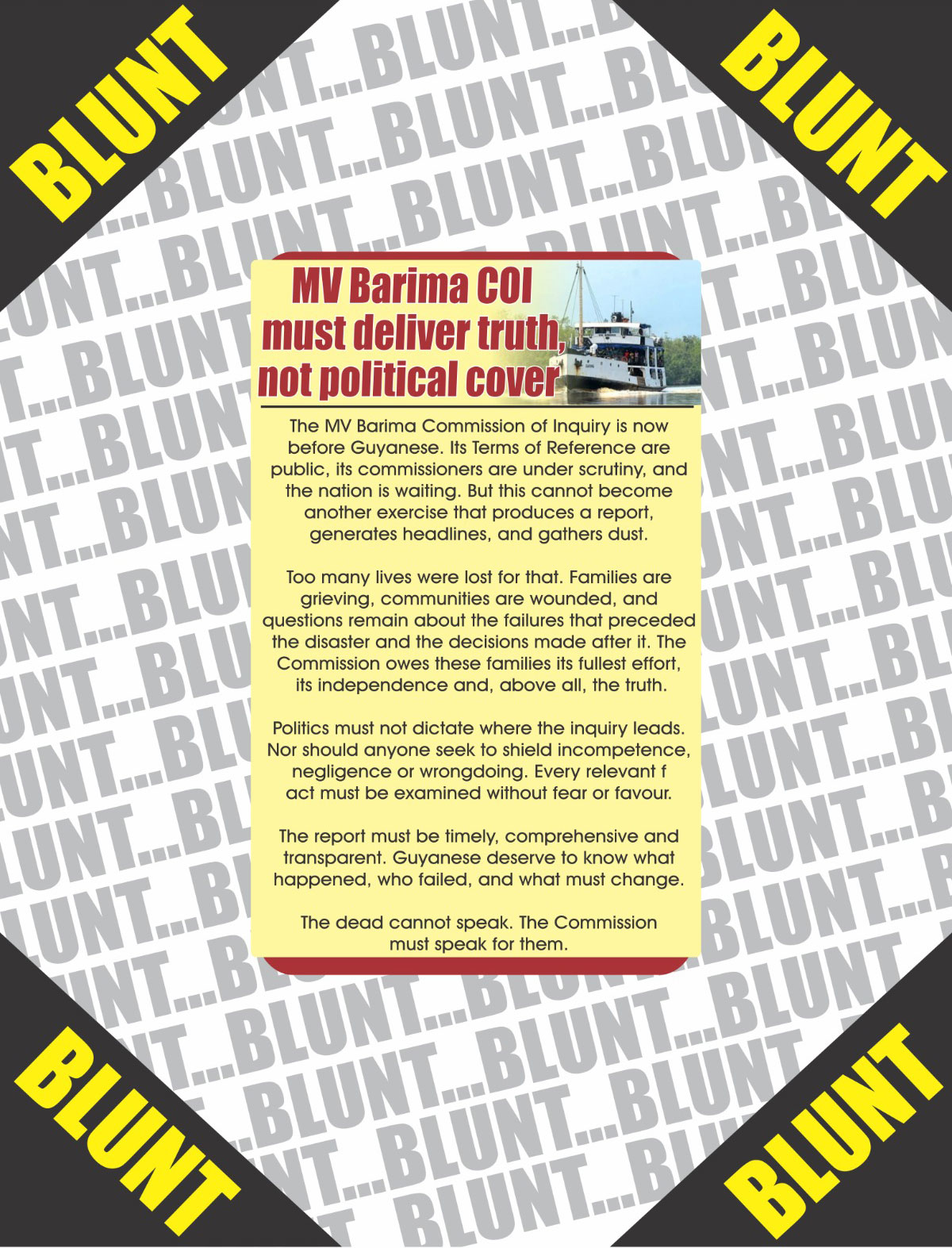
Blunt of the day
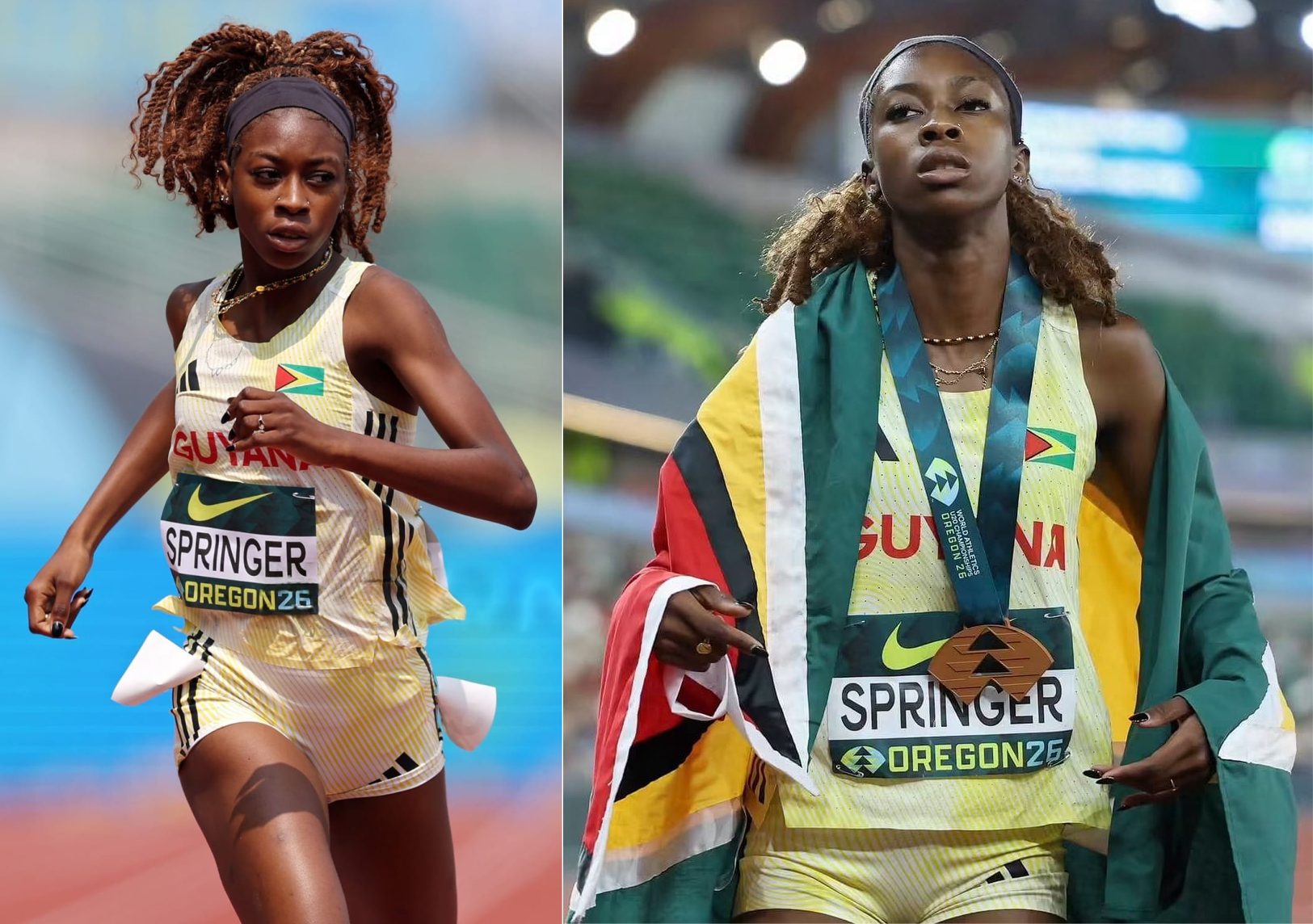
Sports
Features/Columnists

Sir. Ronald Sanders

The GHK Lall Column

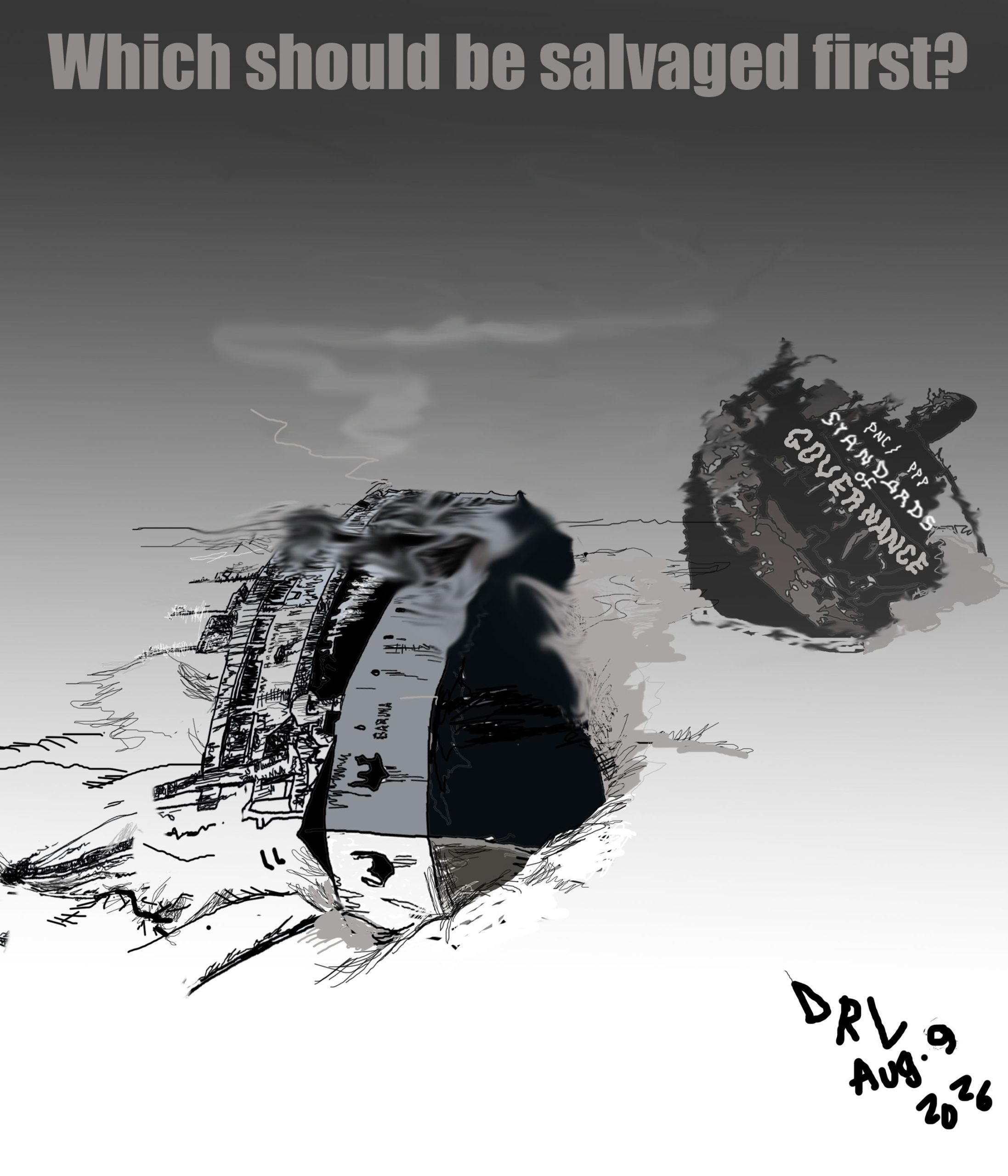
Weekend Cartoon