Latest update October 4th, 2026 10:35 AM


Latest News
- Controversial U.S. company in running for Amaila hydro project
- 40 citizens, 4 organisations appeal EPA’s no-EIA decision on Kurupung uranium project
- Israeli air attack on Gaza City apartment kills at least five
- CANU finds uncustomed alcohol at Windsor Estates property
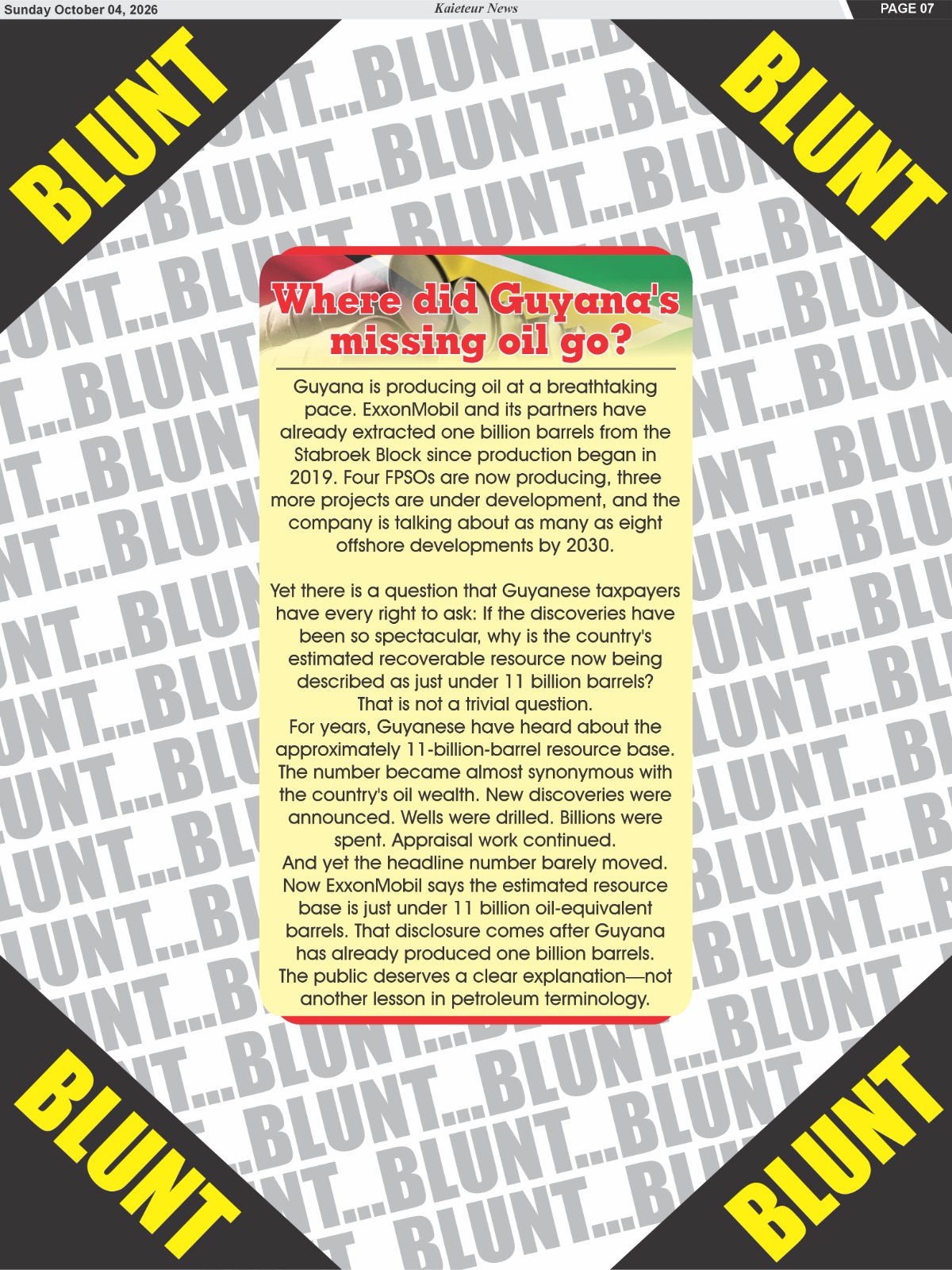
- Govt. still reviewing Exxon’s 8th Stabroek project
Our Water Wealth Must Not Drown Private Enterprise
By Dr. Karen Abrams, MBA, AA
(Kaieteur News) – The newly legislated Guyana Development Bank is one government intervention I welcome.
The bank is intended to provide interest-free, collateral-free loans of up to $3M. For a young farmer, seamstress, mechanic, beautician, food processor or technology entrepreneur, that amount could purchase equipment, provide working capital and transform a small operation into a sustainable business.

Director of STEM Guyana, Karen Abrams
However, $3M cannot finance a modern manufacturing plant, major agro-processing facility, hotel or bottled-water factory. We must therefore distinguish between supporting small businesses and financing the large investments necessary to diversify Guyana’s economy.
This distinction has become important following President Irfaan Ali’s announcement that all bottled water consumed in Guyana should be produced locally within 12 months. According to the Department of Public Information, Guyana Water Incorporated estimated that locally treated water could be bottled and sold for approximately $100 per bottle or less.
The President’s interest in water as an economic commodity is understandable. We are the “land of many waters” at a time when freshwater security has become a global economic and national-security concern.
Cape Town, South Africa’s legislative capital, came within weeks of “Day Zero” in 2018, when authorities feared that reservoir levels would fall so low that household taps would have to be shut off. Strict rationing and improved rainfall prevented that disaster, but the warning remains.
Today, the Colorado River system in the United States is under severe pressure. The river supplies approximately 40 million people across seven American states and Mexico. For 2026, Arizona, Nevada and Mexico again received reduced allocations because of declining supplies and historically low levels at Lake Mead and Lake Powell. The U.S. Bureau of Reclamation continues to manage the system under formal shortage conditions.
Kabul is racing towards an even more frightening possibility. Almost half of the Afghan capital’s boreholes are reportedly dry, and Mercy Corps warns that Kabul could become the first modern capital to run out of water by 2030.
Against this global background, Guyana’s freshwater could become one of our most valuable strategic assets. With proper scientific assessment, environmental safeguards and investment in treatment, packaging and transportation, Guyana could eventually become a net exporter of water. Water could generate jobs and foreign exchange long after our oil production declines.
Perhaps this opportunity has encouraged the government to intervene more directly in the water marketplace. But before we rush to compete with the private sector, we must ask a basic question: do all Guyanese have reliable, treated water running into their homes?
The government reports that more than 95 percent of the population has access to potable water. Yet the Minister responsible for public utilities recently acknowledged that treated-water coverage on the coast was approximately 80 percent. “Access” may mean a well, standpipe or community system. It does not necessarily mean that every family can turn on a tap and receive reliable, properly treated water.
I still hear about villages where households have no direct water supply or where residents must collect, store or purchase water. I have also heard of no village proudly boasting that the water coming through its taps is certified as potable. It may very well be. If so, GWI should regularly publish independent water-quality results, by community, so that citizens do not have to guess.
GWI’s first responsibility must be to provide safe, reliable and affordable water to the Guyanese people. If a publicly funded utility, then enters bottled-water production, it could find itself competing against private businesses while also benefiting from state-financed wells, treatment plants, land, equipment, vehicles and employees. Considering that the government also controls permits, certification, taxation, procurement and access to public contracts. It should not become both referee and player.
There is a better approach. The government of Guyana can establish water-quality laboratories, map our freshwater reserves, protect watersheds, build export infrastructure and encourage shared packaging facilities. It can also extend partial loan guarantees for larger investments.
Under a loan-guarantee programme, a commercial bank assesses the project and lends the money. The investor contributes capital and remains responsible for repayment. The government guarantees only part of the loss if the project fails. This makes banks more willing to finance productive investments without taxpayers becoming the owners of every factory.
In the final analysis, the Development Bank can serve smaller entrepreneurs while a properly governed guarantee programme can help larger Guyanese investors enter water production (expansion), manufacturing and agro-processing.
Guyana should certainly develop its water wealth. But the state should first deliver treated water to every home, protect the resource, establish fair rules and unlock financing. Then it should give Guyanese entrepreneurs a fair chance to build the industry.
Share this:

Discover more from Kaieteur News
Subscribe to get the latest posts sent to your email.
Similar Articles
Website Hits

Blunt of the day
Sports
Features/Columnists

Sir. Ronald Sanders

The GHK Lall Column

Weekend Cartoon