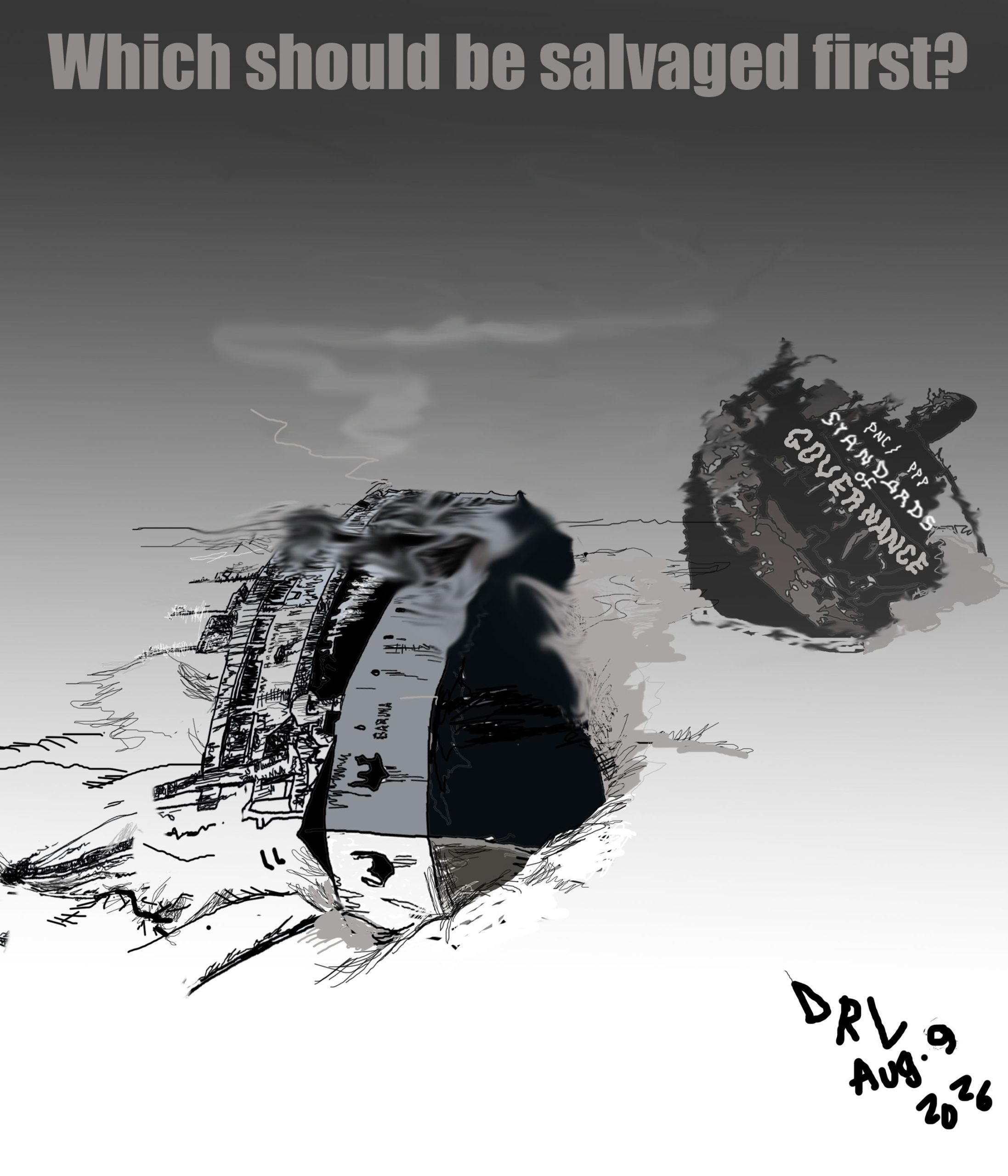
Latest update August 13th, 2026 10:30 AM



Latest News
- New Australian firm secures 44,000 acres gold land in Reg. 7
- U.S. eyes ports, road, housing contracts in Guyana – Deputy Secretary of State
- Colombia declares three days of mourning after deadly earthquake
- MV Barima tragedy… Paper trail contradicts Edghill’s claims as records show repeated warnings before disaster
- Police constable on close arrest after brandishing toy gun during West Bank Demerara-road dispute
Institutional betrayal in “One Guyana”
By Dr. Telford Layne Jr. PsyD, MSc. Postgrad, BSc.
Clinical and Developmental Psychologist – Psychoanalyst
Unwrapping Gift – Clinic
(Kaieteur News) – In Guyana, political dominance is built of institutional betrayal. Institutional betrayal is an effective tool used by every successive government and authorities to suppress, oppress and keep every citizen in check. In my view, a significant portion of Guyanese institution is dysfunctional, unstable and toxic; one where preying on the weak and vulnerable are done by those masking their own weakness as strength.

Dr. Telford Layne Jr.
Institutional Betrayal
Institutional betrayal stems from harm caused when trusted institutions fail to safeguard the interest of the people. Institutional betrayal/trauma also occurs when an institution such as a workplace, government, school, church, police, court, or healthcare system, actively denies wrongdoing, abuse or cover up harm to individuals who depend on it.
This trauma leads to the breach of trust when a supportive entity ignores complaints, covers up wrongdoing, or retaliates against its victims. In Guyana, the slow or ineffective processes in the administration of justice by the judiciary, executive arm, the police force and connected people often lead to distrust for institutions.
Examples like churches not staking against injustices and social ills. Ethnic Relations Commission has a perception of punishing one group of people and the Guyana Elections Commission is being perceived in favor of certain group of people by the race composition of its leaders.
Post colonial trauma
Following independence in 1966, post-colonial struggles, political instability and allegations of electoral manipulation affected public trust. It’s now 60 years after and the Guyana Elections Crisis of 2020 and 2025 is a clear example of this ongoing distrust in institutions.
The Guyanese psyche has been shaped by long-term structural experiences. Under Guyana’s colonial past—especially under United Kingdom’s rule—institutions were designed to control populations rather than serve them. This framework was built extensively after independence.
Ethnic and Social Dimensions
Guyana’s multi-ethnic population includes six ethnic and cultural groups but the motto, “One People, One Nation, One Destiny,” is an apparent farce. The government, past and present which is part and parcel of institutional trauma often falls short in its bid to unify these groups, often favouring one group above the others.
When institutions are seen as favoring one group, mistrust spreads across generations. Institutional betrayal fosters group-based mistrust. This fear of unequal treatment reinforces stereotypes, reduces national cohesion. It also heightens ethnic insecurity and the collective anxiety about fairness.
Every Guyanese knows one person or a family that has been marginalized, mistreated, punished, abandoned, by the institutions that are suppose to support their well being. When institutions repeatedly fail, people learn not to rely on them, even when they are supposed to.
Generational trauma
Institutional betrayal often becomes generational trauma across life span of every generation just like what we are experiencing in Guyana with the police violence and miscarriage of justice. Political unrest occurs five years at the time of elections. People often believe that nothing will change. You hear phrases like “systems don’t protect people like us”. “Justice is selective. “This grows into the full-blown Guyanese crisis.
Individual Mental Health
Institutional betrayal affects not just communities but individuals. Paranoia and suspicion by ethnic groups and vice versa are prime example. In Guyana, the two main ethnic groups, the Afro Guyanese and Indo Guyanese have distrust for each other, neither race wants or feels conformable being govern by the other.
Anxiety and hypervigilant people may feel constantly alert or unsafe—even in routine situations. I have seen people’s nervous system crash or triggered at the name of the Vice president and President Granger. I have seen medical professionals extremely fearful when a person of another race is under their health care.
Learned helplessness becomes a reality when repeated, failure leads people to stop trying to change their circumstances. In this instance, the older generation is stuck on race voting and supporting politicians that are malignant narcissists.
The impact of institutional trauma on the younger population has proven to reduce motivation. Passive coping with alcohol and drugs dependence, starts at school age. When justice systems fail repeatedly, hope declines. People think “There is no point reporting” or “Nothing will improve”. This is the hopelessness and helplessness that can drive the incidence of depression and suicide in our society.
Impact on Youth
Young people growing up in environments of institutional distrust develop cynicism about authority. Children learn early that rules are negotiable since they see it practiced by politicians, and institutional leaders. They see systems that are unreliable.
And, if schools are perceived as unfair or ineffective, motivation declines. This results in reduced academic achievement and later lead to lower aspirations and brain drain (migration of skilled labour).
Institutional Betrayal contributes to brain drain, identity fragmentation and diaspora nostalgia. Many Guyanese seek opportunities abroad in places like: United States, Canada United Kingdom. The psychological drivers are for fairness, desire for reliable institutions. Escape from systemic inequality.
Institutional betrayal affects national growth. When trust is low, citizens avoid paying taxes, businesses avoid formal systems. Corruption becomes normalized and civic participation declines. Psychologically, people shift from collective thinking to individual survival mode.
Psychological Healing
Reducing institutional betrayal requires systemic and psychological changes. Transparency and open communication builds trust. Public accountability, independent investigations, community engagement are key characteristics and should be embedded Guyanese governance, from community to national levels. Institutions must collaborate with communities rather than impose authority without the inclusion.
Guyanese governance also requires trauma-informed approaches where schools become an oasis in the desert, the court brings relief and helps relegate nervous systems.
The police must be trained and empowered not only to serve and protect but enjoy the best of collaboration with the community. In modern Guyana as we are in periods of political tension, economic growth, and oil development, the psychological impact of institutional trust is becoming more needed. If trust improves, social cohesion strengthens, national development accelerates. And mental health improves, but if betrayal continues distrust deepens; social divisions widen and migration increases.
Share this:

Discover more from Kaieteur News
Subscribe to get the latest posts sent to your email.
Similar Articles

Blunt of the day
Sports

Features/Columnists

Sir. Ronald Sanders

The GHK Lall Column

Weekend Cartoon