Latest update September 16th, 2026 10:20 AM


Latest News
The madness of blame
(Kaieteur News) – Two siblings are dead. They drowned yesterday in a tragic incident in a trench at Enterprise.
One child is believed to have slipped into a trench. The other, in an act of instinct and love, went in to save that child and never came back out. It is a heartbreak too heavy for words. Two young lives, gone within moments. A family shattered. A community wrapped in grief.
And almost immediately, the questions began.
Who was watching them? How did they manage to drift off? And now – who caused this? Humans do not sit well with uncertainty. Especially when something terrible happens. A death. A disaster. Children gone too soon. We want answers. We want causes. We want someone to hold responsible.
But when real answers are slow, complicated, or painful, we create clearer ones. In this case, attention has swiftly shifted to a nearby water treatment plant. It is being said that the plant discharges excess water — or effluent — into the trench. It is being claimed that this discharge creates a whirlpool. And that this whirlpool pulled the children under.
It is a powerful image. A hidden current. A mechanical force beneath the surface. A man-made cause. But at this moment, there is no publicly available evidence about the strength of any such current. No measurements. No expert hydrological assessment. No data demonstrating that the discharge created a force capable of overpowering two children in that location at that time.
Yet the narrative has already taken shape.
Psychologists call this attribution theory. When something tragic happens, we search for causes. But often we assign blame before we have facts. Because blame gives comfort. It channels anger. It makes us feel less helpless. If the trench itself is dangerous, that is frightening. If accidents can happen suddenly and silently, that is terrifying. But if we can say, “The plant caused it,” then the chaos feels contained. The tragedy becomes mechanical rather than random.
People do not need proof. They need plausibility. A rumour that sounds logical. A story that fits their fear. Someone mentions discharge into the trench. Someone else says they have seen strong water movement before. Soon, the word “whirlpool” is everywhere. Guilt spreads quickly. If there is a facility nearby, it must be responsible. If water flows from a pipe, it must be powerful. If a theory makes emotional sense, it must be true.
This is confirmation bias at work. Once we believe that industrial discharge is dangerous, every swirl in the water becomes proof. Every previous complaint becomes evidence. Every denial becomes a cover-up.
Truth becomes secondary.
None of this is to say that the possibility should not be investigated. If there is discharge into the trench, its volume, force, and environmental impact should be examined carefully. If safety measures are required, they must be implemented. Questions are legitimate. But questions are not conclusions. At this stage, there is no verified evidence establishing that any discharge created a whirlpool of sufficient strength to pull two children under. Drowning, tragically, does not require dramatic currents. It can happen in still water. It can happen silently. It can happen in seconds.
Yet in our grief, dramatic explanations feel more satisfying. This is how narratives harden into accusations. A plant becomes a villain. Not because of proven wrongdoing, but because the story fits our emotional need for cause and effect. We have seen this pattern before. A tragedy occurs. Social media fills the gaps before investigators can. Technical questions are answered by speculation. Emotion outruns evidence. Motivated reasoning takes hold. If someone already distrusts industry, they will see guilt. If someone already suspects negligence, they will see confirmation. If officials urge caution, they are accused of protecting interests.
Everything becomes a sign of wrongdoing.
And in the rush to condemn, we forget the simplest, most painful possibility: that this may have been a terrible accident. That one child slipped. That another tried to save that child. That courage met tragedy in a matter of moments. But justice requires proof. Science requires measurement. Responsibility requires evidence. If the water treatment plant’s discharge played a role, let that be established through expert analysis — flow rates, current strength, timing, environmental conditions. Let engineers and hydrologists speak. Let data guide conclusions.
If it did not, then an institution and its workers should not be condemned on the strength of a rumour. Two children are gone. That is the tragedy. That is the loss.
Let us not deepen it by turning grief into accusation without evidence. Let us allow facts to emerge before we fix blame. Let us not let the image of a “whirlpool” replace careful investigation. In times of pain, truth must matter more than vengeance. Evidence must matter more than emotion. Compassion must matter more than outrage. That is how we remain just. That is how we remain human.
(The views expressed in this article are those of the author and do not necessarily reflect the opinions of this newspaper.
Share this:

Discover more from Kaieteur News
Subscribe to get the latest posts sent to your email.
Similar Articles
Website Hits

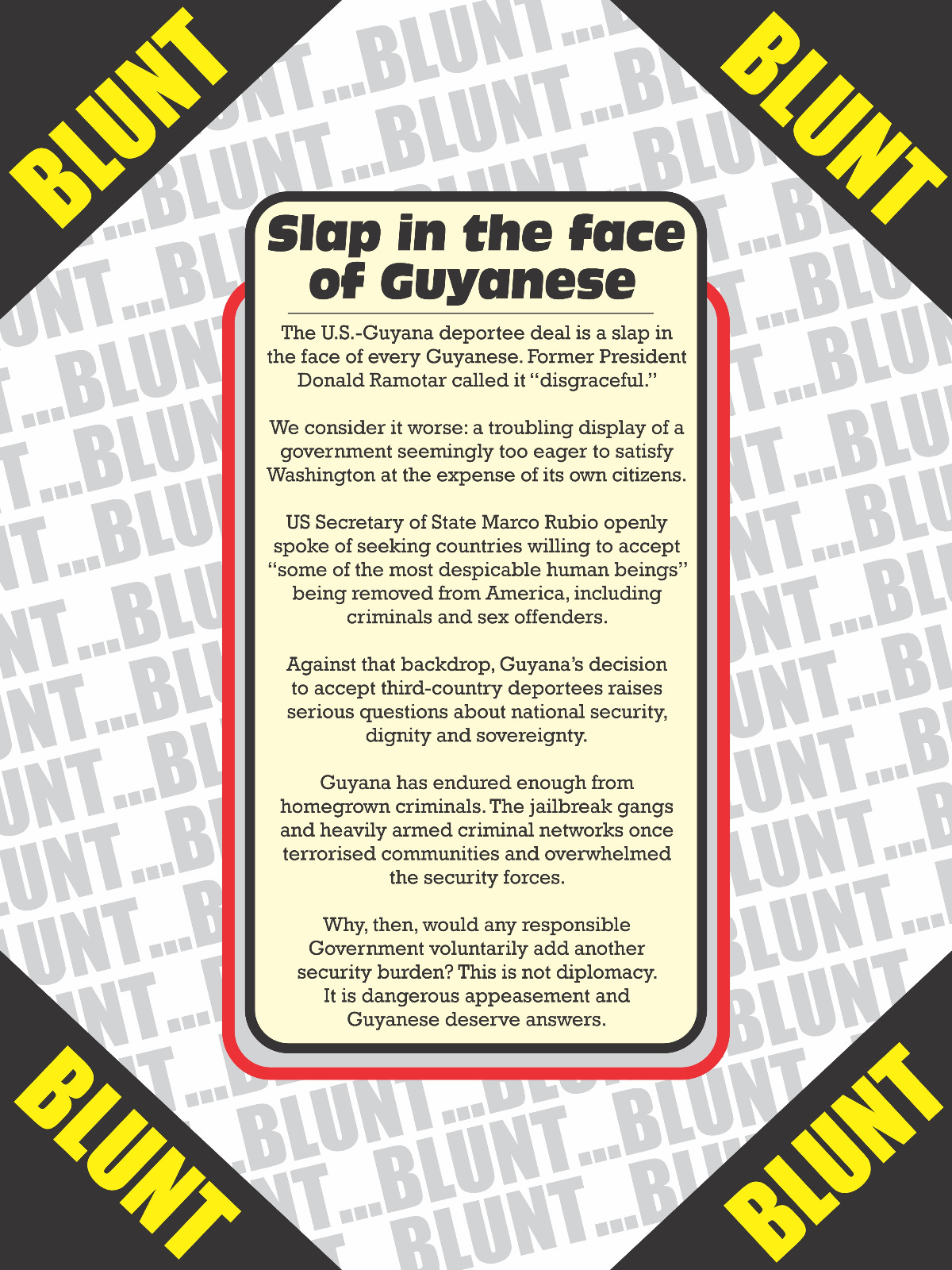
Blunt of the day
Sports

Features/Columnists

Sir. Ronald Sanders

The GHK Lall Column

Weekend Cartoon