Latest update October 3rd, 2026 10:20 AM


Latest News
- U.S. steps up pressure on China as firms battle for Guyana’s mega projects
- ExxonMobil goes deeper at Liza Two as hunt for more oil continues
- G7 countries agree on release of diesel and oil stocks after U.S. pressure
- Five remanded for murder of 23-year-old Corentyne labourer
- WIN MP resigns from parliament amid sexual misconduct investigations
Exxon’s irony on poverty
(Kaieteur News) – Last week ExxonMobil’s upstream boss mounted the platform at the Guyana Energy Conference and declared that Guyana’s oil will “lift the world from poverty,” the bitter irony could be felt from Kingston to Kitty.
It is a grand line, polished for international ears. But on the ground in Georgetown and across the coastland villages, it rings hollow. In a country now pumping more than 900,000 barrels of oil per day, some 58% of citizens still wrestle with poverty. The minimum wage in the private sector stands at a meagre $60,147 and in the public sector $100,000, while rent alone can devour $45,000. The arithmetic of survival is cruel. Street begging swells. Homelessness creeps quietly through the capital’s corners. Empty pots outnumber full promises.
This is the contradiction that defines oil-rich Guyana in 2026: glittering FPSOs offshore and grinding hardship onshore. The Stabroek Block gushes wealth, but the trickle reaching the average citizen is barely enough to dampen the dust.
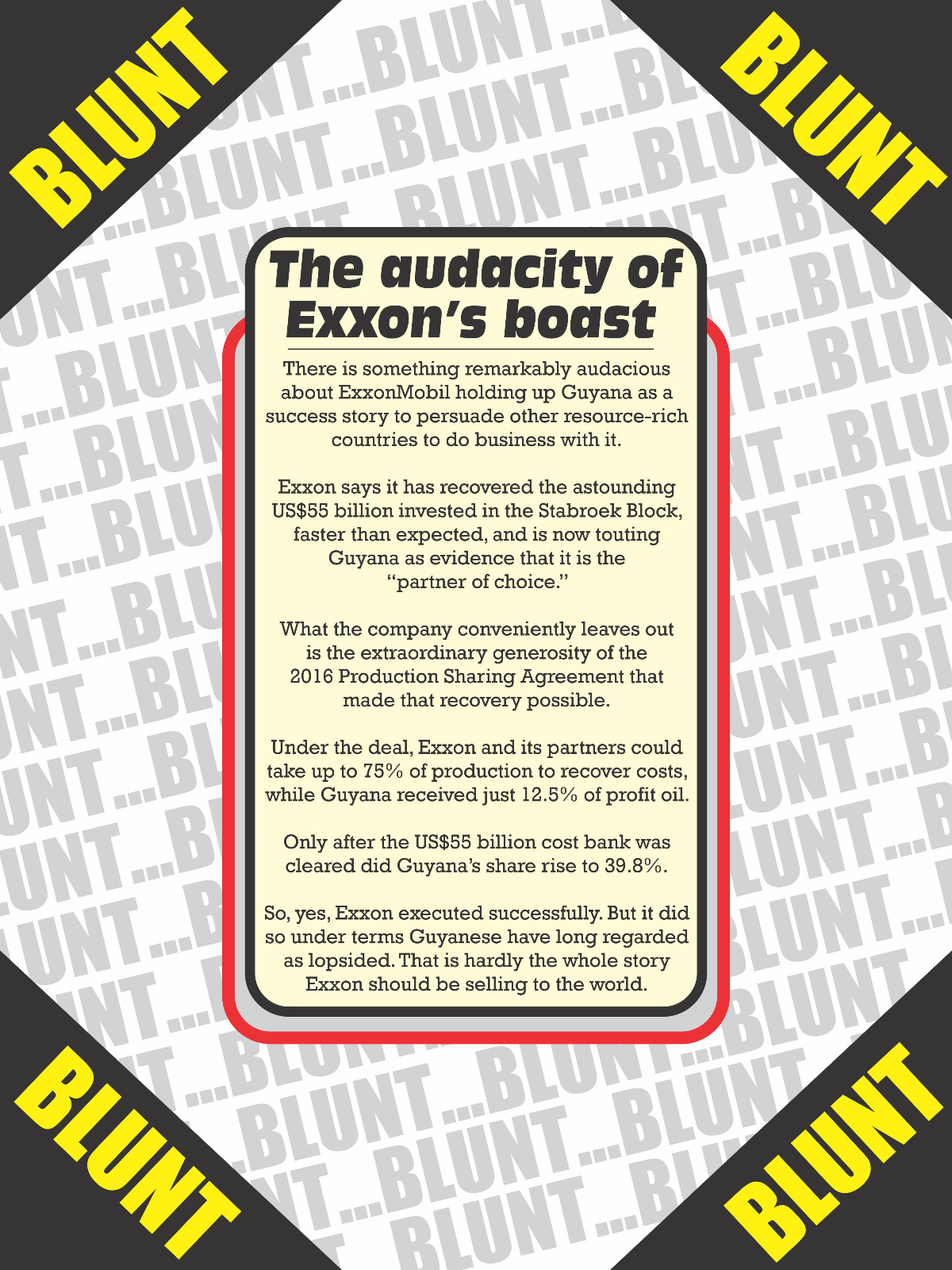
Guyanese, with few exceptions, have known for about ten years that the 2016 Production Sharing Agreement (PSA) was one-sided—one-sided in every way imaginable. That contract, inked in haste and defended in stubborn pride, locked this nation into terms so generous to Exxon and its partners that Guyana was destined to come out on the wrong end of the stick repeatedly. What has emerged since are glittering quarterly earnings for the oil supermajor, while Guyanese creep and crawl for the leftover crumbs.
Under that lopsided 2016 PSA, Exxon and its partners carted off an estimated US$8.4 billion in 2024 alone. Guyana, by comparison, receives a fraction just 12.5 barrels out of every 100 produced when royalty and profit oil are tallied after cost recovery. The rest disappears into the vaults of corporate America and beyond. And yet, from international stages, the company speaks loftily about global upliftment.
Recent reports indicate ExxonMobil has its eyes set on a windfall of US$25 billion in the next five years, with Guyana’s Stabroek Block featuring prominently in its drive toward 5.5 million barrels of oil equivalents per day by 2030. The company can program its mind for further enrichment in the tens of billions. Meanwhile, in this season of so-called prosperity, Guyanese citizens set their hearts on a paltry $100,000 cash grant. Five hundred US dollars per eligible citizen is treated as a windfall here. Twenty-five billion US dollars is projected as routine business there. If ever there was a portrait of one-sidedness, this is it.
ExxonMobil can compute present profits and future prosperity with utter surety. Its CEO speaks confidently of billions flowing by the next decade. In sharp contrast, rank-and-file Guyanese, owners of this national patrimony, scramble year-round to put food on their tables. Since oil was discovered, the bonanzas that citizens expected, by right of ownership, have been part dream and part mirage. The promise of becoming “the richest country per capita” reads well in foreign magazines. But on the streets of Georgetown, it feels like a cruel joke.
The one-sided nature of the arrangement is glaring. One-sided in terms and conditions. One-sided in enforcement. One-sided in results. ExxonMobil calls the shots; Guyana adjusts. The company’s country head speaks with the assured tone of a man in the driver’s seat, while elected officials often sound defensive, evasive, or lost in technicalities. How much real power does the Government of Guyana exercise over its oil wealth? How does that compare to the leverage wielded by ExxonMobil under the sanctity-of-contract shield? The distance between those two powers is vast.
It is telling that while ExxonMobil charts expansion new FPSOs, new wells, new production records—Guyanese debate the adequacy of small cash transfers and short-term relief measures. The management of this nation’s oil wealth has become a case study in imbalance. A model of what happens when a developing country negotiates with a global titan and mistakes speed for strategy.
To hear ExxonMobil’s executives speak, Guyana is a treasure trove of “high-quality, low-cost oil.” To live in Guyana is to know that high-quality oil has not yet translated into high-quality living for the majority. Forty to sixty percent of the population remains perilously close to impoverished conditions. What can be more conspicuous, more sickening, than this disparity? A windfall for the corporation. Woe and worry for the citizen.
Before preaching about lifting the world from poverty, ExxonMobil would do well to confront the stark reality in Georgetown’s yards and rural villages. Charity, as the saying goes, begins at home. If Guyana’s oil is to be celebrated as a global blessing, then let its first blessing be felt by the people whose seabed holds the treasure. Until then, every triumphant declaration about rescuing the globe will sound like salt in a national wound, another reminder that in this grand oil saga, the scales remain tilted, one-sided in every way imaginable.
Share this:

Discover more from Kaieteur News
Subscribe to get the latest posts sent to your email.
Similar Articles
Website Hits

Blunt of the day
Sports
Features/Columnists

Sir. Ronald Sanders

The GHK Lall Column

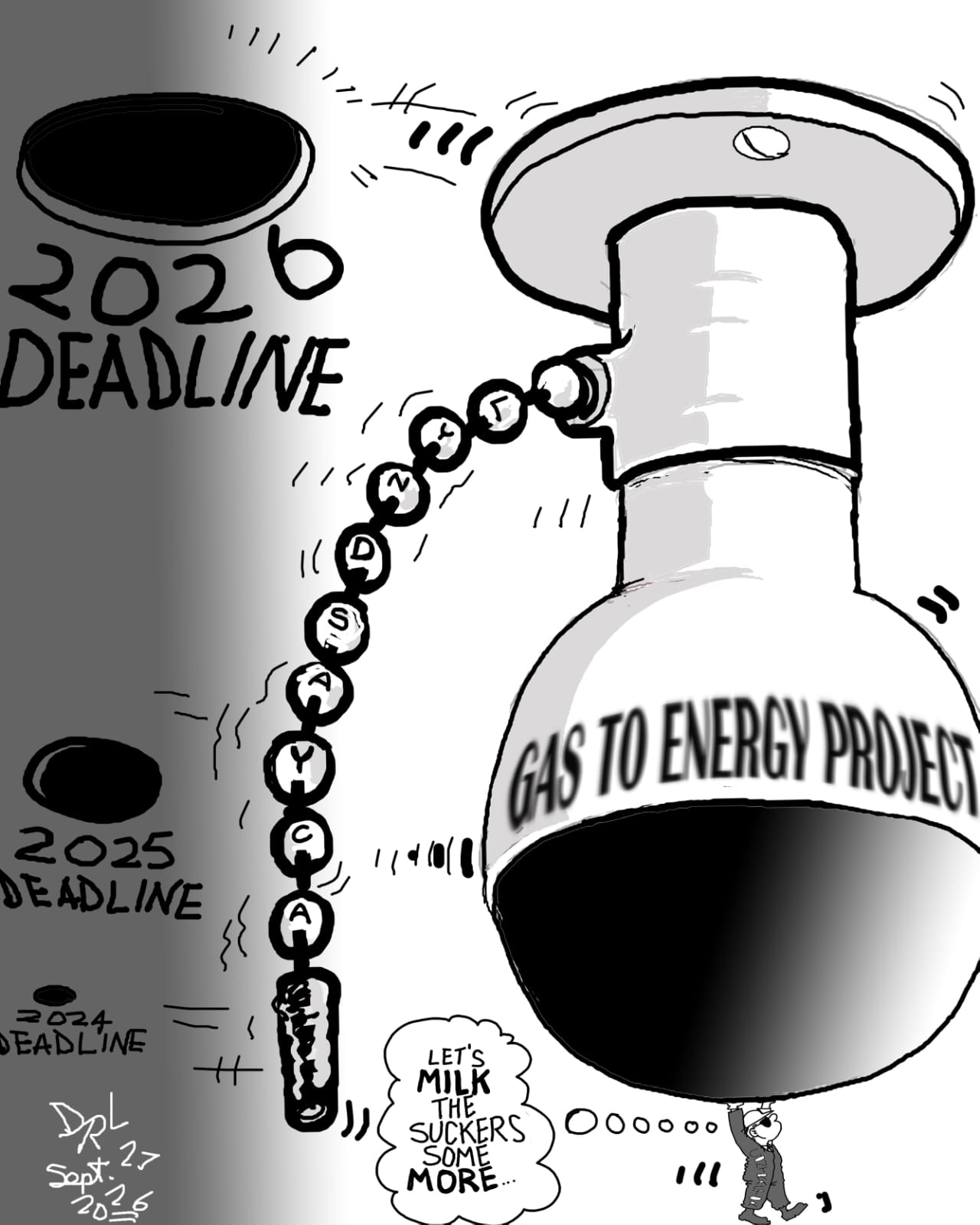
Weekend Cartoon