Latest update October 4th, 2026 10:35 AM


Latest News
- Controversial U.S. company in running for Amaila hydro project
- 40 citizens, 4 organisations appeal EPA’s no-EIA decision on Kurupung uranium project
- Israeli air attack on Gaza City apartment kills at least five
- CANU finds uncustomed alcohol at Windsor Estates property
- Govt. still reviewing Exxon’s 8th Stabroek project
Mashramani and the national identity crisis
(Kaieteur News) – In exactly one week we will once again host Mash Day, that annual exercise in patriotic perspiration where we celebrate becoming a Republic by borrowing someone else’s party and adjusting it for inflation.
Now, before I am deported to Lethem for cultural treason, let me say that I love a good festival. I enjoy music, dancing, and watching normally restrained civil servants transform into sequined philosophers. But as Mash Day approaches with the inevitability of an electricity bill, I cannot shake the uneasy feeling that our grand national celebration looks suspiciously like a photocopy of Trinidad and Tobago’s Carnival—except the toner is low and the paper slightly damp.
We have the Float Parade. We have the costumes. We have the party trucks. We have the gyrations that suggest either cultural liberation or mild chiropractic distress. What we do not appear to have is a clear answer to the question: what exactly is Guyanese about Mash Day?
Mashramani, we are told, comes from an Arawak word meaning “celebration after hard work.” This is beautiful. It conjures images of community, harvest, storytelling, ancestral memory, and maybe a responsible amount of cassava bread. Yet somehow the modern translation seems to be: “celebration after importing a costume catalogue.”
The irony is delicious. We named the festival after an Indigenous concept, then proceeded to sideline Indigenous culture. If an alien landed on Mash Day and watched the parade, it might conclude that Guyana is a small suburb of Port of Spain. And here is the thing: Trinidad’s Carnival is magnificent precisely because it is Trinidad’s. It is born of their history, their struggles, their calypso rebellions, their steelpan genius. It is a cultural organism. When they do bacchanal, it is historically grounded bacchanal.
When we do bacchanal, it sometimes feels like we’re auditioning.
Every year we add new ingredients. A chutney competition here. A dancehall segment there. A costume band that looks like it survived a collision between a peacock and a glitter factory. But inclusivity cannot be achieved by sprinkling cultural confetti over a structure that is fundamentally imitative. We like to say we are “One People.” In reality, we are a salad bowl of African, Indian, Indigenous, Chinese, Portuguese, and European influences. And there is nothing wrong with a salad bowl—except that it requires intention.
Where, for example, is the storytelling? Where are the dramatic reenactments of Cuffy’s rebellion? Where are the indentured labourers stepping off the ship not as a footnote, but as theatre? Where are the Indigenous myths brought to life in costume and dance? Where is the Chinese dragon weaving through Main Street? Where is Portuguese folk music colliding joyfully with tassa drums?
Instead, we have a parade that feels like a cultural déjà vu. I half-expect Machel Montano to appear at any moment and politely ask us for the rental fee.
Other countries with diverse populations have managed to create festivals that are unmistakably theirs. Festa Junina in Brazil celebrates rural life and harvest traditions, entirely distinct from Rio’s Carnival. Crop Over in Barbados grew out of the island’s sugar cane history.
Mashramani, by contrast, feels like it is having an identity crisis. It wants to be a national reflection, but it keeps glancing sideways at Trinidad’s mirror. Now, imitation is the sincerest form of flattery. It is also the sincerest form of insecurity. We have convinced ourselves that if it looks like Carnival, it must be successful. But success is not measured by how closely we resemble someone else’s cultural blueprint. It is measured by how deeply our people see themselves in the celebration. Imagine if we paused — just once — and reconceptualized the festival from the ground up. Not as “Carnival Lite,” but as an evolving expression of Guyana’s layered history. Instead, we cling to imitation like it is a flotation device.
Perhaps we are afraid. Defining a national identity is complicated. It requires uncomfortable conversations. It forces us to admit that we are not, in fact, “one people,” but many peoples negotiating coexistence. It demands creativity rather than copy-and-paste.
But if Mashramani is to mean “celebration after hard work,” then perhaps the hard work now is cultural introspection. In one week, the music trucks will roll. The costumes will shimmer. The sun will scorch us equally, which may be our most authentic unifying experience. We will dance. We will wave. We will post photos. And we will once again congratulate ourselves on a successful national celebration. The only lingering question will be: successful at what?
Until we have the courage to abandon the safety of imitation and risk inventing something unmistakably ours, Mashramani will remain what it has quietly become — a well-meaning, energetic, slightly insecure echo of another country’s festival.
(The views expressed in this article are those of the author and do not necessarily reflect the opinions of this newspaper.)
Share this:

Discover more from Kaieteur News
Subscribe to get the latest posts sent to your email.
Similar Articles
Website Hits

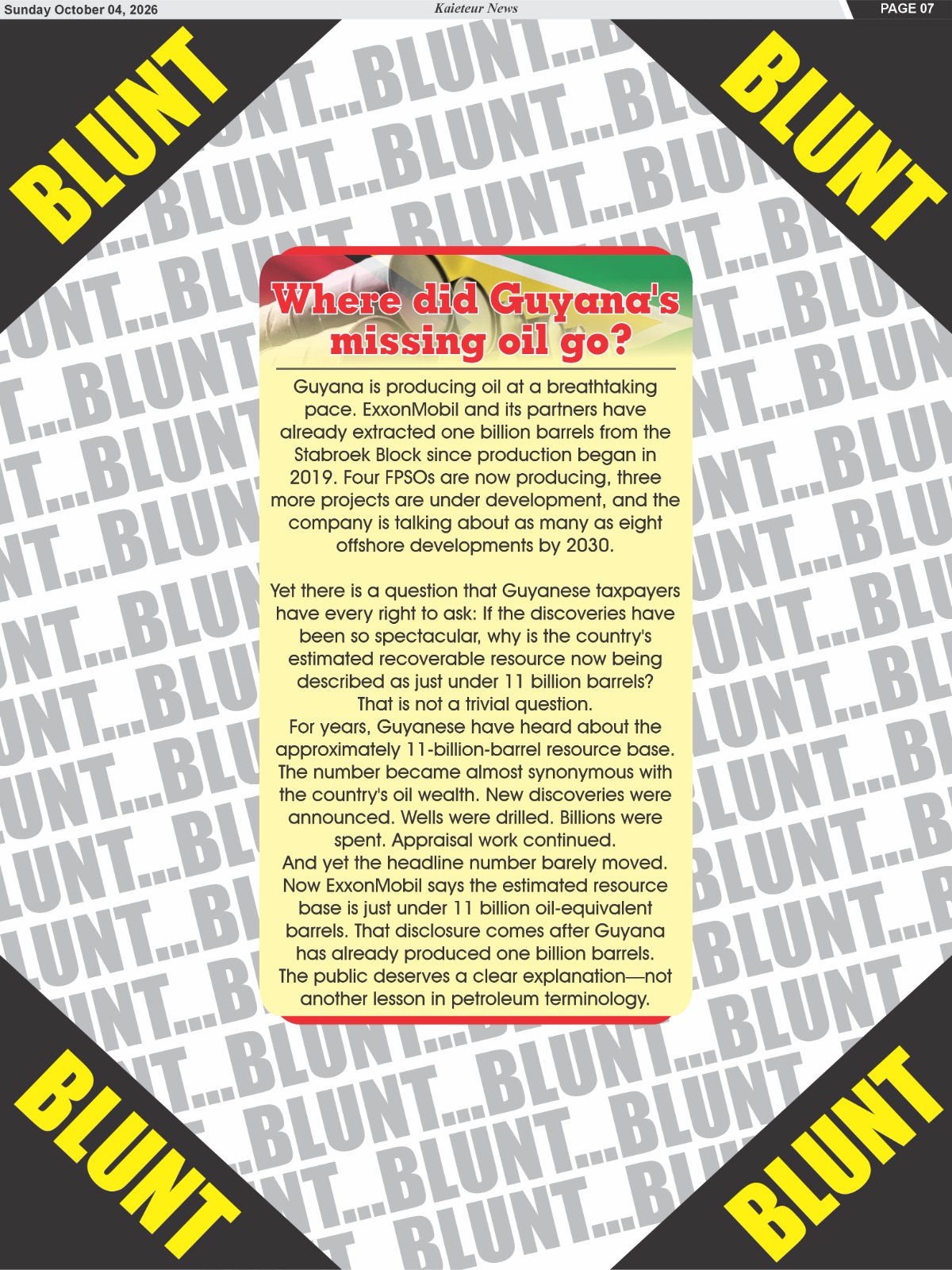
Blunt of the day
Sports
Features/Columnists

Sir. Ronald Sanders

The GHK Lall Column

Weekend Cartoon