Latest update September 2nd, 2026 10:50 AM


Latest News
- Commission wraps up site visit, prepares Arthur Chung Conference Centre, Liliendaal for M/V Barima public inquiry
- Opposition leader demands ring-fencing of future Stabroek Block projects
- GGMC to crack down on unauthorised sale and transfer of mining lands
- Govt. denies negligence in Mahdia dorm fire
- Cuban construction worker electrocuted; two others critical after scaffold hits live wire
The Mohammeds cannot be extradited under the 1931 US–UK Extradition Treaty
(Kaieteur News) – There has been a recurring misconception that the 1931 Extradition Treaty between the United Kingdom and the United States somehow governs extradition between Guyana and the United States today. This contention is, in my opinion, legally unsustainable.
The 1931 treaty was never extended to British Guiana, and therefore it could not have been “saved” or carried over into Guyana’s domestic law at independence in 1966. Any reliance on it today as a basis for extradition is constitutionally, historically, and legally flawed.
The 1931 Extradition Treaty between the United States and the United Kingdom was a bilateral agreement, concluded on December 22, 1931, and ratified in 1935. It replaced earlier arrangements and established reciprocal obligations for the surrender of fugitive offenders between the two powers. Importantly, the treaty included provisions (Articles 14, 16, and 17) that allowed the United Kingdom to extend its application to certain colonies, dominions, and protectorates under British control. The British government, through exchanges of diplomatic notes, indeed extended the treaty to a number of overseas territories—among them Australia, India, Palestine, Transjordan, and several African protectorates. But conspicuously absent from every list of extensions is British Guiana — the colonial name for modern-day Guyana. I have seen no record, in any exchange of notes or subsequent Order-in-Council, of the 1931 Treaty ever having been applied to British Guiana.
That omission is decisive. Under international law, a treaty does not automatically apply to all territories under the sovereignty of a party. Application must be explicit. Since the treaty was never applied to British Guiana, it could not have been in force there at any time prior to independence.
While the 1991 case of King v. Director of Prisons et al. held that Guyana, by its conduct, had not repudiated the 1931 United States–United Kingdom Extradition Treaty and therefore could not rely on the “clean slate” principle to deny its continuity, the more decisive and logically prior question is whether that treaty ever applied to Guyana in the first place. The court’s reasoning presupposed the treaty’s prior application to British Guiana, yet historical and documentary evidence suggests otherwise: the 1931 treaty was never formally extended to the colony by Order in Council or through any exchange of diplomatic notes. If the treaty was never operative within the territory before independence, then there was nothing for Guyana to “accept” or “reject” after 1966, rendering the court’s conclusion on succession largely academic and its foundation constitutionally unsound.
When Guyana gained independence on May 26, 1966, it became a new subject of international law. It became a sovereign state in its own right. Independence carries with it a well-established principle of international law, reflected in Article 16 of the 1978 Vienna Convention on Succession of States in Respect of Treaties:
“A newly independent State is not bound to maintain in force or to become a party to, any treaty by reason only of the fact that at the date of the succession of States the treaty was in force in respect of the territory to which the succession of States relates.” This is the “clean slate” doctrine. A newly independent state starts fresh; it inherits its territory, not its treaties. Thus, even if the 1931 Treaty had somehow applied to British Guiana before independence (and it did not), Guyana would still not automatically have been bound by it after May 26, 1966. It would have required explicit consent — through succession, reaffirmation, or renegotiation — for that treaty to continue in force.
There is no evidence of any such act between Guyana and the United States following independence. Nor is there any diplomatic note or declaration between Guyana and the United Kingdom confirming that the 1931 Treaty would continue to bind Guyana. To bridge the transition from colonial rule to independence, the Independence Constitution of 1966 (the Guyana Independence Order 1966) contained a savings law clause — a standard feature in post-colonial constitutions. Its purpose was to preserve existing laws that were in force immediately before independence so as to prevent a legal vacuum.
However, the savings clause has limits. It preserves laws, not treaties that were never part of the domestic legal order. Moreover, for any treaty obligation to be “saved,” the treaty must have been in force and applicable within the territory prior to independence. Since, in my opinion, the 1931 Extradition Treaty was never extended to British Guiana, it could not have been part of the colony’s “existing laws” in 1966. There was, therefore, nothing for the savings clause to preserve. In short: one cannot save what never existed.
Even if one were to argue that an extradition treaty is a form of “law,” such continuity would still require bilateral intent. A treaty cannot survive unilaterally; both parties must agree to its continuation. There is no indication that either Guyana or the United States took steps to revive or extend the 1931 agreement after independence.
A country becomes bound by an international treaty through an affirmative act of accession or ratification, not by mere silence or failure to deny its applicability. International law rests on the principle of state consent. No state can be bound to a treaty unless it has clearly and voluntarily expressed its intention to be so bound. Ratification and accession are the recognized legal mechanisms by which such consent is given, each involving a formal declaration by the state and, in most cases, compliance with its constitutional procedures.
Conversely, the absence of repudiation or denial cannot substitute for the positive act of consent required by law. A treaty cannot apply to a state by default, by presumption, or by inertia; it applies only where the state has taken deliberate and formal steps to accept its obligations. The constitutional sovereignty of Guyana requires that the extradition of its residents and citizens be governed only by laws to which Guyana itself has consented, not by relics of colonial arrangements that were never applied to its territory.
The issue goes beyond technical legal argument. At its core, it is about sovereignty and the integrity of Guyana’s legal system. The right to decide which international treaties bind the Republic is a sovereign prerogative. To rely on a treaty that was never in force for British Guiana, and which was never reaffirmed by independent Guyana, is to undermine that sovereignty.
The legitimacy of the extradition process depends upon clear legal authority. Extradition is one of the gravest acts a state can perform against an individual. It involves surrendering a person to a foreign jurisdiction. It must therefore rest on an unimpeachable legal foundation. The 1931 treaty provides no such foundation. It was a treaty between two other nations — the United Kingdom and the United States, concerning territories to which British Guiana did not belong for purposes of that agreement. In matters of extradition, legality must begin where sovereignty begins: in Georgetown, not in London or Washington.
(The views expressed in this article are those of the author and do not necessarily reflect the opinions of this newspaper.)
Share this:

Discover more from Kaieteur News
Subscribe to get the latest posts sent to your email.
Similar Articles
One thought on “The Mohammeds cannot be extradited under the 1931 US–UK Extradition Treaty”
Website Hits

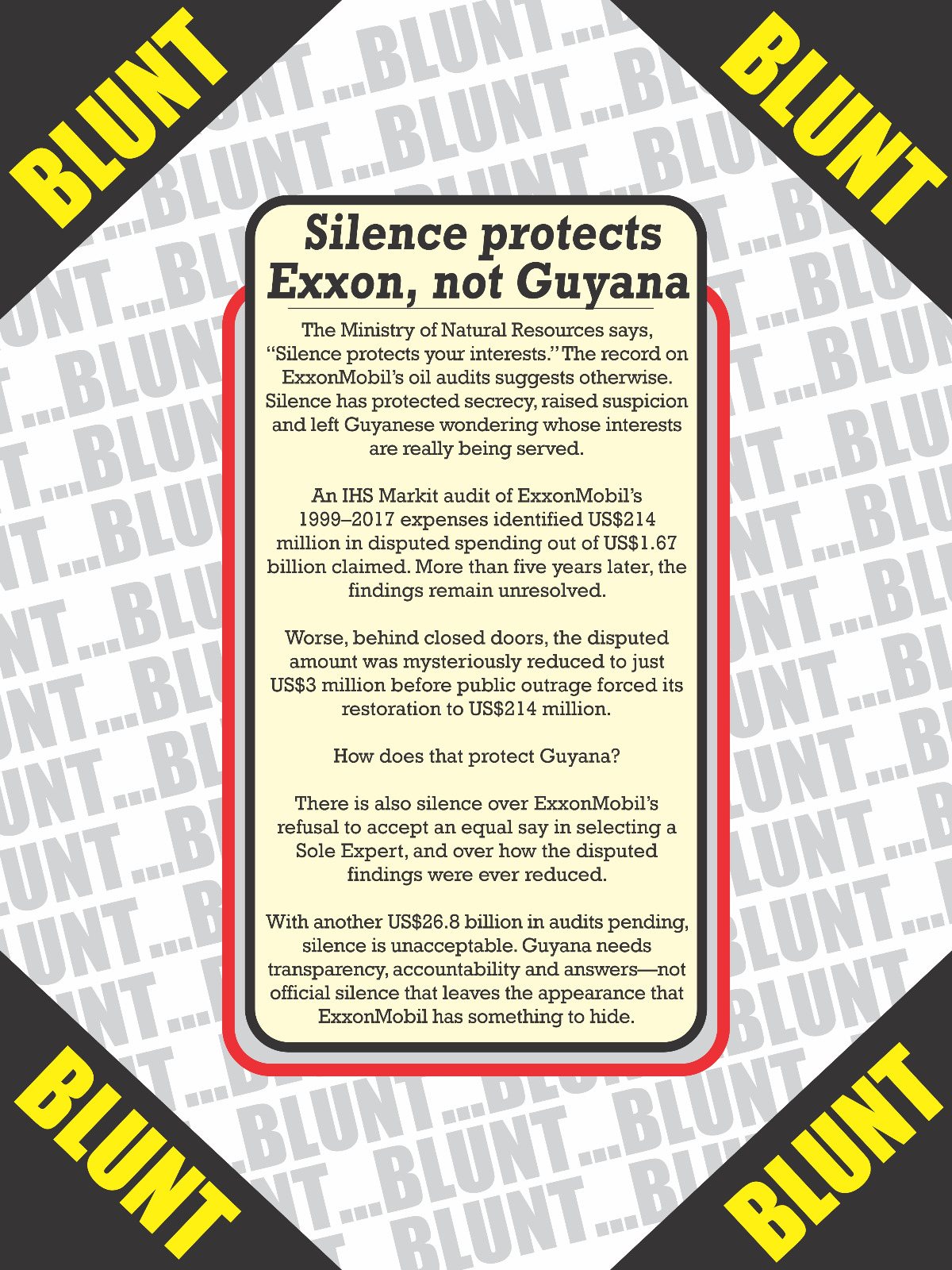
Blunt of the day
Sports

Features/Columnists

Sir. Ronald Sanders

The GHK Lall Column

Weekend Cartoon


Great explanation, should be posted to all news out lets as it goes to the roots of this problem with the case of the Mohamed’s. Impartial and Well written Well done.