Latest update July 26th, 2026 2:05 AM



Latest News
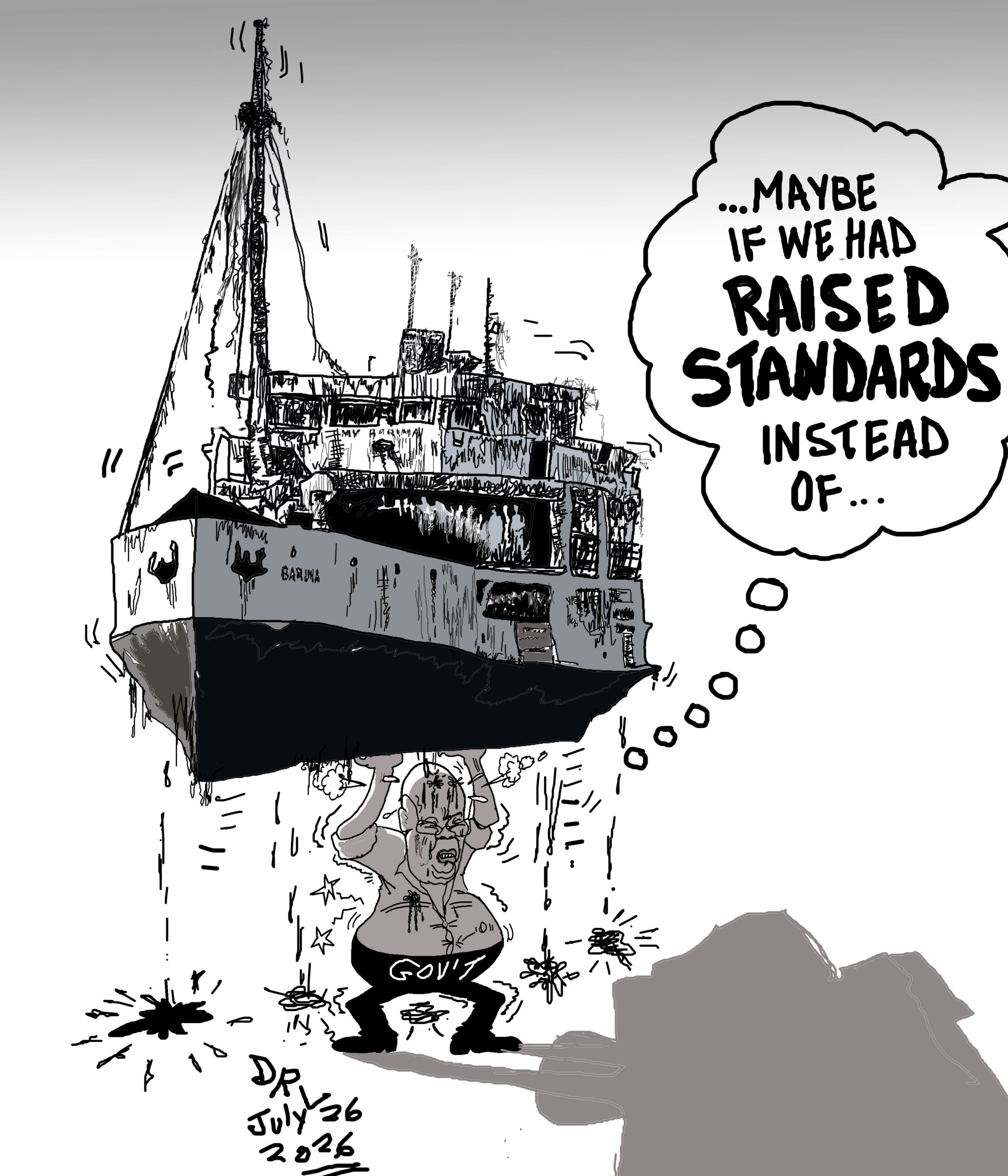
- Pres. Ali to unveil 5-member Int’l COI today to probe MV Barima disaster
- After six years of pumping oil, Guyana’s debt increased sixfold
- Other nations’ ministers stepped down following deadly ferry disasters
- Grieving mother calls on Govt. to subsidise airfares after ferry tragedy claims son
- GHRA demands Parliament-led COI into MV Barima sinking
Election in Guyana: Changing Voters Dynamics & The Decline of Racialism
Dear Editor,
The recently concluded 2025 General and Regional election in Guyana has marked a historic milestone in our country’s political evolution. The People’s Progressive Party/ Civic (PPP/C) unsurprisingly secured a decisive and expanded victory. Not only that, but they also made unprecedented inroads into regions traditionally aligned to the opposition. This shift in the electorate signals the potential weakening of the deeply entrenched and abused ethnic voting patterns that have long defined the Guyanese political arena. In a country historically divided between Indo-Guyanese and Afro-Guyanese political allegiances, the results of the 2025 election hints at an emerging national consciousness rooted in performance, policy, and inclusivity.
The Guyana Elections Commission (GECOM) on September 6th, 2025, made its official declaration on the 2025 election. From that declaration, the PPP/C emerged victorious securing 242,498 votes. The PPP/C significantly outpaced both APNU with 109,066 and WIN 77,998 votes. This led the PPP/C into a landslide victory and earned them 36 seats out of 65 seats in the parliament (three more than the previous term). The results too have shown notable change in Guyana’s political map.
One of the most striking observations of those results was the PPP/C’s victory in Region Four (Demerara-Mahaica) which is the largest populated region, home to the capital, Georgetown and long considered a stronghold of the PNC. The PPP/C outpolled all its rivals in this once impenetrable region for the first time in Guyana’s post-independence history, securing over 87,000 votes. This victory represents more than a numerical success, it represents a symbolic breakthrough in the heart of the political and cultural opposition to the PPP/C.
Historically, Guyanese politics have mirrored the country’s ethnic composition. The PPP/C has been largely supported by Indo-Guyanese while the PNC garnered its support from Afro-Guyanese. However, the recent election results highlighted a significant departure from this rigid divide. The PPP/C winning majority votes as a single party in region four, an urban, Afro-Guyanese majority constituency, was emblematic of this shift. Voters in Georgetown and surrounding areas, previously loyal to the PNC gravitated towards the PPP/C. Factors contributing to this included dissatisfaction with the opposition, the emergence of the unpredictable WIN party and the PPP/C’s effective messaging focused on inclusive economic development and national unity. The PPP/C also managed to deepen its dominance in its traditional strongholds like Regions Two, Three, Five and Six while increasing its outreach in the Indigenous Regions like Regions One, Seven and Nine. PPP/C notably increased its vote count in region Nine by more than 2,000 votes compared to the 2020 election results. We must also pay close attention to the WIN support in the hinterland communities; this is likely to disrupt the binary power structure and further signals a shift towards multi-ethnic political alignments.
One of the key takeaways from the 2025 elections is the growing importance of issue-based politics over ethnic loyalty. The PPP/C’s campaign was not built on ethnic appeals but rather on developmental promises including infrastructural upgrades across all regions, expansion of social services, education, and healthcare.
The PPP/C’s policies of the last five years and those in its 2025-2030 manifesto appeared to have resonated across demographic lines. The PPP/C’s message of progress and shared prosperity appealed not only to its traditional voters but also to voters across all ethnic and geographic lines. The PPP/C’s ability to outperform both the traditional opposition and the new contender in many areas speaks largely about its broadening voter base.
The PPP/C’s ability to emerge victorious in non-traditional areas and the general shift away from the racially polarized voting patterns raise important questions about the future of racialism in Guyana. For decades, the politics in Guyana has been heavily racialized, with voting largely reflecting ethnic identities rather than policy preferences. This is what the PNC heavily capitalized and relied on in all the elections. However, the results of the recent elections suggest that this may be changing.
There are several indicators which supports the view of the emergence of a new and changing dynamics of voting in Guyana.
Firstly, Cross Ethnic Voting, the PPP/C’s victory in Region Four was only possible by Afro-Guyanese votes. This shows an increasing percentage of the population willing to vote across ethnic lines when presented with competent governance and inclusiveness.
The second indicator is Multi-Ethnic Platforms. While the PPP/C remains the largest multi-ethnic party in Guyana the emergence of WIN suggests that the political system is opening to more non-ethnic party identities. Therefore, as more voters gravitate to such parties, racialism in politics is more than likely to lose its centrality.
Thirdly, Inclusive Policy Implementation nationwide. The PPP/C has always believed in national development and inclusiveness. Its efforts to include Indigenous communities in its national developmental agenda through infrastructure, education, healthcare, tourism, and environmental programmes further dismantle the perception of ethnic favouritism. The fulfilling of these promises and commitments is building trust across all communities, and it is solidifying the foundation of a new political transformation.
Lastly, an important indicator is youth engagement and social media. Young voters exposed to social media are less likely to subscribe to ethnic-biased political affiliation. Their exposure gives access to global ideas and connected to information on digital platforms that fosters a preference for accountability, transparency, and tangible development. These are all values that transcends ethnicity and race.
The 2025 elections provide a ray of hope for a more inclusive political future for Guyana. However, entrenched ethnic narratives do no disappear overnight especially in societies like ours where there are persons and organisations that continue to propagate race talks and feed off it daily. Political rhetoric, historical grievances, and community level biases will continue to influence how parties are perceived. The opposition’s sharp decline was mainly due to it clinging to identify politics and racial biases for decades and if it continues to hold on to this then it will definitely struggle to regain the support it once had.
The elections of 2025 undoubtedly mark a turning point in the nation’s political journey. It underscores a shift away from the rigid ethnic allegiances towards a more inclusive and performance-based politics. And with a more fluid voter base, political parties may need to compete on performance and policies rather than race.
While this evolution is far from complete, it nevertheless represents meaningful progress in a society long divided by race. This trajectory can continue steadily with responsive governance, inclusive policies, and commitment to equity. Upon this realization, Guyana may finally transcend its past of ethnic polarization and build a more unified and democratic future, a future that the People’s Progressive Party/ Civic has been advocating Guyana for, since its birth in 1950.
Regards,
Shivesh Persaud
Share this:

Discover more from Kaieteur News
Subscribe to get the latest posts sent to your email.
Similar Articles

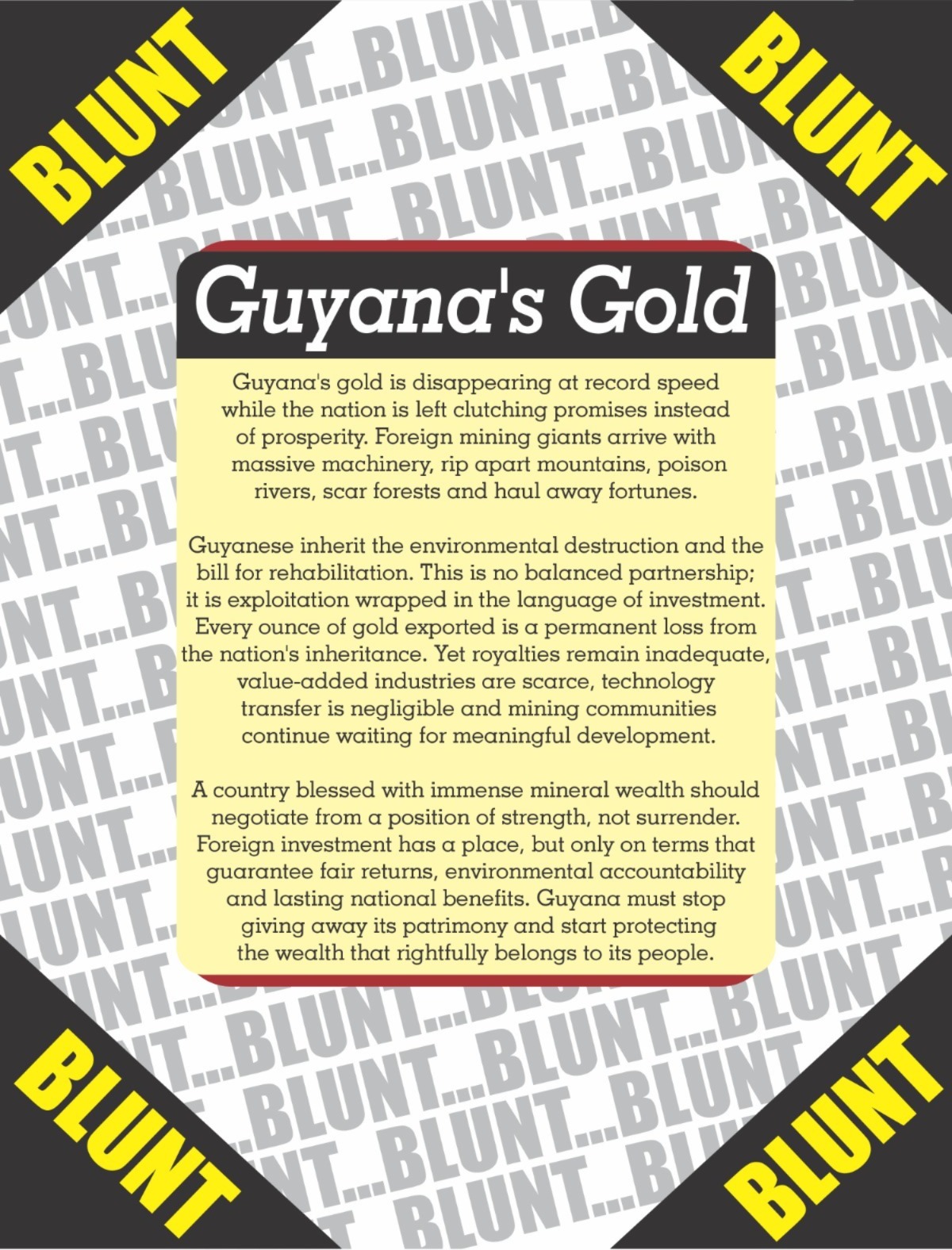
Blunt of the day
Sports
Features/Columnists

Sir. Ronald Sanders

The GHK Lall Column

Weekend Cartoon