Latest update October 7th, 2026 10:30 AM


Latest News
- US$214M audit dispute with Exxon now before ICC
- Suriname rejects 384.8 tonnes of Guyana rice over missing import approval
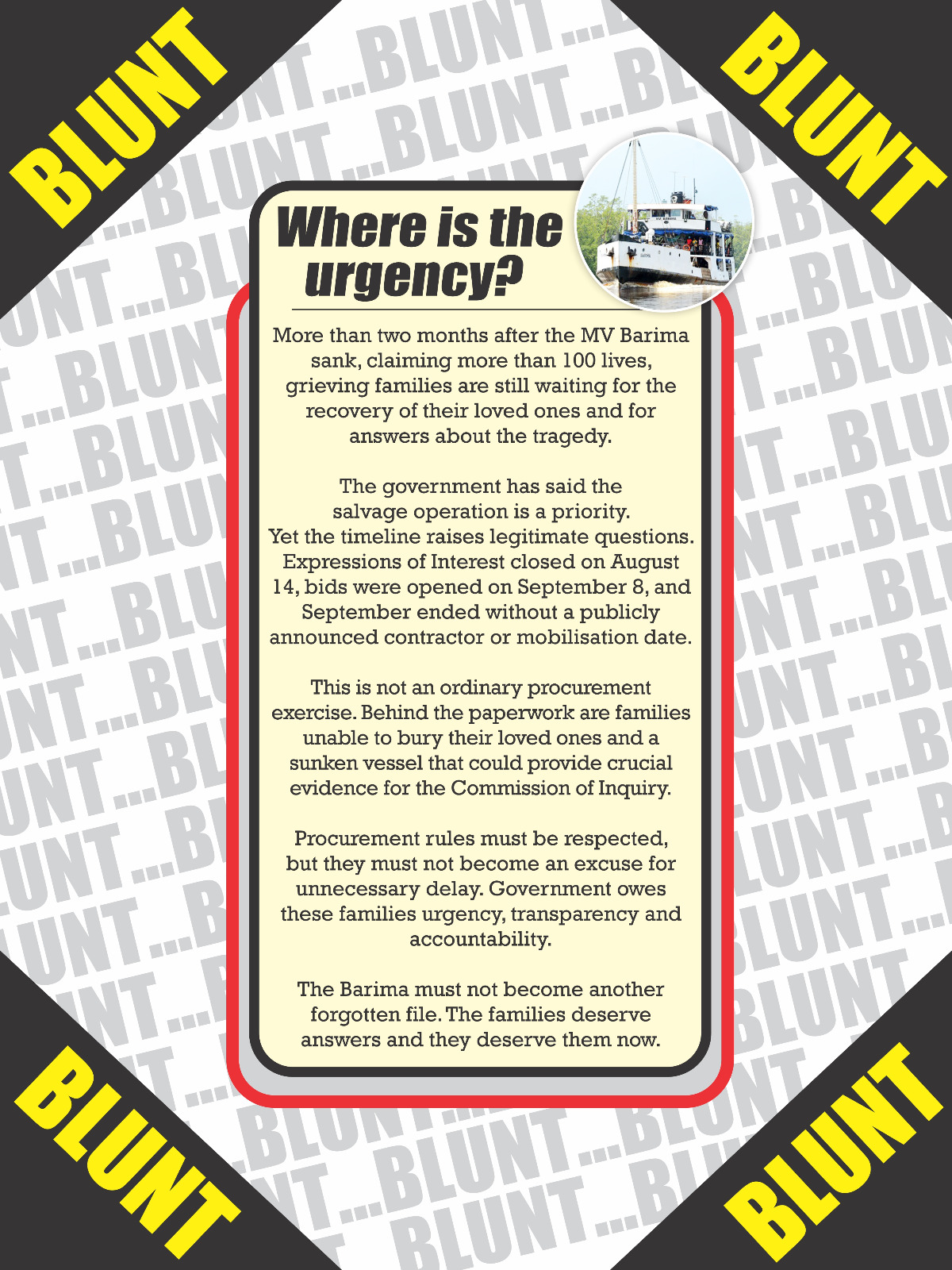
- MV Barima CoI to last 6 months amid boycotts, protest over unsalvaged vessel
- President’s Lawyer admits reporting Opposition Leader’s page before meta suspension
- Rodrigues-Birkett stands by Gaza ‘genocide’ remarks
Child rights and abuse
…Editorial
Kaieteur News- Violence against children whether physical, emotional, or sexual continues to be a major problem in our country.
Its impacts are severe, leading to injuries, sexually transmitted infections, mental health issues such as anxiety and depression, and death. According to the latest available global data by UNICEF: every 4 minutes, somewhere in the world, a child is killed by an act of violence; about 90 million children alive today have experienced sexual violence; 650 million girls and women (1 in 5) alive today were subjected to sexual violence as children, including over 370 million (1 in 8) who experienced rape or sexual assault.
Additionally, UNICEF said in fragile settings, girls face an even greater risk, with the prevalence of rape and sexual assault in childhood slightly more than 1 in 4. The organization said nearly 50 million adolescent girls aged 15-19 (1 in 6) have been victims of physical or sexual violence by their husbands or partners in the past year.
Additionally, it said 410 to 530 million boys and men (around 1 in 7) experienced sexual violence in childhood, including 240 to 310 million (around 1 in 11) who were raped or sexually assaulted. According to UNICEF 1.6 billion children (2 in 3) regularly face violent punishment at home; more than two thirds are subjected to both physical punishment and psychological aggression. The organization said violence takes the lives of about 130,000 children and adolescents under 20 each year on average with boys facing a higher risk of dying from violence: 3 out of every 4 children and adolescents killed by violence were boys.
Instances of abused children litter the pages of our newspaper with alarming frequency. It does not matter what school of psychology or sociology we believe in. All agree that it is not clothes but the child that “maketh the man”. Subconsciously, one’s childhood experiences, especially injuries, exert a great influence over one’s thinking as an adult; and if we create damaged children, we will end up with damaged adults who have difficulty in not acting anti-socially.
Unpleasant experiences sink into the psyche to later emerge as “disorders”. It is universally accepted that every child has a right to be considered of equal intrinsic worth, and hence entitled to equal socio-economic, civil and political rights so that he/she may realize his/her potential and share in life, liberty and the pursuit of happiness. A working definition of child abuse may be any act of omission or commission that endangers or impairs a child’s psychological health and development judged on the basis of a combination of community standards and professional expertise. It may be committed by individuals, individually or collectively, who, by their age, status, knowledge etc., are in positions of differential power that renders a child vulnerable.
Of the types of child abuse, physical abuse consists of any non-accidental form of injury or harm inflicted on a child by a person; this includes beating, burning or wounding.
Physical abuse is common in our society, where corporal punishment such as slapping, etc. is considered the norm. However, corporal punishment that injures the child to the point where medical attention is required is a form of physical abuse outside the limits of normal corrective discipline. It is sometimes difficult for even doctors to determine whether a child who is brought in to a hospital is the victim of an accident or whether the injury has been caused by physical abuse. It is therefore imperative for doctors to place importance on this task, and be able to differentiate between accidents and abuse.
Sexual abuse cases – any sexual act with a child performed by an adult or by another child – also abound in Guyana. Females appear to bear the brunt of this type of abuse, although boys are also at risk. While all sexual abuse of children is heinous, incest —- sexual activity between individuals related by blood —- reportedly cause the greatest and most long-lasting trauma in children.
Ironically, it may be the most common type of sexual abuse of children on account of the opportunities presented because of the sexual predator being “family”. The behavioural indicators of neglect include withdrawal, or depression, when he/she assumes adult responsibilities, appears consistently hungry or thirsty, steals food, demands physical contact or attention, has poor social relationships, engages in delinquent acts, vandalism, substance abuse, appears fatigued, listless, and lethargic, and is passive. How many adults around us do not fit this description? The Ministry of Human Services has its work cut out for it – but it is the work of all of us, isn’t it?
(Child rights and abuse)
Share this:

Discover more from Kaieteur News
Subscribe to get the latest posts sent to your email.
Similar Articles
Website Hits

Blunt of the day
Sports
Features/Columnists

Sir. Ronald Sanders

The GHK Lall Column

Weekend Cartoon