Latest update July 28th, 2026 10:33 AM



Latest News
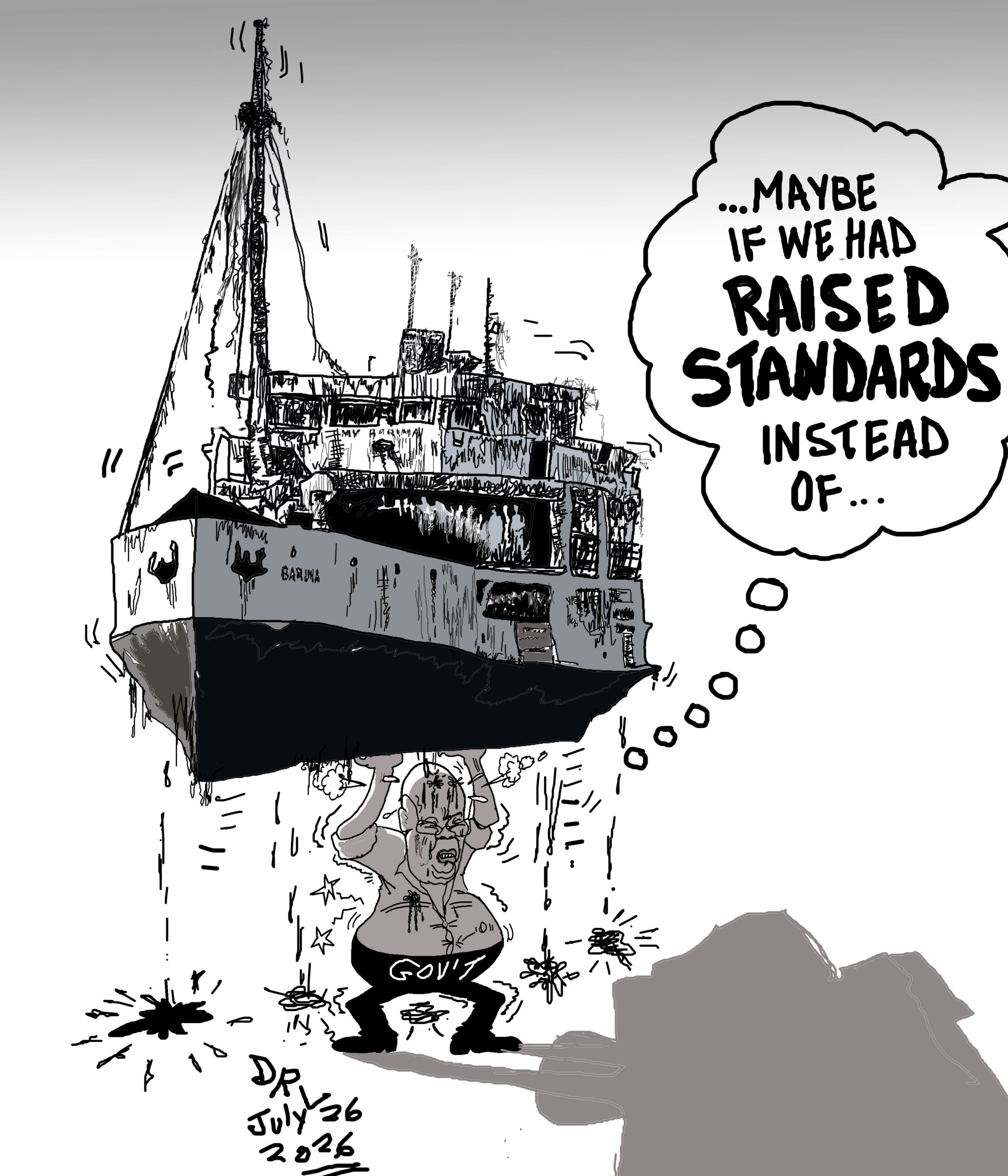
- MV Barima captain, two crew members charged with murder
- Protest erupts in Parliament as opposition demands Edghill, Indar resign over MV Barima tragedy
- Govt. floats leaving MV Barima on seabed as memorial site
- Bodies of five victims of MV Barima tragedy still to be identified- Health Ministry
- ‘Driven Out by Despair’: Thousands of Cubans find refuge in Guyana
Arbitration renders audit of ExxonMobil expenses meaningless – former Auditor General
Kaieteur News – The 2016 Production Sharing Agreement (PSA) Guyana signed with United States oil major, ExxonMobil and its partners grant the country a two-year period, following the end of any fiscal year, to conduct a review of the expenses incurred by the operator of the Stabroek Block, Esso Exploration and Production Guyana Limited (EEPGL).

Former Auditor General, Anand Goolsarran
That arrangement also allows for a majority of the revenue earned- 75 percent- to be deducted towards cost recovery, or repaying the oil companies for its investments to extract the resources. The remaining revenue is then shared equally as profits between the state and the Stabroek Block partners.
Given that the lion’s share of the resources are directed to the recovery of costs, Guyana’s priority should therefore be to ensure that these bills were not inflated or that it did not pay for goods or services contrary to the provisions of the PSA.
Former Auditor General (AG), Anand Goolsarran in his weekly column published by Stabroek News on Monday concluded his review on the new Petroleum Activities Bill released by the Government of Guyana (GoG) on June 19, 2023. In his final analysis of the draft document, Goolsarran highlighted that the proposed legislation does not feature provisions relating to production or profit sharing which he noted would be left to be negotiated between government and petroleum companies in future PSAs.
To this end, he noted: “we have seen how the 2016 PSA with ExxonMobil’s subsidiaries was overwhelmingly weighted in favour of the U.S. oil giant. In particular, 75 percent of monthly production of crude oil goes towards the recovery of costs, leaving the remaining 25 percent as profit oil to be shared equally between Exxon and the Government.”
After establishing the importance of the cost recovery sum, the former Auditor General went on to point out that the provisions of the PSA have been widely criticized as the absence of a ring-fencing clause leaves the door open for costs to be overstated.
He wrote, “Several aspects of the 2016 PSA have been severely criticized by many stakeholders. One such criticism relates to the possibility of recoverable costs being over stated due to several loopholes in the agreement, especially the absence of ring-fencing provisions.”
Goolsarran was keen to note in his column that while the oil contract provides for the auditing of such expenditure to ensure the accuracy of the amounts shown in the cost statements, there has been a “laissez-faire attitude” towards enforcing this requirement and acting on the results. The former AG, who has over 30 years of professional experience in public sector financial management locally and internationally, pointed out that when auditors were finally appointed to review the US$1.6 billion expenses incurred by ExxonMobil during the period 1999 to 2016, the authorities failed to get the company to adjust the amounts shown as recoverable in the Report compiled by the British auditing firm, IHS-Markit.
That report indicated that some US$214M in costs could be contested by State authorities. Shortly after, Vice President Bharrat Jagdeo indicated that government is prepared to challenge disputed costs claimed by ExxonMobil through the process of international arbitration.
This is so as it refuses to renegotiate the terms of the lopsided agreement signed by the former Coalition government. According to the contract, costs that have been flagged in an audit and deemed unacceptable can be recovered by the Contractor until the dispute is resolved. Goolsarran has therefore asserted, “This attitude renders the auditing provisions ineffective, if not meaningless.” The AG told his readers that due to the difficulties in verifying recoverable costs, a number of countries have moved away from the profit-sharing model, or are about to do so, to one of revenue sharing.
In the new model PSA, government has proposed to cap cost recovery each month at 65 percent of revenue, thereby increasing the value of profit to be shared. Goolsarran noted that to avoid mistakes made in the Exxon contract, the government should move to include specific provisions on revenue sharing, signature bonus, royalty and fiscal concessions in the new law.
The analyst also shared that the fixed share of profits approach ignores the profitability of the project over time. He said the International Monetary Fund (IMF) reported that most PSAs globally include a formula in which the government’s share increases as a function of production, a combination of production and prices, or an economic variable such as the ratio of cumulative revenue to cumulative costs, or the project’s internal rate of return. Additionally, Goolsarran pointed out that in many countries, the top tier government share of profit oil could be as high as 80 or 90 percent. He said, “Considering that Exxon’s tax liability has to be settled from the Government’s share of profit oil, the Government’s take is considered relatively low.”
Share this:

Discover more from Kaieteur News
Subscribe to get the latest posts sent to your email.
Similar Articles

Blunt of the day
Sports

Features/Columnists

Sir. Ronald Sanders

The GHK Lall Column

Weekend Cartoon