Latest update October 4th, 2026 10:35 AM


Latest News
- Controversial U.S. company in running for Amaila hydro project
- 40 citizens, 4 organisations appeal EPA’s no-EIA decision on Kurupung uranium project
- Israeli air attack on Gaza City apartment kills at least five
- CANU finds uncustomed alcohol at Windsor Estates property
- Govt. still reviewing Exxon’s 8th Stabroek project
Lincoln’s daydream – realising Article 13
It was never my dream, but last Tuesday evening I was asked the question by Leonard Gildarie of Kaieteur Radio, if I am President what would I do.
Similar questions were asked of me before. So if anyone dares to accuse me of being pompous and overrating myself, let me here and now claim no such. First of all, my academic qualifications may not be satisfying to those who consider the position as one needing lots of advanced certification (whatever they might be).

Lincoln Lewis
Looking around the world, I realise this is not a universal position and there is more to being president other than be the recipient of countless degrees. We have seen failures with degrees, bad decisions, selfishness, lack of vision, weakness, cruelty and lack of a people’s personality.
We see lettered presidents who are the biggest hindrance to people’s development. So I have concluded that it takes more than lettering. It takes wisdom, vision, integrity, understanding and an ability to compromise and negotiate. It takes love of people and a desire to see fair play and justice served to all. These are qualities I believe I can claim quite comfortably. They are not taught in classroom but learnt along the course of life, starting at home.
So whereas, I declare myself working class, a blue collar worker who values deeply the role I play in shaping Guyana’s history and the quality of life of families through trades union activism and leadership, I am declaring that I am eminently qualified to dream. I was once upon a time President of this august group of fighters, so I understand the importance of servant leadership, social justice and solidarity. These are the philosophical pillars of the trades union movement. With such knowledge and wisdom inculcated and nurtured over the years, here is what I would do as one of the first steps governing this country given the plurality of the society and the challenges we currently face.
Let’s call this piece Lincoln’s daydream and bear with me as I lose myself for a moment in the grandiosity of such power. Before I do let me reflect. I recall vividly the admixture of expressions in the smiling face of Cheddi Jagan in 1992 when he addressed the nation as President.
One could not help but feel his joy which was evident in his face after so many years in the opposition. One can imagine Forbes Burnham who became the country’s first president with executive responsibility in 1980. What a personal sense of satisfaction he must have felt knowing what that meant for local empowerment.
For me, President Lincoln Brandon Lewis, the daydreamer, the joy is that associated with a make-belief situation and the opportunity that such would grant me to give meaning to Article 13 of the Guyana Constitution. That would be moment of glee because finally, I get to do what others before me have either ignored, taken for granted, failed to appreciate and not diligently pursued. Article 13 is representative of the vision of the Forbes Burnham Constitution. It shows a dream for this nation of ours torn apart by ethnic strife and political greed.
This article embodies the very essence of what we as a people need to do in order to move Guyana forward in unity. It is premised on the belief that each group has an entitlement to share in the nation’s decision making, to participate equally and be treated equally. The present Article 13 ensconced during the struggle for a more inclusive governance strengthens our democracy and gives meaning to our motto of “One People, One Nation, One Destiny.” It is who we are or rather who we are supposed to be. It is the constitutional direction charted by democratic thinkers not the work of dictators who did not see the wisdom of sharing power and uniting all peoples.
It is the dream I want to see realised, a dream that today those who speak of democracy shy away from and pay no interest in giving meaning to, through relevant laws and policies. Article 13, if and when fully realised, can reduce the tensions of our different groups. The trust in each other to best represent them is marginal or virtually nonexistent. Many are therefore left to feel denied, desperate and fearful, unless they control the powers vested in the presidency and the majority of seats in parliament.
There is no guarantee that once elected, grievances and rivalry will be cast aside and whoever governs will embrace the constitution and be president of all. Article 13 offers some protection to the aforesaid but requires relevant laws to give it meaning.
A few examples of what can stem from Article 13 are as follows:-
• Making the nation’s highest decision-making forum, the Parliament, more inclusive by amending the Representation of the People Act to allow for the 20 Geographic (Regional) Members of Parliament to be elected directly by the people of the ten administrative regions and the National Parliamentarians be elected by the Proportional Representation system.
• Giving the Opposition a meaningful stake in planning and decision-making in parliament by amending the Constitution to allow for major Bills such as the Appropriation (National Budget) to be passed by no less than 60 percent of the vote of all the elected members of the National Assembly.
• Enacting legislation for State boards requiring representation by the Opposition and Government based on a formula arising from Proportional Representation which includes the rest of the stakeholders.
• Allowing greater percentage in the decision-making structure of regional and local governments.
• The regional system will realise its intended autonomy through enactment of legislation consistent with Article 76 of the Constitution which stipulates, “Parliament may provide for regional democratic councils to raise their own revenues and dispose of them for the benefit and welfare of their areas.”
• Removal of party politics at the local government level, giving way to communities to identify and elect their leaders. This would allow the people at that level to take control of their villages and identify their needs at the level of the Local Democratic Organs.
Article 13 reads simply, “The principal objective of the political system of the State is to establish an inclusionary democracy by providing increasing opportunities for the participation of citizens, and their organisations in the management and decision-making processes of the State, with particular emphasis on those areas of decision-making that directly affect their well-being”
A Lincoln Lewis presidency would be ushered in with a smile that can be interpreted as “Yes…we can now give meaning and continue the dream that our Independence fighters, those whose shoulders they stood on must have had when they fought for freedom and internal self-government”.
When we wrote into the constitution, Article 13, which stands as a reminder of what the principal objective of our political system is, it speaks to individual and groups involvement in the management and decision-making processes that affect their well-being. It has the potential to give everyone the opportunity to be involved in planning not only at the national level but at the regional and local government levels.
My daydream is unfortunately at an end. I am not president! It’s just me dreaming. But unlike some, I have a dream, it’s one I am proud to share and desire to achieve. I wake to the reality that what I must continue to do is doggedly pursue the realisation of meaning being given to Article 13.
Guyanese deserve the fulfillment of the goals of those who wrote the Guyana Constitution. A document that we must not tamper with willy-nilly and which offers us protection and guidance if we only take the time to appreciate and stop trying to malign it because of the era of its writing and under whose leadership it was written.
(The views expressed in this article are those of the author and do not necessarily reflect the opinions of this newspaper.)
Share this:

Discover more from Kaieteur News
Subscribe to get the latest posts sent to your email.
Similar Articles
Website Hits

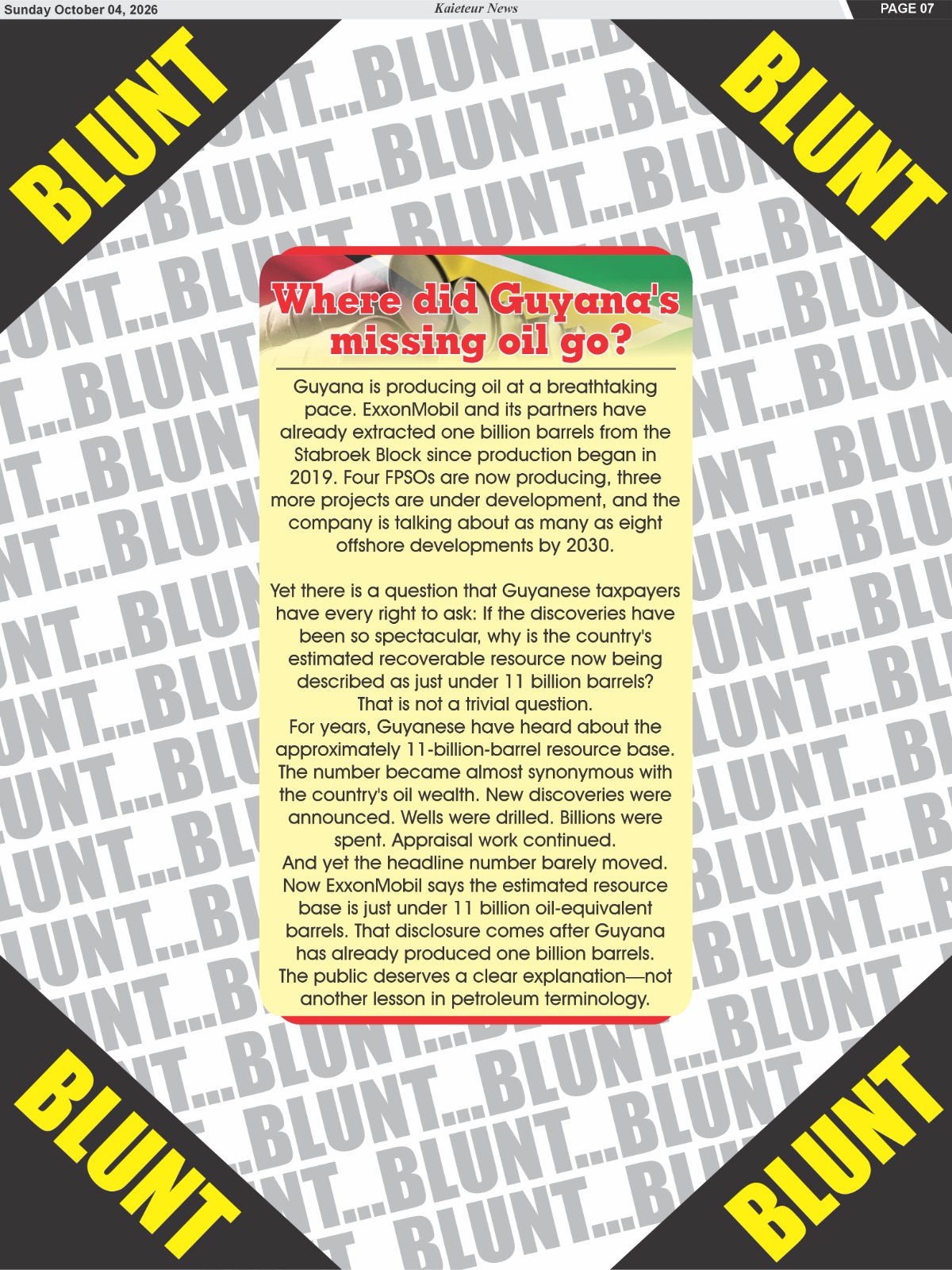
Blunt of the day
Sports
Features/Columnists

Sir. Ronald Sanders

The GHK Lall Column

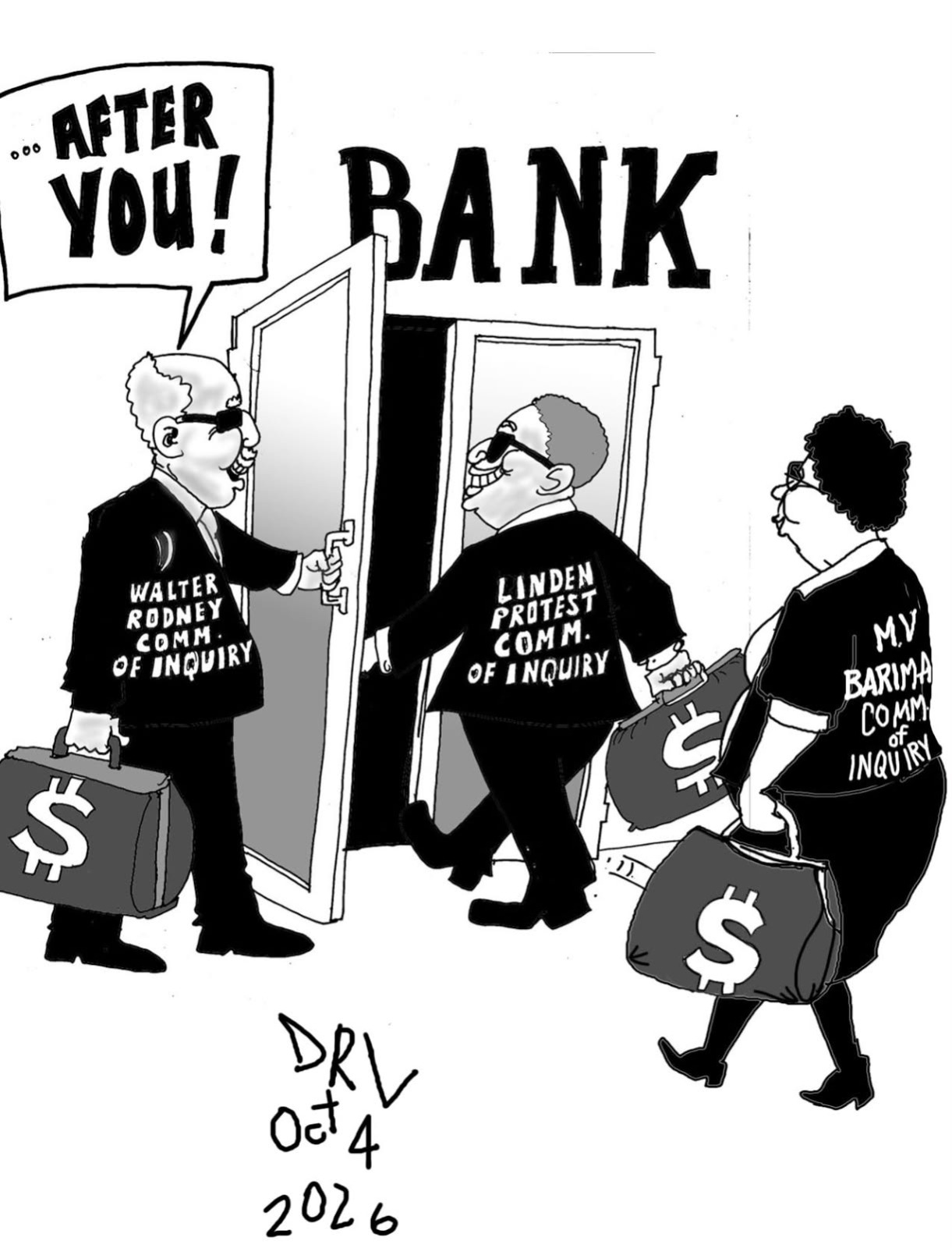
Weekend Cartoon