Latest update July 23rd, 2026 12:30 AM



Latest News
- MV Barima Disaster… Brazil, T&T come to Guyana’s rescue
- Govt. cannot investigate itself! – Amanza Walton
- Billions from oil, no safe passage for hinterland residents – MP Hastings on MV Barima tragedy
- Oil settles up more than 3% to six-week high as Mideast conflict threatens oil transit routes
- Opposition unites in call for Edghill to go
From Where I Stand: The Democratic Culture We Must Intentionally Build
By Janelle A.N Persaud
(Kaieteur News) – Two weeks ago, I delivered a TED Talk on democracy. My central argument was that democracy is not plug-and-play and it does not thrive simply because we adopt elections or constitutions. Like any living system, it depends on conditions.
Since then, I have found myself immersed in a very different, but deeply connected, conversation.

By Janelle Persaud
Over the past week, I have spoken with Guyanese who are organising around electoral reform. I also had the opportunity to discuss Guyana’s democratic trajectory with representatives of The Carter Center following the release of its latest election report. The report, like similar assessments from other international observers over the years, raises important questions about our electoral institutions: from campaign finance and constituency boundaries to GECOM and constitutional reform.
I agree that these conversations matter. In fact, I would support serious efforts to improve our electoral system. But I am much more concerned with the health of our overarching democratic culture.
This distinction matters because one asks how we improve elections and the other, how we build the kind of society in which democracy can genuinely flourish.
Those are not the same question.
A country can very well conduct technically sound elections and still struggle with mistrust, fear, polarisation, weak civic participation and institutions that fail to command public confidence. Likewise, no amount of constitutional engineering will automatically produce citizens who feel empowered to participate, who trust one another enough to disagree respectfully, or who believe their voices matter beyond elections.
That kind of democracy must be cultivated, which requires intentionality.
I use that word deliberately because we often reduce conversations like these to “political will.” Of course, political leadership is important. Someone has got to lead the reform. But building a healthy democratic culture cannot be the responsibility of government alone.
There need to be intentional choices across an entire society.What should schools teach if we hope to raise engaged citizens rather than just successful exam candidates?
What responsibility do universities have to produce the research and ideas needed to solve Guyana’s own problems instead of just graduates?
What role should our media play in strengthening informed public debate rather than merely reporting political conflict?
How do businesses contribute to a society where citizens feel economically secure enough to disagree without fearing the loss of opportunity?
What responsibilities do faith communities, civil society organisations and families have in cultivating respect, participation and civic responsibility?
And significantly, what responsibility do you and I bear as citizens?
These are not abstract questions.
Recently, while participating in a consultation on the impact of social media on children, I asked what research had been conducted on Guyanese children to inform the need for regulation and or future legislation. One of the presenters had earlier commented that the university didn’t have the research capacity to undertake work of that scale.
This comment reinforced something that has been on my mind for a while.
Capacity doesn’t just exist, it has to be built intentionally.
If we aspire to evidence-based policymaking, then we must invest in the institutions capable of producing that evidence. If we want Guyanese solutions to Guyanese challenges, we must therefore strengthen the University of Guyana, support independent research, and create space for scholars, practitioners and communities to work together in understanding our society. I want to say some of that GOAL investment could go to UG, but thats another topic for another day.
What I’m saying here is that this extends well beyond democracy. To me, this is a matter of nation building.
One of my academic mentors, Professor Percy Hintzen recently challenged me to think beyond democratic institutions and toward what economist and philosopher Amartya Sen would call the capabilities people need to live meaningful lives and participate fully in society. That conversation has been stuck with me and prompted me to ask whether healthy democracies depend on more than strong institutions, but on citizens who possess the knowledge, confidence, economic security and sense of agency to engage those institutions meaningfully.
I suspect the answer is yes. There is another reflection that these recent conversations have prompted.
For decades, Guyana has benefited from the observations of organisations such as The Carter Center, the European Union and other foreign missions. Their work has undoubtedly strengthened our democratic journey, and their recommendations deserve careful consideration.
But sixty years after Independence, our democratic future cannot depend primarily on outsiders diagnosing our challenges.
A confident nation must develop the habit of examining itself and doing so honestly.
That does not mean rejecting international expertise. But, it does mean complementing it with our own and we have plenty of capable Guyanese who have been consistently saying much of the same things.
If we need to produce more, then we have to build universities capable of world-class research. We also need to strengthen local think tanks, encourage public intellectuals, support independent media and create the confidence to ask difficult questions of ourselves before others ask them for us.
Ultimately, democracies do not flourish because reports recommend reforms and then we implement bits and pieces, here and there.
They flourish because societies intentionally choose to cultivate the conditions that allow those reforms to take root.
This column cannot explore every one of those conditions. In the months ahead, I hope to return to many of them; from civic education and economic security to institutional trust, research capacity, citizenship and what it truly means to cultivate a democratic culture
For now, perhaps that is the conversation worth beginning.
Not simply how we reform our elections.
But how we intentionally build the kind of society in which democracy itself can flourish.
Share this:

Discover more from Kaieteur News
Subscribe to get the latest posts sent to your email.
Similar Articles

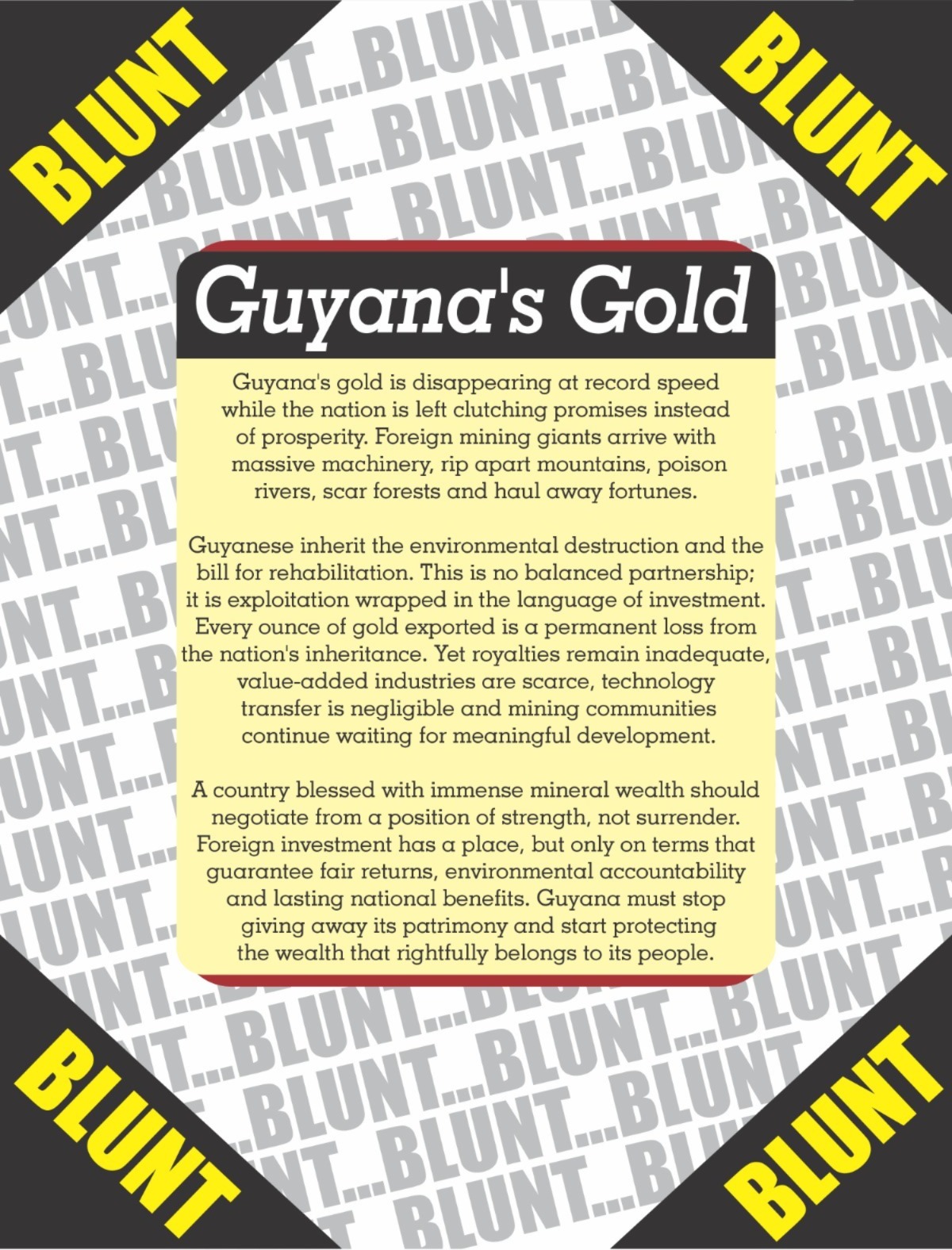
Blunt of the day
Sports
Features/Columnists

Sir. Ronald Sanders

The GHK Lall Column

Weekend Cartoon