Latest update August 13th, 2026 10:30 AM



Latest News
- New Australian firm secures 44,000 acres gold land in Reg. 7
- U.S. eyes ports, road, housing contracts in Guyana – Deputy Secretary of State
- Colombia declares three days of mourning after deadly earthquake
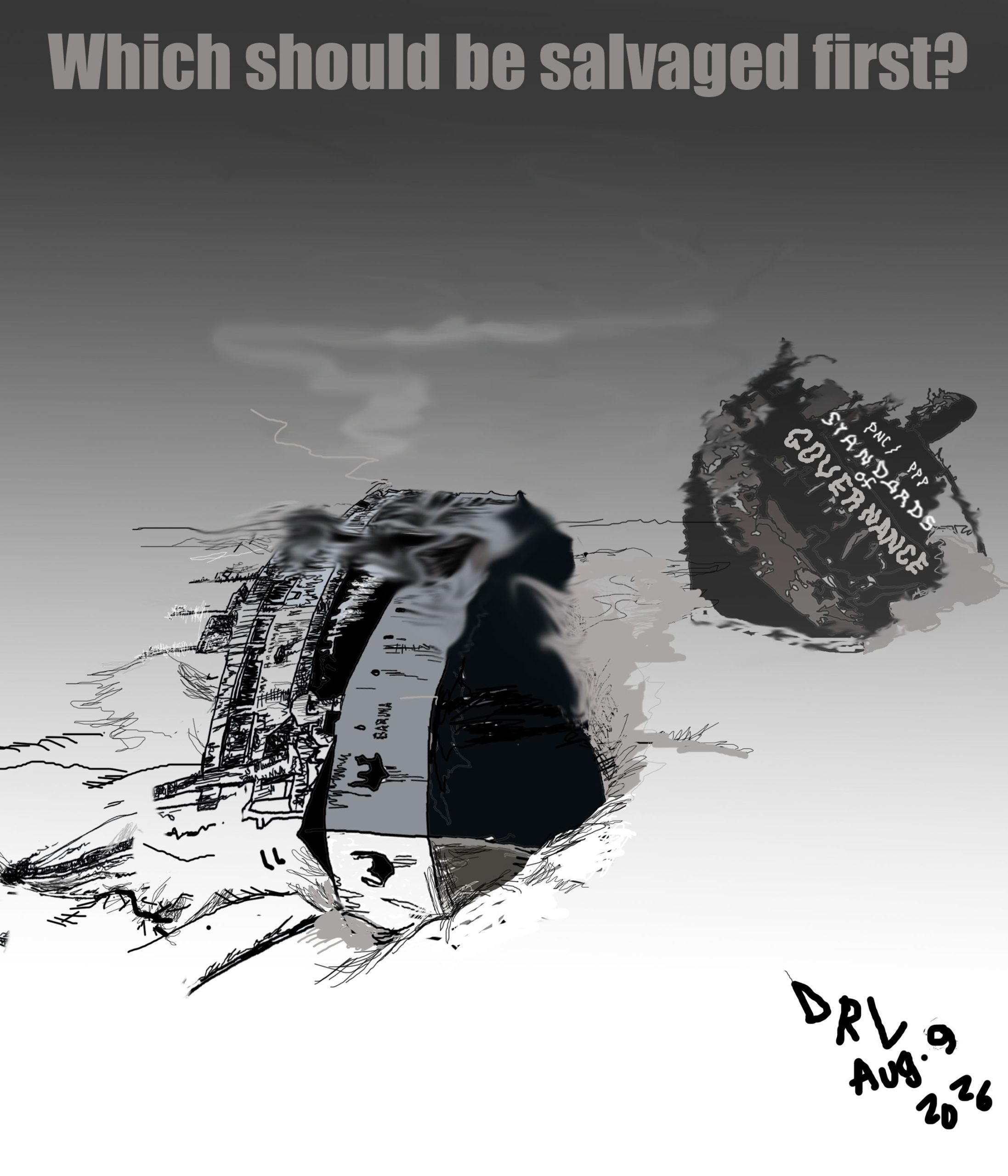
- MV Barima tragedy… Paper trail contradicts Edghill’s claims as records show repeated warnings before disaster
- Police constable on close arrest after brandishing toy gun during West Bank Demerara-road dispute
Demanding racial respect and dignity is not racism
Race must be confronted, head on. It must no longer be seen as the elephant in the room that no one wants to have honest, open and frank discussion on. Each group has its story and experiences to share, and we must be allowed to do so.

Lincoln Lewis
As an African, in this period as we commemorate 181 years since the end of chattel slavery – a brutish system that subjected my ancestors to the worst form of injustices inflicted by one race against another – it is not happenstance I am here, but by the determination of my forebears to fight the abominable system and overcome.
As heir of my ancestors’ sacrifices and indomitable spirit, I bring to theirs and my experiences the innate desire to be treated with dignity and respect. What I desire for myself is too desired for others, for where mine are threatened, they pose a threat to that of all others.
We as Guyanese have the ability to overcome, but it requires of us drawing on our resilience to move forward, recognising that though we are of different groups, we are of common experiences and have a shared destiny. So today, I speak to the recent experiences of the African community.
In the immediate post-1992 National and Regional Elections, there was an onslaught carried out by the People’s Progressive Party/Civic (PPP/C) Government against African career public servants and operatives in state entities. The services of those workers were terminated, not because of poor performance, but based on perceived support for the People’s National Congress (PNC), given their identity and the fact that that party’s base is drawn primarily from the African community. At the national level, investments via budgetary allocation/spending were also tilted in a manner that gave credence to economic and others forms of marginalisation.
The national census requires of us the identification of race as part of its clusters in calculating data of the various demographics in the society. This data should not only be used for accumulation or seen as assessment of electoral value – which in our society is seen as a factor in determining which party/group is likely to win or lose election. Data on race must be used to play a fundamental role in informing effective and efficient planning at all tiers of government.
The United Nations (UN) acknowledges race as an important characteristic of human existence. This body seeks to promote racial equality, as adumbrated in its Human Rights Declaration, by removing all forms of barriers/discrimination that would hinder same.
Given our historical experiences of racial conflicts, as a member of the UN it is not unreasonable to expect Guyana’s adoption of these declarations will see efforts at creating policies, programmes and laws, where race is considered a premier developmental factor in national planning.
The demand for racial respect and dignity is not racism. Racism speaks to the enactment of polices, programmes, laws and other acts designed to deprive a person or group its deserving respect and dignity as an equal participating member of society. Being Guyanese is not a race but a nationality – the country/geographic space within which one is born or has adopted as his/her land of citizenship.
Having pride in one’s ancestral lineage(s) does not prevent sharing similar pride in where one is born. As a man of African descent born in Guyana, I proudly identify as African Guyanese. Identifying the physical characteristics/heritage of my ancestry does not diminish or obliterate the land my ancestors happened to move to, be it voluntarily or not. I draw strength from both experiences and can learn to avoid the pitfalls that had befallen both. I am who I am from both experiences, and would want to be treated with dignity and respect, notwithstanding such experiences.
Racial equality will remain elusive when we ignore the fundamental factors to achieving it. For instance, based on statistical data, racial groups are seen as predisposed to certain health challenges, given lifestyle in diet, genetic make-up, etc. You cannot properly plan to ensure these persons have access to quality healthcare care – preventative and curative – ignoring the issue of race. We talk about tackling poverty, but how can this be tackled effectively, through the allocation of resources and the creation of institutions, ignoring the pockets of poverty, some of which are race-specific and location-driven.
We must return to the early days of national planning for development where racial pride was encouraged and promoted at the national and local levels.
Let us not take for granted, as a newly independent nation, the structures put in place to decriminalise religious beliefs/practices and placing them on the national calendar. Let us not take for granted an indigenous education system that sought to reverse racial animosity by creating the space and opportunity to get to know each other better, to see diversity as a strength and unifier, and the importance of respecting same as integral to peaceful co-existence.
It is not by accident that earlier planners of this nation’s development promoted pride in Guyana being a land of six peoples and having a motto “One People, One Nation, One Destiny.” Recognising and securing this oneness is meant to ensure that the diversity amongst our people is being harnessed as one consolidated unit. And this is best understood in the UN declaration, notedly Articles 1 and 2, which speak to the fact that all are born free and equal in dignity and rights, entitled to the rights and freedoms in the declaration, and should act towards one another in a spirit of brotherhood.
Ignoring race as a factor in planning can realise lopsided development and exacerbate racial tension and division. This also creates the perception that one’s interest can only be addressed when his/her race holds political office. On the other hand, it becomes problematic when some seek to hold the group accountable to ensure the delivery of good governance, whether you voted for them or not. Persons have become victims to racial fear, preferring to stay silent in the midst of wrongdoing, rather than hold their own to account, be they in Government or Opposition.
We are nurturing a society that opens itself for the extremists and unscrupulous among us to rise to and hold office merely by virtue of racial identity, not by valuing universally acceptable principles of good governance. We need to emancipate ourselves from this stranglehold.
We have to continue the building and strengthening of all groups. Groups need to engage each other, share their experiences and seek to participate in conversation and decision-making, guided by Article 13 of the Guyana Constitution, which speaks to an “inclusionary democracy.” This is fundamental to emancipation and the attaining of racial equality.
(The views expressed in this article are those of the author and do not necessarily reflect the opinions of this newspaper)
Share this:

Discover more from Kaieteur News
Subscribe to get the latest posts sent to your email.
Similar Articles

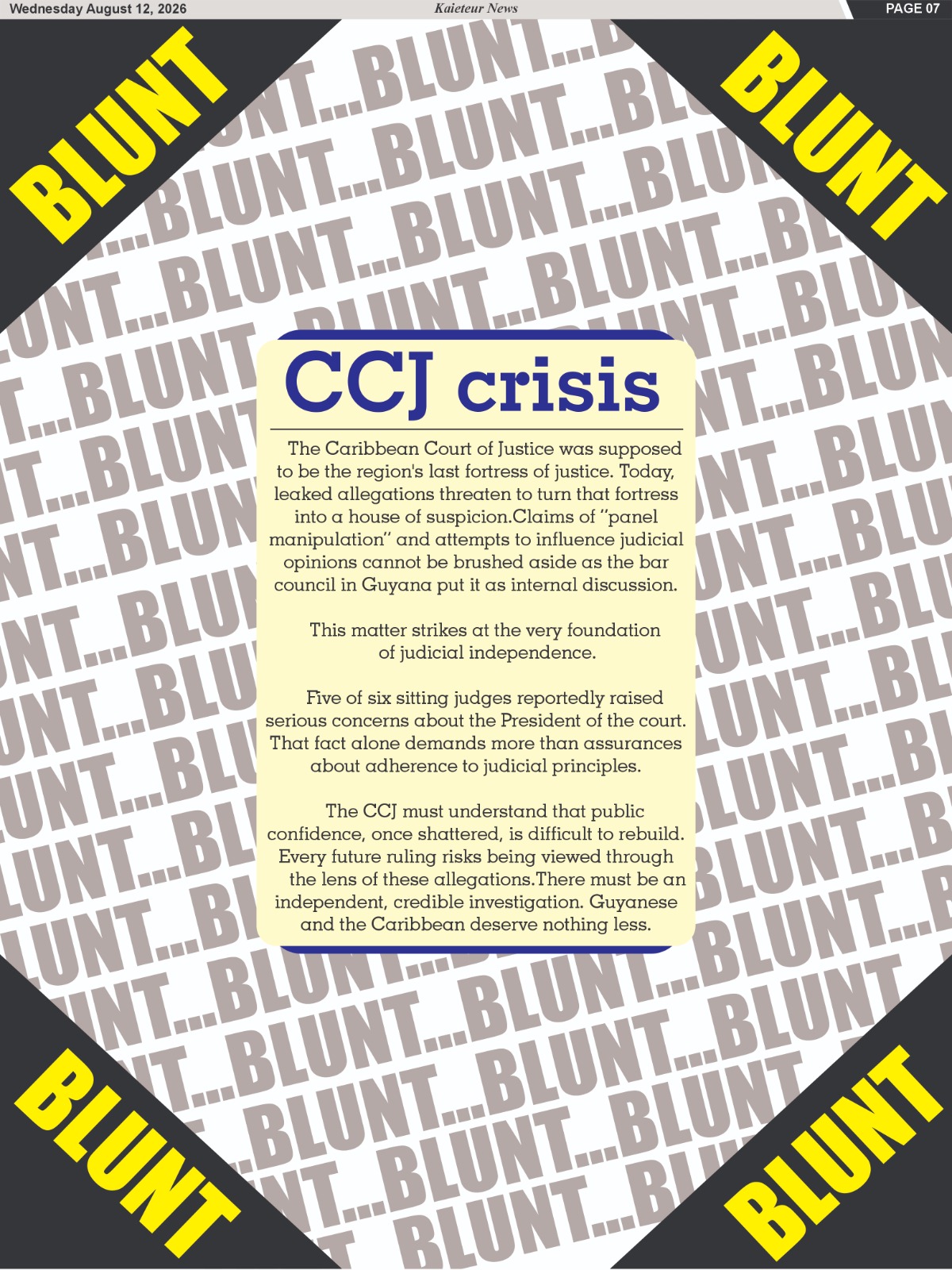
Blunt of the day
Sports
Features/Columnists

Sir. Ronald Sanders

The GHK Lall Column

Weekend Cartoon