Latest update September 3rd, 2026 10:25 AM


Remembering Walter Rodney and the Grenadian Revolution
This is the month of March—the birth month of Dr. Walter Rodney and the month of the Grenadian revolution. If he were alive, Rodney would be celebrating his 77th birthday this month. And on March 13, Grenada, the Caribbean and progressives the world over would be observing the 40th anniversary of the Grenadian Revolution.
I am old enough to have met Walter Rodney, to have spent some one-and-one time in his presence and to have participated in some small way in one of the greatest political moments of Guyana’s modern political history—the Rodney-WPA Civil Rebellion 1979-80. I am also old enough to have been conscious of the birth, the duration and the demise of the Grenadian revolution.
Much of what has become my political world view was initially shaped by that period of my political upbringing. So, ever so often I return to those moments when I have difficulty making sense of the contemporary.
I teach Walter Rodney in all my courses on Guyana, the Caribbean and the African Diaspora—he is a constant in my classrooms and on my mind. In the process, I introduce him to new generations of young people of all ethnicities and races.
I am always glad when my students discover something about the world through his thoughts and ideas.
Rodney remains, for me, one of the foremost scholar-activists to have emerged from the Caribbean at a time when our region of colonial and ex-colonial outposts gave the world more than our fair share of intellectual giants.
Here in Guyana, he has become the victim of the bizarre politics he once tried to make sense of via ideas and activism. Of all the spaces in the Caribbean, Africa and the rest of the African diaspora, Guyana is the place that he is least celebrated.
One side of power hates his very name because he dared to challenge the very moment that they celebrate. The other side uses his name to swat those they consider enemies. And the remnants of his party seem to forget his name and legacy as they grapple with the logic of the contemporary. In the end, Rodney is misunderstood by or lost to new generations of Guyanese.
Equally lost and misunderstood is the Grenadian revolution. In the almost four decades since the self-destruction of the Grenadian Revolution, there has been a general avoidance of a comprehensive analysis of its relevance to a proper understanding of post-colonial Caribbean politics and society.
Insofar as there had been a discourse on Grenada, it has been confined to shouting attacks between supporters of the two sides which squared off in the final months of the revolution. While such an exchange is useful, it never gets beyond emotions and self-serving narratives. Some have dismissed the revolution as nothing more than an orgy of violence by a few political hooligans who in the end slaughtered each other. Others have located the revolution in narrow Cold War terms, a narrative which exalts the evil of Marxism and communism.
In the process, the larger significance of the revolution is either marginalized or erased. The revolution is reduced to an event with little significance to those who lived through it or to the construction of Grenadian and Caribbean history.
Some have questioned whether characterizing it as a revolution is accurate, preferring instead to describe it as a minor coup. Yet the events in Grenada from March 1979 to October 1983 deserve more scrutiny, not to determine who were the saints and the devils, but to engage something which arose from the bowels of Caribbean Society and greatly influenced that nature of the society since its demise.
While the 1979 overthrow of the Grenadian government stands out because of the way the New Jewel Movement took power, it was part of a larger popular upsurge in the region and the world at large. In Dominica, the authoritarian Patrick John regime, which had governed in the same manner as Eric Gairy and Forbes Burnham, was brought down by a popular insurrection.
The ensuing interim government was led by the Dominican left, which led the insurrection. In St. Lucia, the John Compton government lost the election of that year to the St. Lucia Labour Party, which had been energized by the entry of the St. Lucian left led by George Odlum. The Odlum group came out of the Forum which was radical organization engaged in public education and political mobilization among farmers and students.
In Guyana, the WPA was engaged in what became known as a “civil rebellion” which brought thousands of citizens to the streets in public rallies and demonstrations against the Burnham regime. Walter Rodney was the spearhead of this insurrection, which pushed back against the intensified repression of the government which had closed all doors to democratic change. The civil rebellion exposed the government’s vulnerability to such an extent that the latter resorted to assassination of three WPA members, including Walter Rodney.
In Jamaica, Michael Manley’s People’s National Party, which came to power in 1972 on a wave of popular support, was by 1979 fighting to stave off destabilization by the local opposition in collusion with external forces. Manley’s democratic socialism had introduced modest social reforms in Jamaica, but in the context of the Cold War, they were framed by the right wing as socialism.
More of Dr. Hinds’ writings and commentaries can be found on his YouTube Channel Hinds’ Sight: Dr. David Hinds’ Guyana-Caribbean Politics and on his website www.guyanacaribbeanpolitics.news. Send comments to dhinds6106@aol.com
Share this:

Discover more from Kaieteur News
Subscribe to get the latest posts sent to your email.
Similar Articles
Website Hits

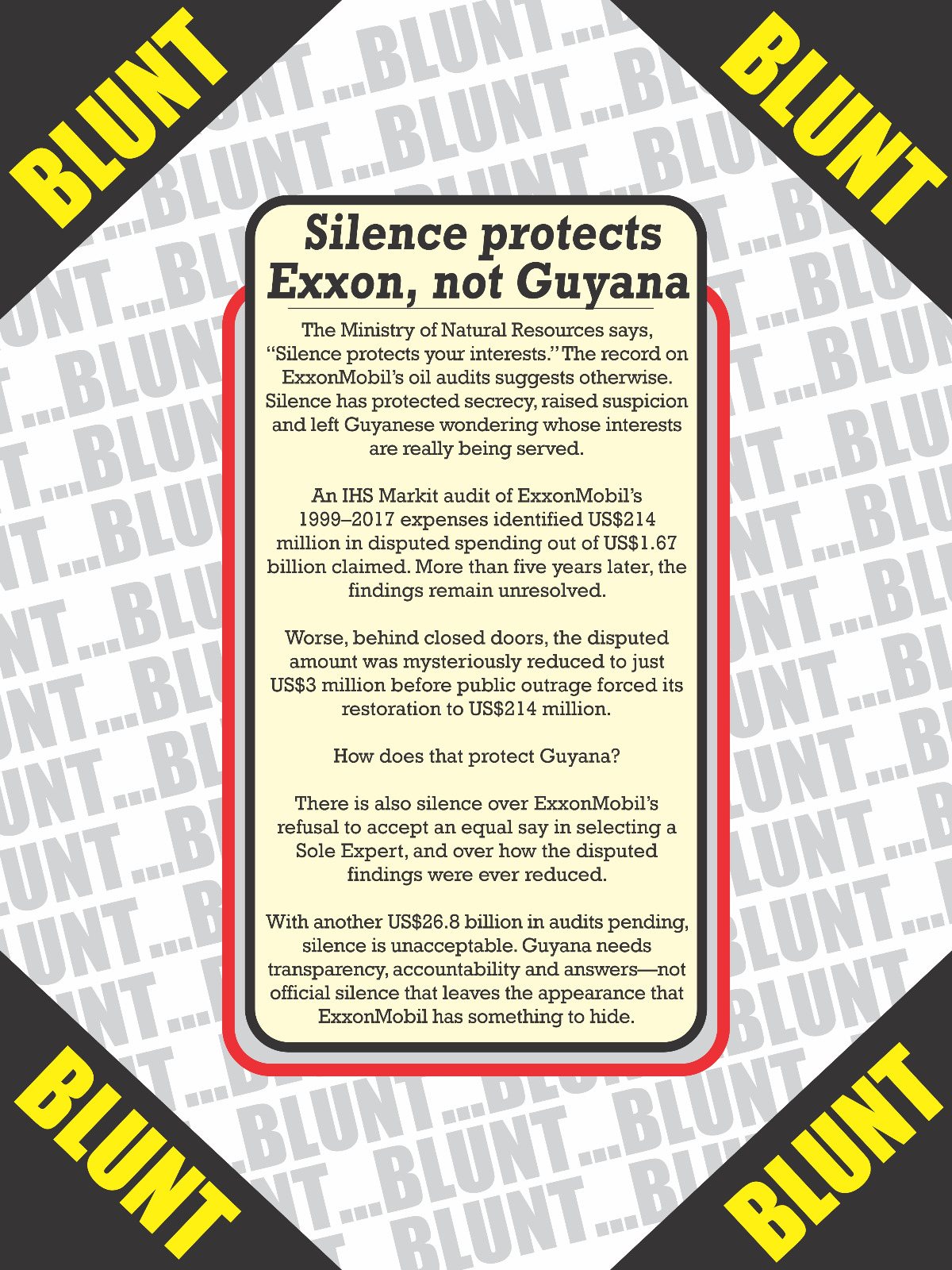
Blunt of the day
Sports
Features/Columnists

Sir. Ronald Sanders

The GHK Lall Column

Weekend Cartoon


