Latest update September 27th, 2026 10:40 AM


Latest News
- ExxonMobil pushes back against calls for ring-fencing new oil projects
- All overpayments recovered or cleared by contractors, Auditor General reveals
- Fuel prices jump 13% at Guyoil
- Iran insists on diplomatic solution after Trump rejects peace plan
- GCAA warns animal owners: Runway trespass could mean $1M fine, jail
Who is really to blame?
(Kaieteur News) – A motorist approached a busy junction one afternoon and, after glancing left and right, eased his vehicle across a major roadway. Before he could clear the intersection, there was a loud crash. A speeding vehicle slammed into the side of his car, scattering glass and twisting metal like a child’s discarded toy. Within minutes a crowd gathered, as crowds always do. The verdict came swiftly, confidently and without appeal.
“Is de man who cross de road fault!”
Case closed.
Or was it?
Most of us would instinctively blame the driver who emerged from the side road. After all, drivers entering a major road are expected to yield to traffic already on that roadway. Had he remained at the junction, there would have been no collision. That much is true.
But traffic law is rarely as simple as roadside spectators make it seem.
Suppose the vehicle travelling along the major road was speeding excessively. Suppose the driver had a clear view of the junction from hundreds of feet away. Suppose he had sufficient time to slow down, sound his horn, swerve safely, or take some other evasive action. Suppose he chose instead to maintain his speed and barrel ahead.
The picture suddenly changes.
The question is no longer whether the first driver should have entered the road. The question becomes whether the second driver exercised due care and attention. What appeared to be a straightforward case of one driver’s fault now becomes a much more complicated issue involving the conduct of both drivers.
This is where the concept of contributory negligence enters the discussion.
Contributory negligence is a principle recognised in common law jurisdictions. Simply put, it means that more than one party can contribute to an accident. A person may have suffered damage because of another’s actions, but if his own conduct helped cause the accident, responsibility may be shared.
In other words, fault is not always an all-or-nothing affair.
Courts around the world have repeatedly recognised that even where one motorist violates a traffic rule, another motorist may still bear part of the blame if he failed to exercise reasonable care. A driver cannot simply claim the right of way and then proceed as though all other road users are invisible. The law expects drivers to anticipate hazards and act prudently.
Yet one is left wondering how many of our traffic officers fully understand this concept and, more importantly, how many are equipped to apply it properly when investigating accidents.
This is not a criticism of individual officers. It is a question about training.
How many traffic ranks can clearly explain contributory negligence? How many can identify circumstances where both parties may share responsibility? How many can distinguish between the legal concepts of dangerous driving and careless driving?
The distinction is important because the two offences are not the same. Dangerous driving generally involves driving that falls far below the standard expected of a competent and careful driver and creates an obvious danger to the public.
Case law in many jurisdictions has emphasised that the test is objective. The question is whether the driving would appear dangerous to a competent and careful driver. Excessive speeding, racing, aggressive overtaking, or driving with reckless disregard for obvious risks often fall into this category.
Careless driving, on the other hand, involves driving that falls below the expected standard but does not necessarily reach the level of obvious danger required for dangerous driving. Examples may include momentary inattention, failure to observe a road sign, or a lapse in concentration. The conduct is negligent, but not necessarily reckless.
The difference may seem subtle, but in law, it is significant. One offence suggests a serious departure from safe driving standards. The other suggests a lesser, though still unacceptable, failure to exercise proper care.
The problem arises when these concepts are misunderstood or applied inconsistently. A poorly investigated accident can lead to the wrong charges, unfair outcomes, and diminished public confidence in traffic enforcement.
Traffic investigation today is far more than taking measurements and statements. It requires an understanding of reaction times, stopping distances, visibility, vehicle dynamics, legal principles, and established case law. It requires officers who can analyse facts rather than rely on assumptions.
Too often public opinion reaches a verdict before the evidence is properly examined. Unfortunately, the same tendency sometimes appears in official investigations. The most obvious explanation is not always the correct one.
The driver emerging from the side road may have made an error. The speeding driver on the main road may have made a larger one. The truth may lie somewhere in between.
That is why training matters. If traffic officers are expected to investigate collisions, recommend charges, and provide evidence that may influence judicial outcomes, then they must possess a thorough understanding of traffic law and legal principles. They must know not only what happened but why the law regards certain conduct as blameworthy.
Our roads are becoming busier. Vehicles are becoming faster. Accidents are becoming more complex. The days when traffic enforcement could rely solely on common sense are long gone.
Before we place officers in positions where they effectively adjudicate responsibility for accidents, we must ensure they receive comprehensive training in traffic law, accident reconstruction, contributory negligence, and the distinctions between various driving offences.
And while the authorities are at it, can the authorities also explain why it is that some traffic ranks are still making routine stops of motorists and demanding ‘documents’ without identifying any offence?
(The views expressed in this article are those of the author and do not necessarily reflect the opinions of this newspaper.)
Share this:

Discover more from Kaieteur News
Subscribe to get the latest posts sent to your email.
Similar Articles
Website Hits

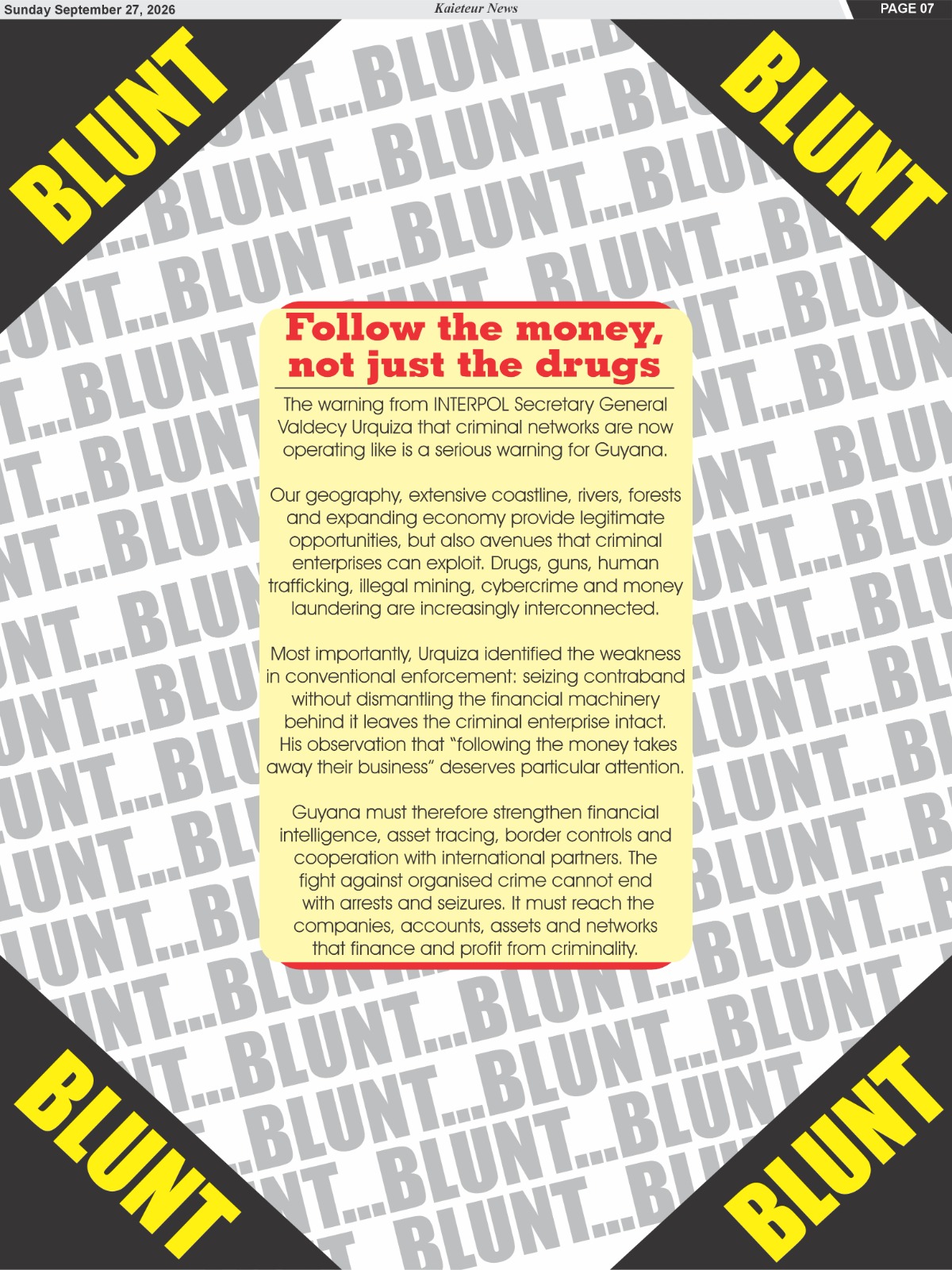
Blunt of the day
Sports

Features/Columnists

Sir. Ronald Sanders

The GHK Lall Column

Weekend Cartoon