Latest update October 17th, 2026 10:25 AM



Latest News
- Feasibility, EIA studies must be done for all project funded by US EXIM Bank – Ambassador
- Mohamed, staff granted $750,000 bail each for firearm, obstruction charges
- EU rallies in support of Ukraine amid Trump standoff
- Subcontractor electrocuted by live GPL wire
- Rodrigues-Birkett pushes multilateralism as path to ending global conflict
A good read at Christmas
Christmas is a good time to visit bookstores. A great many new books appear but what is most interesting about a visit to a bookstore at this time is the appearance of reprints of old classics.
A reprint of CLR James classic, ‘Beyond a boundary’ is now available in Austin’s Bookstore. The book is considered a must read for those seeking to understand the relationship between cricket, race and society.
John Arlott wrote that it was the finest book written about cricket. The book, however, was always more than just about cricket. Though concerned with the mechanics of cricket, ‘Beyond a Boundary’ is a sociological study of West Indian society. It provides an insight of class stratification in the Caribbean, including the often ignored intra-racial stratification.
James, for example, noted how clubs were stratified along the lines of colour and class. The Queen’s Park Club was for whites and the upper classes; there was a club for Black workers; another for lighter-skinned persons and another for lower middle classes.
What was true to cricket clubs in Trinidad and Tobago was also true of the rest of the Anglophone Caribbean where cricket was played or, for that matter, where British rule had dominated. In this respect, James’s book should be a must read for persons who wish to understand the roots of the nature of West Indian society.
The book should be of particular interest to the working men who often ask themselves how it is that the two main political parties in Guyana, who were once left wing parties, continue to fail to satisfy the needs of their major working class constituents.
Social organizations were the forerunners of Guyana’s political movements. These social movements Guyana were organized markedly not dissimilar to how cricket was organized along the lines of class and race in colonial times.
The PPP sought to break that mold when it was established as multi-racial party. But after Burnham split the party, political organization became dominated by race and class and their intersections.
These influences never disappeared. Racial mobilization still exists within political parties and class influence still pervades all political parties.
CLR James, Beyond a Boundary will help Guyanese the nature of class rule within West Indian society and why the middle-class continues to hold sway over the leadership of both of the main political parties, the PNCR and the PPPC.
After 28 years in office, the PNC was replaced in 1992 as the ruling party by the PPPC. But the working class found themselves after 23 years of PPPC asking themselves how it was that a so-called working class government was in place yet the gap between the rich and the poor was increasing. The APNU+AFC coalition which came to power has not made life any easier for the poor.
And the reason why both the PPPC and the PNCR have failed their constituents is that the leadership of these two parties continue to be dominated by middle-class interests. The middle class controls the leadership of both of these parties.
The working class has long been as used by the middle classes for gaining power. But once that power has been gained, the middle class secures its interests, leaving the working class to scramble for the crumbs of the spoils of the struggle for power.
The working class will remain the underclass of society because they lack political influence, as ironic as it may seem. The parties which the workers support are controlled by the middle class. The governments which these parties command further the interests of the middle class and not workers.
The trade union movement, which was supposed to be the vanguard of the workers’ struggle has been divided along political lines. Class is also an influential factor.
The working class is therefore isolated from both the political and trade union leadership. It certainly does not have the means of the influence to seize control of political parties, and, as is evident, even its unions. As such, the working class is contained within a boundary.
They are ruled by parties dominated by middle class interests and belong to trade unions which are powerless to improve their lot. All of this makes CLR James’s Beyond a Boundary, written in 1963, a timeless classic.
Share this:

Discover more from Kaieteur News
Subscribe to get the latest posts sent to your email.
Similar Articles
Website Hits

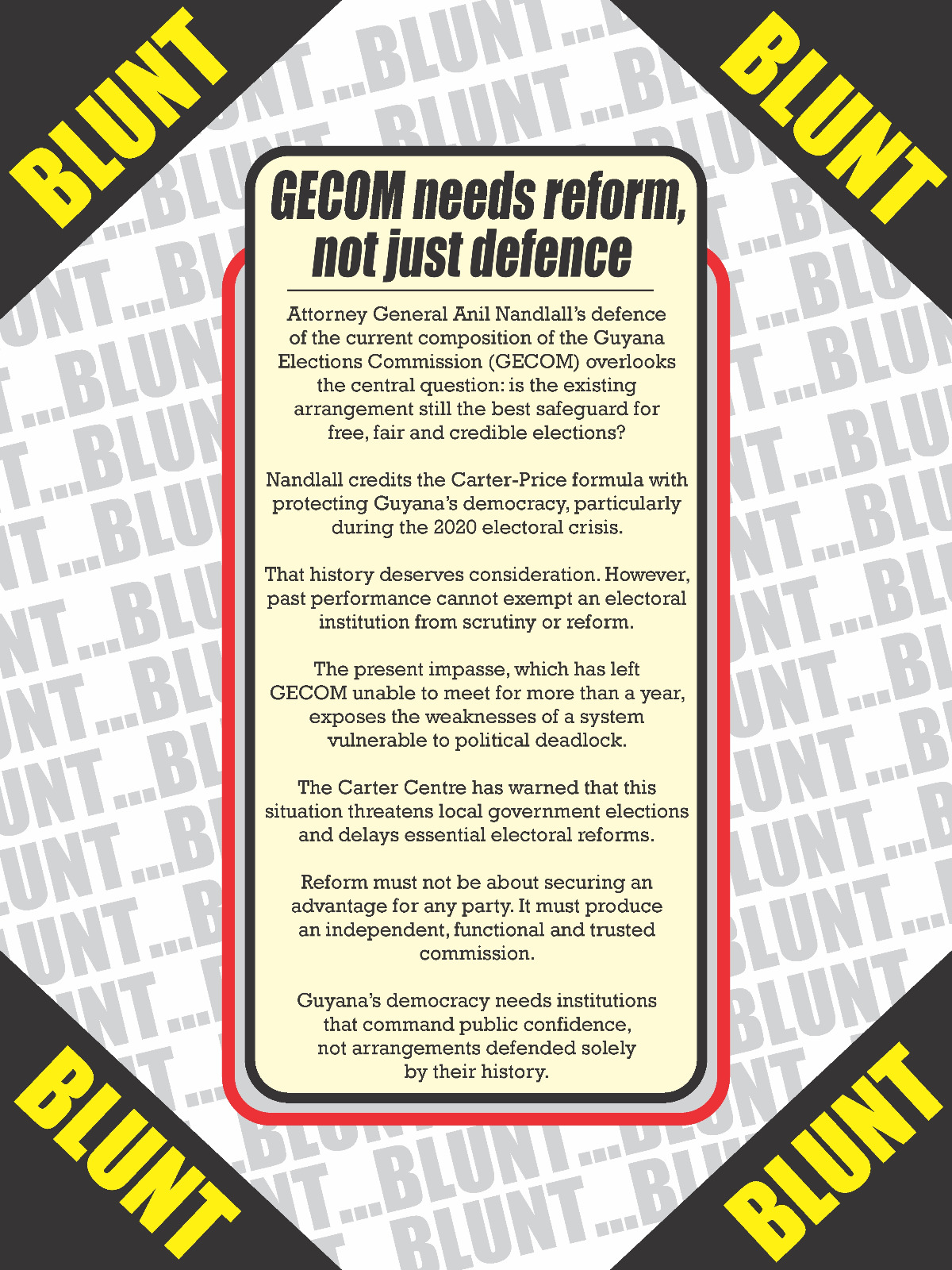
Blunt of the day
Sports

Features/Columnists

Sir. Ronald Sanders

The GHK Lall Column

Weekend Cartoon



