Latest update October 25th, 2026 10:40 AM



Latest News
- Chevron reaps billions from Guyana oil stake
- Car was speeding that killed four on Linden Highway
- Pres. Ali orders task force to tackle children’s mental health, safety
- Violence flares in Paris after largely peaceful protests across France
- Former CARICOM heads urge world to reject U.S. embargo on Cuba
Constructive Engagement with the rough edges edited out
(Kaieteur News) – It is said that one should not speak ill of the dead. But there is something about the tributes paid to deceased persons that encourages the living to improve the reputation of the dead.
At the recent evening of reflection for Robert Corbin, Bharrat Jagdeo appeared to have discovered that his relationship with the late PNCR leader was a model of political civility, mutual respect and constructive engagement. The two men, he recalled, maintained open lines of communication despite their political differences. Their relationship was cordial and respectful, and Corbin was prepared to put the national interest first.
There is no reason to dispute that the two men could sit together, exchange views and conduct themselves with civility. Indeed, in Guyana, and given the background of political stability at the time, this was no small achievement. But cordiality is not the same as agreement. A pleasant meeting or two between politicians is not necessarily evidence of a successful political process. A man can have a perfectly civil conversation with his dentist while the dentist is preparing to extract a tooth.
Jagdeo’s recollections risk giving the impression that the Constructive Engagement process – he entered into with Robert Corbin – was a harmonious exercise in statesmanship. The historical record is considerably less comfortable. On 6th May, 2003, Jagdeo and Corbin signed a communiqué intended to end a prolonged political impasse. It promised action on important questions of governance, parliamentary reform, broadcasting legislation, equitable access to state-owned media and other matters of national importance. There was a palpable sense of optimism that the two leaders might finally have found a way to conduct politics without treating every disagreement as a declaration of war.
Then came the implementation.
Dr. Henry Jeffrey, who was involved in facilitating the negotiations, recalled Corbin’s complaint in August 2003 that the time and energy required to secure agreement suggested that deliberate efforts were being made to retard implementation. Jeffrey agreed with the assessment. He also recounted that influential PPP members subsequently questioned whether their own negotiators had exceeded the party’s mandate. That was hardly an auspicious beginning for an initiative supposedly enjoying the full spirit of cooperation.
Michael Lund, in his scholarly study of political dialogue in Guyana, reached a similarly sobering conclusion. The communiqué had been negotiated with very limited participation, the two leaders later gave conflicting accounts of what was to be implemented, and by the end of 2003 most of the promised measures remained outstanding. The result, Lund wrote, was a deepening mood of estrangement, cynicism and intransigence.
In other words, the problem was not that the two gentlemen could not get along. It was that the agreements reached were not reliably translated into government action. Ralph Ramkarran has been particularly direct on this question. Writing in Conversation Tree in 2015, he recalled that committees established during the earlier engagement between Desmond Hoyte and Jagdeo had produced comprehensive reports, but nothing happened. Hoyte eventually abandoned the process when he concluded that the government had no intention of fulfilling its obligations. Ramkarran said the subsequent agreements with Corbin produced the same result: the PPP/C government, under Jagdeo, did not implement them.
Jagdeo occupied the presidency during the process of engagement with Corbin. His administration controlled the executive machinery and had the principal responsibility for advancing the government’s legislative programme. Where the agreed reforms required government action, delay or inaction could not be cured by another cordial meeting. Consider broadcasting legislation. The May 2003 communiqué committed the government to advancing legislation within a specified period. Years later, the promised framework remained unrealised. In 2011, Corbin publicly reminded the government that legislation intended to replace the interim Advisory Committee on Broadcasting had been agreed upon, yet eight years had passed without its enactment.
Jimmy Carter’s 2004 report identified the central impasse. Jagdeo maintained that the government stood by the communiqué and wanted the PNCR to participate in Parliament and pass the necessary legislation. Corbin’s position was that outstanding commitments had to be implemented. Each side expected movement from the other, and neither approach broke the deadlock. Constructive engagement cannot survive indefinitely on constructive adjectives. It requires deadlines, implementation and a willingness by those holding executive power to surrender the convenience of doing things entirely on their own terms.
Corbin deserves credit for attempting dialogue in a deeply polarised political environment. His willingness to engage should not be confused with weakness, nor should the failure of the process erase the effort he made. But neither should his death become an occasion for rewriting the record into a political fairy tale.
Jagdeo and Corbin may well have respected one another personally. Their engagement nevertheless exposed the distance between political civility and genuine political inclusion. At a wake, generosity is appropriate. Historical amnesia is not. Robert Corbin deserves to be remembered with respect, but the best tribute to his pursuit of constructive engagement would be an honest examination of why it failed—and a recognition that the principal responsibility for implementing government commitments rested with the government itself which, at the time was headed by Jagdeo.
(The views expressed in this article are those of the author and do not necessarily reflect the opinions of this newspaper)
Share this:

Discover more from Kaieteur News
Subscribe to get the latest posts sent to your email.
Similar Articles
One thought on “Constructive Engagement with the rough edges edited out”
Leave a Reply
Website Hits

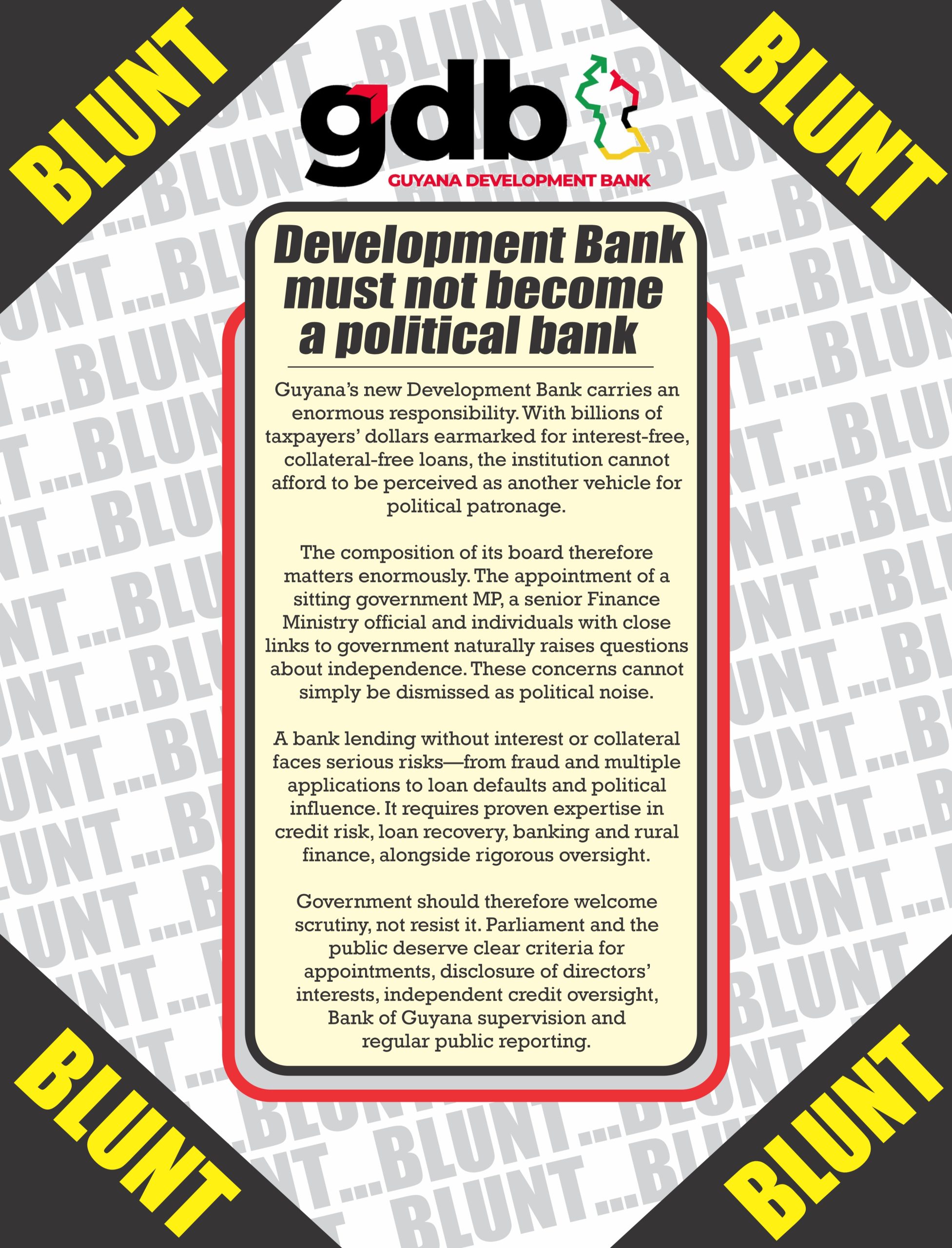
Blunt of the day
Sports
Features/Columnists

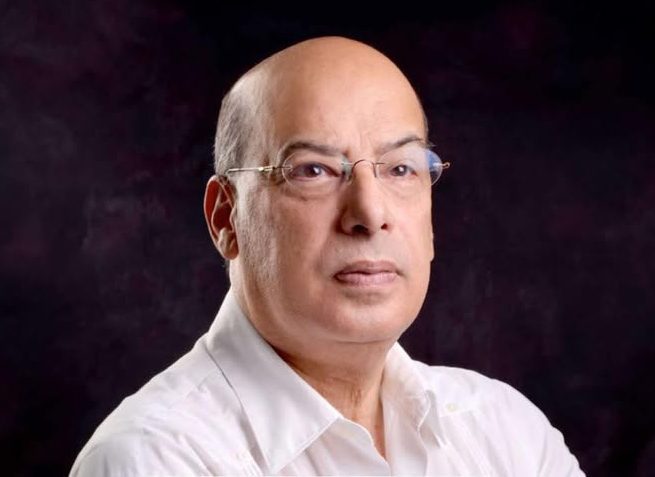
Sir. Ronald Sanders
The GHK Lall Column

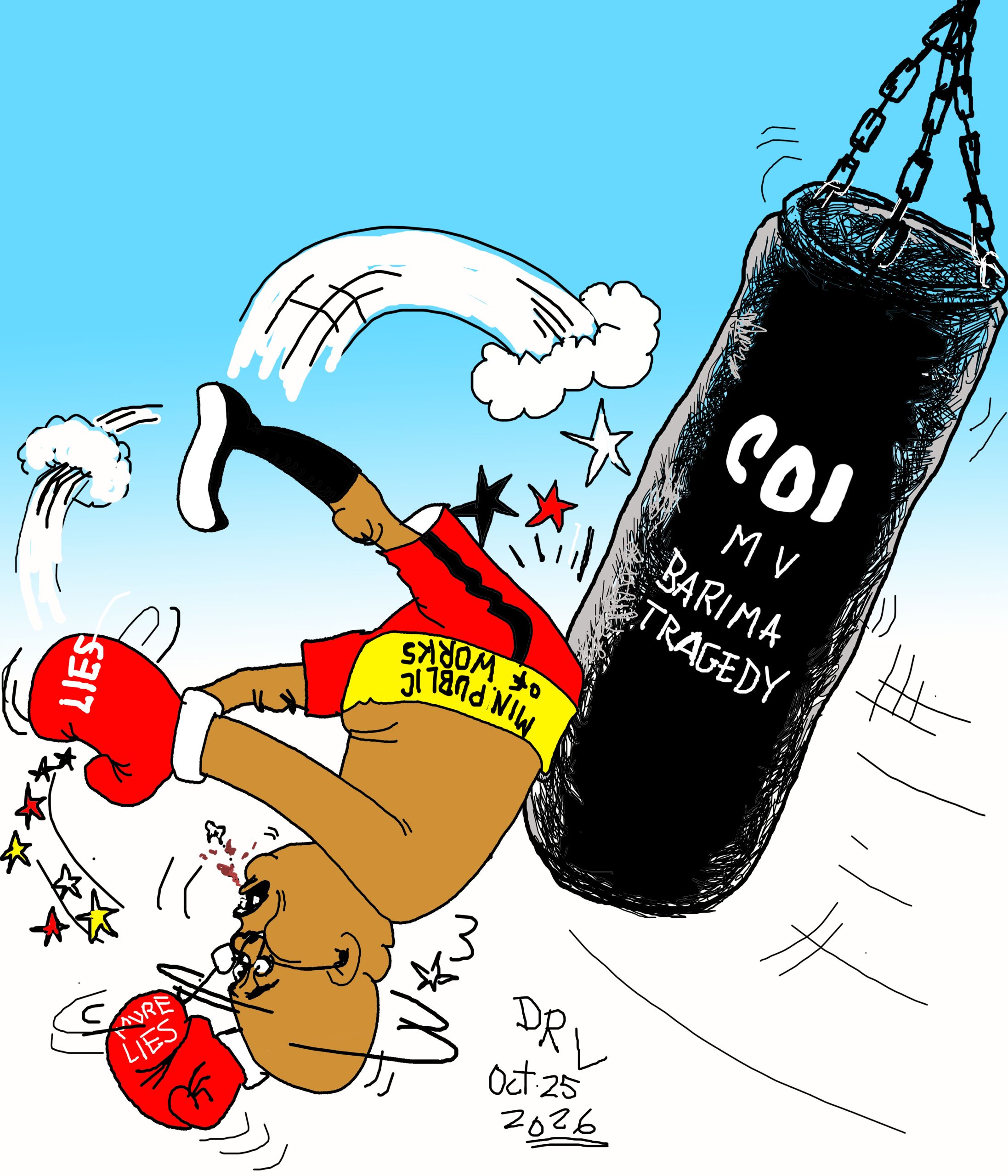
Weekend Cartoon


Irrespective of their efforts , inherent in our society , the strong is right , is the hideous or blatant racial & political violence , robberies & willful damage to property of the ‘sitting ducks’ due to the lopsided structure of strategic institutions & fear generated!!!