Latest update October 3rd, 2026 6:00 AM


Latest News
- PPP activist fired from Home Affairs Ministry after slapping Rubis pump attendant
- Chinese businessman confesses to killing boy, 6, over US$3M dispute with parents
- Guyana’s oil reserves drop below 11B barrels – Exxon says
- Mazaruni prison officers rescue miner after boat mishap
- NIS pensioners allegedly owed arrears since 2021
Continuous mining renders Guyana’s reclamation programme sluggish – Dennison
(Kaieteur News) – A pattern driven by fluctuating global gold prices has created a regulatory blind spot where operators keep mining properties technically active indefinitely, ensuring they rarely ever reach a formal ‘completed’ stage ripe for environmental restoration.
Rather than concluding operations and initiating reclamation, miners routinely alter their timelines based on the market. When global gold prices shift, operators return to previously worked plots to re-mine the tailings, or waste materials, that were discarded during earlier cycles.
Confirming this core structural challenge, Guyana Geology and Mines Commission (GGMC) Commissioner Newell Dennison explained to Kaieteur News the operational hurdles the regulatory body faces. “Yes. GGMC has a reclamation programme, and that’s where we go to re-identify sites. There’s a way with this criterion and then we work to have those areas reclaimed and they’re also used… One of the realities is that many miners do not ever finish mining. This is the problem we have,” Dennison stated.

As Dennison noted, this economic elasticity means that from a practical standpoint, properties exist in a state of permanent suspension.
“… when the price of gold changes, for example, they go back to those same areas that they’ve mined and mine the tailings again. So, there is a perpetual mining of the areas, and it’s very difficult to have aspects of recognition that is contemplated by the regulation,” the Commissioner added. “So, it’s a case of the realities and the practicalities of mining where, in many instances, those properties rarely get to a stage where the miner considers them ready for reclamation.”
He noted that from a “straight regulatory point of view, miners need to complete mining on a property to reclaim that property and restore it” but that remains an elusive milestone.
Because regulations are built around the flawed assumption of a clear end-date for mining activity, critics argue the financial mechanisms meant to enforce safety obligations are rendered completely toothless. Under the current framework, applicants for medium-scale mining permits must post a G$100,000 environmental bond before operations can legally begin. Failure to provide this capital blocks the issuance of a mining licence, meaning operators maintain a technical stake in environmental safety obligations on paper.
However, for medium-scale miners, the flat G$100,000 bond is low enough to be treated by many as a minor cost of doing business rather than a genuine incentive to rehabilitate. This stands in stark contrast to other sectors; large-scale operations face stricter deterrents, often requiring a performance bond valued at approximately 10 percent of their first-year’s planned expenditure, while small-scale operations are mandated to provide a smaller security deposit.
Minister of Natural Resources, Vickram Bharrat, weighed in on the function of these financial safeguards, clarifying that the current fees are not static boundaries for liability.
“The payment of environmental bonds as determined by the Commissioner is applicable at all scales of mining (small, medium and large),” Minister Bharrat explained to Kaieteur News. “The G$100,000 sum is applicable to transactions classified as medium scale. The bonds are refundable provided that the miner conducts reclamation, however mining areas continue to be worked/reworked,” the minister.
The Minister further stated that when an area is definitively determined to be suitable for reclamation, these accumulated sums may be used to conduct reclamation activities directly by the Government of Guyana. “It is important to note that the G$100,000 sum is not the final determinate amount for the cost of reclamation,” Bharrat emphasised. “In this regard, the agency is empowered to assess the cost of reclamation on a case-by-case basis and retrieve that sum from the miner.”
Yet, because the perpetual re-mining loop keeps sites legally active, the triggering mechanism for these assessments remains largely gridlocked. The funds remain held by the State, while the land itself is left open, degraded, and effectively abandoned.
While regulators and policymakers view the issue through the lens of shifting market timelines and legal provisions, data from Indigenous communities across the country confirm that the physical consequence on the ground is permanent environmental devastation. Because sites are never formally closed, miners simply exit the regions when yields are low, leaving a scarred landscape behind.
Reports from the hinterland highlight a grim regional reality, in Kangaruma lands are systematically left abandoned without any physical intervention or reclamation once active operations cease. In Chinoweing, foreign operations, specifically those managed by Brazilian miners, abandon sites entirely once the immediate plots are worked out. For Jawalla and Kako, local communities report that miners arriving from the coastland and other regions exit the areas without making any visible efforts to restore the landscape or repair severe environmental damage.
The structural failure of the system highlights the gap between regulatory theory and the practical realities of the mining sector. By allowing the “perpetual mining” loop to persist unchecked, the GGMC is left holding a repository of cash deposits, but has virtually no properties that ever transition into actual environmental recovery.
Share this:

Discover more from Kaieteur News
Subscribe to get the latest posts sent to your email.
Similar Articles
Website Hits

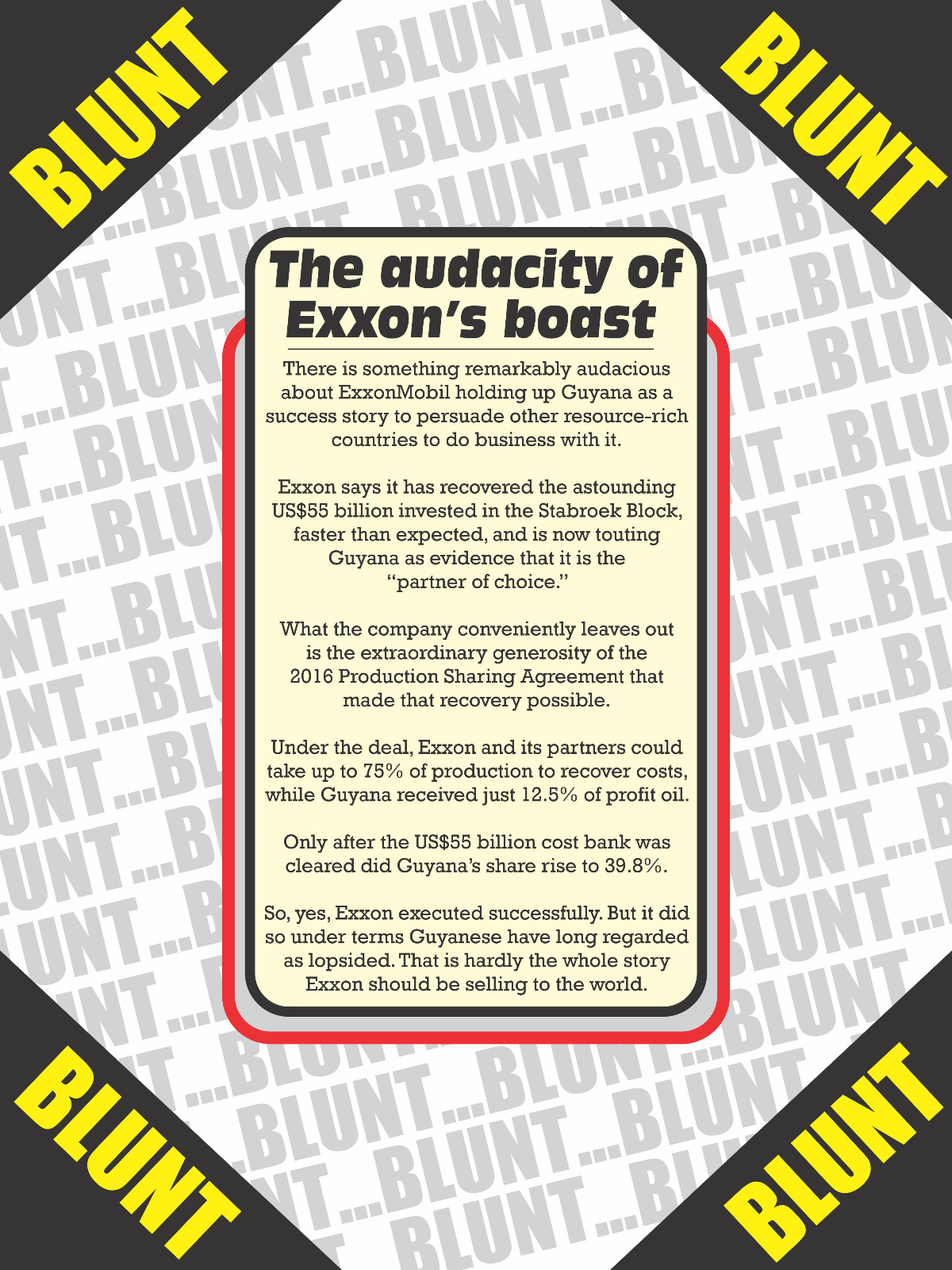
Blunt of the day
Sports

Features/Columnists

Sir. Ronald Sanders

The GHK Lall Column

Weekend Cartoon