Latest update September 30th, 2026 5:56 PM


Latest News
- Six-year-old Chinese boy killed at Parika
- Unrest in Vigilance… villagers set truck ablaze as cops arrest wanted man’s family over missing Surinamese men
- Exxon pushes 4th oil project to 270,000 barrels per day
- Oil prices fall on signs Middle East crude flows recovering
- NRF oversight committee appointed without National Assembly nominee
Independence, Sovereignty and Exxon
The Road to First oil: Every Man, Woman and Child Must Become Oil-minded – Column 184 May 9, 2026
By Christopher Ram
(Kaieteur News) – One day after the nationalisation of the bauxite industry, then President Forbes Burnham observed that Independence gave Guyana a new flag and wardrobe, but “not a new economy.” Fifteen years later, during the debate on the Petroleum Exploration and Production Bill, Leader of the Opposition Cheddi Jagan warned against surrendering sovereignty to big US oil companies. Neither warning appeared foremost in President Ali’s mind when he was flattered and honoured with a visionary leadership award by a Houston business chamber. As Guyana approaches its sixtieth Independence anniversary, it is worth asking: what exactly was independence supposed to mean?

Christopher Ram
Burnham’s response – self-sufficiency, nationalisation and cooperative socialism – ultimately proved disastrous. But behind the failures lay a patriotic instinct: Guyana had to become master of its own destiny. Jagan approached the question differently. His politics were rooted in anti-imperialism, Third World solidarity and suspicion of multinational corporate power. In his autobiographical The West on Trial and throughout decades of parliamentary interventions, he warned repeatedly about the dangers of external domination and economic dependency masquerading as development.
Desmond Hoyte liberalised the economy and opened Guyana to Western capital, yet still carried himself with the reserve and seriousness of a statesman conscious of sovereignty. Bharrat Jagdeo – for all his pragmatism and embrace of oil development – projected toughness, calculation and nationalist caution when dealing with foreign power.
One may disagree with all of them. But Burnham, Jagan, Hoyte and Jagdeo shared one instinct: Guyana was small, vulnerable and historically exploited. Its leaders therefore had to remain psychologically guarded in dealing with external interests. In his many engagements in Houston, and even since his re-election, Ali has signaled a profound change.
At the Offshore Technology Conference in Houston, Texas, he delivered a speech that simultaneously defended fossil fuel development, praised energy realism and subordinated the language of climate justice. In doing so, he distorted global energy comparisons – particularly the resurgence of coal – in an apparent effort to reassure a Houston petroleum audience that his Guyana welcomed continued hydrocarbon expansion.
World Oil, a respected petroleum industry publication, described the address as confusing, unfocused and lacking in substance. The criticism was blunt, striking, and factual, representing the disappointment of the oil industry itself. That did not stop the business-courting Houston chamber honouring Ali at a private dinner with a “Visionary Leadership Award.” Far from elevating the moment, the award seemed almost patronising – less the recognition of a visionary leader and more ceremonial flattery extended to the leader of a strategically useful petro-state offering profitable business opportunities.
The sense of presidential drift deepened in a subsequent Houston interview when Ali was asked how Guyana manages public expectations arising from oil windfalls. Before answering, he found it necessary to acknowledge Exxon’s presence in the room, then waffled through AI, drones and hotels before arriving at Exxon’s expectations, cost-bank recovery and Guyana’s future as an oil producer “beyond 2060”. Even when discussing wealth for Guyanese citizens, the President instinctively framed the issue through the priorities of the petroleum industry.
This followed the posting on Facebook of photographs of Ali and his wife alongside US President Donald Trump and his wife. In another era, Guyanese leaders would have treated such encounters as routine diplomatic moments, not personal achievements worthy of celebration. Burnham and Jagan would not have been impressed. Hoyte would have maintained distance and dignity. Jagdeo would likely have viewed it transactionally rather than sentimentally.
Ali is different. He appears unusually susceptible to international flattery, corporate prestige and elite recognition. That becomes dangerous in a resource rich, poorly governed republic where no company – not even Bookers in the colonial era – has exercised such structural dominance in national life.
Bookers dominated the pre-Independence economy, but all its companies paid taxes to the State. Today, under the 2016 Petroleum Agreement, Guyana pays Exxon’s taxes. Bookers exploited labour and land within a renewable agricultural economy. Exxon controls vast areas of Guyana’s continental shelf for the extraction and monetisation of finite natural resources which, once depleted, are gone forever. That distinction matters.
The doctrine of permanent sovereignty over natural resources engaged the United Nations after decolonisation precisely because newly independent countries understood the dangers associated with extractive industries. As we witness, even now in the Strait of Hormuz, petroleum determines geopolitical leverage, fiscal sovereignty and the long-term developmental future of nations. It is why independent states fought so fiercely for control over petroleum resources throughout the twentieth century. That lesson has either escaped Ali – or been rejected by him.
His boast in Texas about Guyana’s unwavering commitment to “sanctity of contract” elevated a jurisprudential concept above sovereignty itself. Ali came to office condemning the 2016 Agreement and pledging renegotiation and stronger oversight. Instead, renegotiation is off the table, an independent petroleum commission never materialised, and enforcement of existing contractual provisions is either weak or absent. After a full first term in office, unprecedented oil revenues and an expanded parliamentary majority, the Ali Administration still cannot settle and enforce petroleum audits under this “sacred contract.” At some point, this ceases to be incompetence. It begins to look like political incapacity before corporate power.
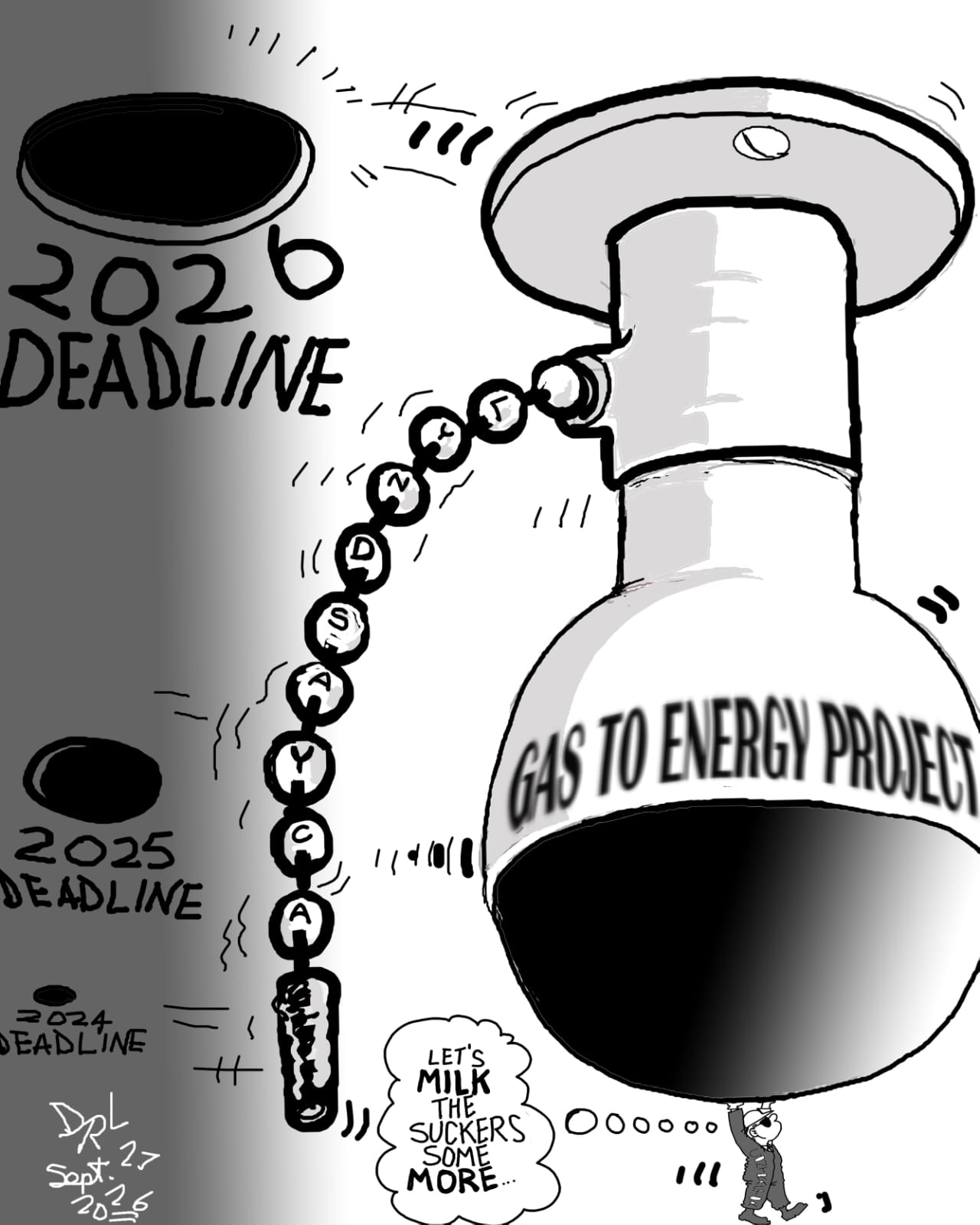
Worse, we appear to have contracted out planning and national pronouncements to Exxon’s representative in Guyana. When Exxon executive Alistair Routledge publicly spoke about another gas-to-energy project before President Ali leaves office, the statement passed with remarkable ease into public discourse. The relationship between Ali and Routledge has become so cozy that they seem to make complementary speeches.
Burnham, Jagan and every other President would have found this development at entirely undesirable. They all understood something essential: political independence without sovereign self-respect is worse than where we were in 1966.
The real question facing Guyana on the eve of its sixtieth Independence anniversary is not ExxonMobil itself. The company is simply pursuing its purpose: exploiting resources and maximising shareholder returns. Nor is it the Agreement, which provides for review and renegotiation. The real danger is a presidency insufficiently patriotic to keep ExxonMobil at sovereign distance, too chummy to call out Exxon, and too vulnerable to vanity and external validation to place country above ego.
This column first appeared on chrisram.net and is reproduced with the kind permission of the author.
Share this:

Discover more from Kaieteur News
Subscribe to get the latest posts sent to your email.
Similar Articles
Website Hits

Blunt of the day

Sports

Features/Columnists

Sir. Ronald Sanders

The GHK Lall Column

Weekend Cartoon