Latest update August 11th, 2026 5:12 PM



Latest News
- Guyanese should be outraged over Govt. silence on 50% profits now due to country – former Finance Minister
- Guyana’s oil take could triple – opposition leader
- Friends killed in Eversham smash-up
- At least 111 killed after powerful earthquake hits western Colombia
- Calls mount in Trinidad for probe into CCJ
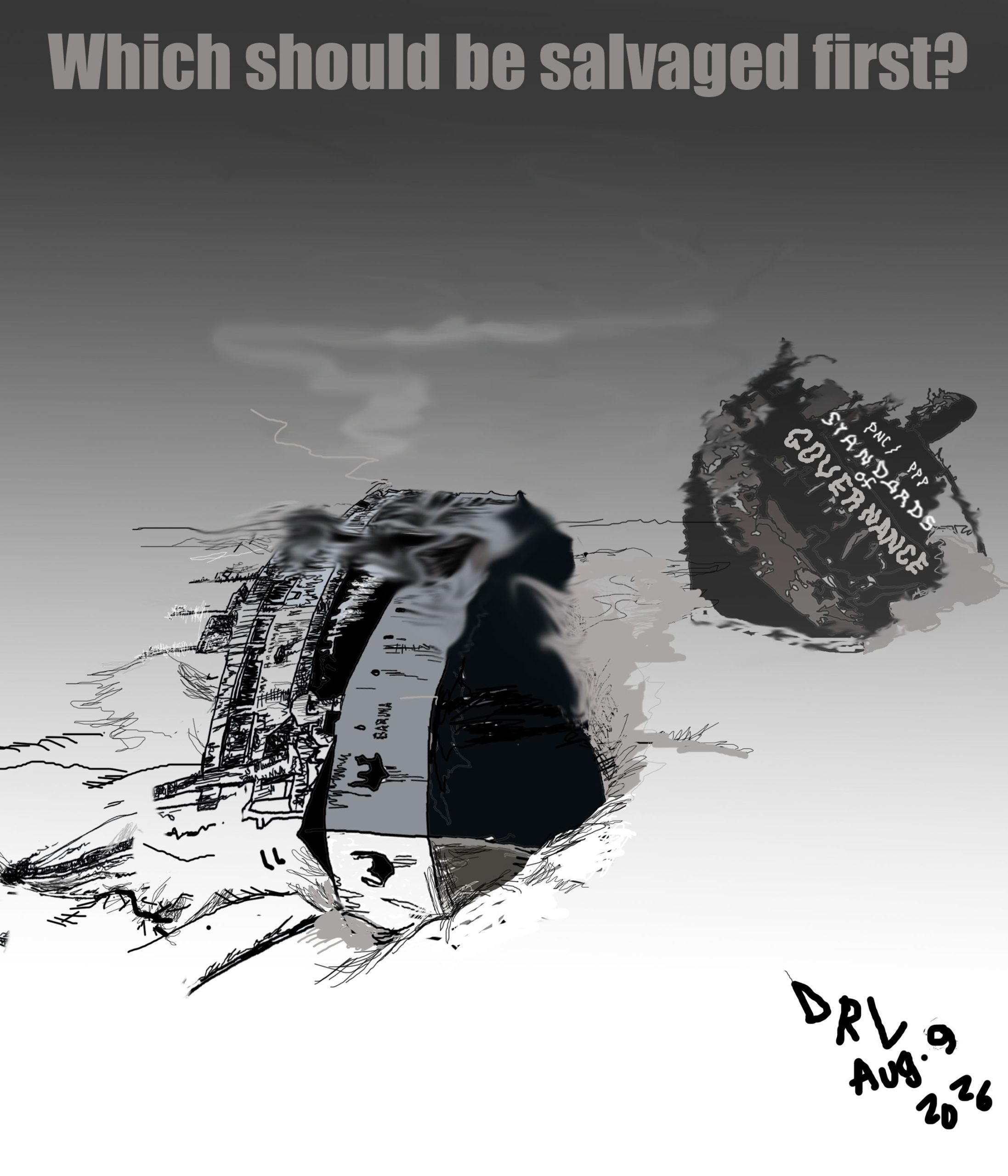
The disease that is eating away at the PNCR
(Kaieteur News) – In the latest twist in the political narrative of the country’s Opposition, there is an unvarnished attempt to suggest that under the leadership of the PNCR during the period 2015 to 2020, the party’s support base was neglected. Nothing could be further from the truth.
The charge that during its time in government the PNCR neglected its base, and that this alleged neglect explains the loss of power in 2020 and the party’s subsequent travails, does not stand up to scrutiny. So let us begin with the historical record. The PNCR that entered the 2006 elections was a party that had suffered a bruising defeat. Its parliamentary strength had diminished and its opponents in the People’s Progressive Party/Civic (PPP/C) seemed securely enthroned. It was even said back then that its leadership was unelectable.
It was under the new leadership of David Granger that the party began the slow and laborious task of political recovery. Through the vehicle of A Partnership for National Unity (APNU), the party clawed back support that had slipped through its fingers in 2006. The effort culminated in the 2011 elections, when the governing PPP/C, for the first time since 1964 was reduced to a minority in the National Assembly.
It was the same David Granger who later engineered the coalition between APNU and the Alliance For Change (AFC)—a partnership that many pundits at the time dismissed as improbable. In 2015, the 2015 Guyanese general election produced a result that sent a political tremor through the Caribbean: the APNU+AFC coalition defeated the PPP/C and ended twenty-three years of uninterrupted rule. That happened under David Granger’s leadership.
This was not the accomplishment of a leader who had lost touch with the party’s base. On the contrary, it was the work of a leadership that had painstakingly rebuilt the party’s electoral reach and re-energised its organizational machinery. The claim that the PNCR neglected its grassroots while in government is equally unconvincing when one considers the practical record. During that period the party upgraded several of its regional offices, including those at Vreed-en-Hoop and Agricola, strengthening the infrastructure through which the party interacted with supporters. The party also maintained an office in Region Nine, a presence that was only lost after the PPP/C returned to office in 2020. These are not the actions of an organization that had forgotten where its supporters lived.
In 2016, the PNCR held what many within the party considered one of its most successful congresses. Delegates endorsed a programme aimed squarely at strengthening the party’s machinery: revitalising regional structures, expanding membership, improving administrative capacity, and ensuring robust grassroots mobilisation. If neglect was the intention, it was pursued in a remarkably peculiar way.
The more plausible explanation for the coalition’s later difficulties lies elsewhere, in a phenomenon that has undone many political movements before it: factionalism. David Granger himself warned repeatedly about the corrosive effects of internal division. A party engaged in quarrelling with itself rarely defeating its rivals. Within the coalition government, tensions began to surface. Open criticism from elements within the Working People’s Alliance (WPA) placed additional strain on the ruling coalition. Meanwhile, resentment simmered among some supporters who believed the AFC had been granted too generous a share of influence within the coalition arrangement. Ambition, envy and suspicion began whispering in too many ears at once.
These internal disputes did not remain confined to private conversations. They seeped into the public domain, weakening the image of cohesion that any governing coalition must project if it hopes to survive the brutal arithmetic of elections. By the time the 2020 Guyanese general election arrived, the coalition entered the contest burdened not merely by the ordinary difficulties of incumbency but also by the accumulated weight of internal discord.
Factionalism, once unleashed, rarely retires politely. It continued to haunt the PNCR even after David Granger declined to contest the leadership at the party’s 2021 congress. Indeed, the very divisions that had been cited as justification for his departure proceeded to flourish in his absence, proving that the disease had not been cured merely by removing the patient from the room.
The result was predictable. A party consumed by internal rivalries finds itself less able to confront its external adversaries. The political energy that might have been directed toward expanding support is instead spent settling internal scores. And so, the convenient fiction of “neglecting the base” persists, not because it is true but because it offers a painless explanation for complex failures. It spares those who advanced the theory the more uncomfortable task of examining their own roles in the party’s internal struggles.
(The views expressed in this article are those of the author and do not necessarily reflect the opinions of this newspaper.)
Share this:

Discover more from Kaieteur News
Subscribe to get the latest posts sent to your email.
- APNU, disease, Peeping Tom, PNCR, PPP/C
Similar Articles

Blunt of the day
Sports
Features/Columnists

Sir. Ronald Sanders

The GHK Lall Column

Weekend Cartoon