Latest update February 14th, 2026 12:35 AM

Feb 14, 2026 Features / Columnists, Peeping Tom
(Kaieteur News) – Georgetown has always possessed the air of a place living on memory. Not history in the grand sense, not the kind that builds monuments and sustains civic pride, but memory that is faded, selective, and slightly resentful.
The old wooden houses, leaning like tired men; the canals dug by the Dutch, now thick with refuse; the markets once loud with commerce and argument, now crowded with the improvisations of survival. Georgetown is a city that remembers what it was and cannot quite admit what it has become.
So, when the rains came—four inches in four hours, we are told—the city responded with surrender. Streets became brown canals. Cars stalled in water that seemed to rise not only from the sky but from the very earth, as if the land itself had given up. The official explanation is meteorological excess. Yet rain is an old visitor here. It is not the rain that has changed; it is the city.
If such a deluge fell across other parts of the coastland—and surely it did—why did the catastrophe feel so concentrated, so intimate to Georgetown? The answer is plain enough. Georgetown’s drainage is in shambles. The trenches are clogged because municipal governance is clogged. The kokers drain sluggishly because they have not been properly maintained. The city does not flood simply from water; it floods from neglect and denial.
The government, anxious to demonstrate competence, has taken to cleaning drains, hauling garbage, dispatching machinery in displays of industrious urgency. It is a theatre of intervention. Trucks appear. Excavators bite into silt. Photographs circulate. For a week or two, there is motion. But the rains, indifferent to spectacle, return. And the water rises as before.
The truth is uncomfortable: Georgetown cannot be redeemed by periodic rescue. The city’s deterioration is structural, not episodic. It lies in chronic incapacity of City Hall, in the culture of disorder that has become ordinary. To clean a drain without reforming the institution responsible for its maintenance is to scoop water from a leaking boat while refusing to mend the hull.
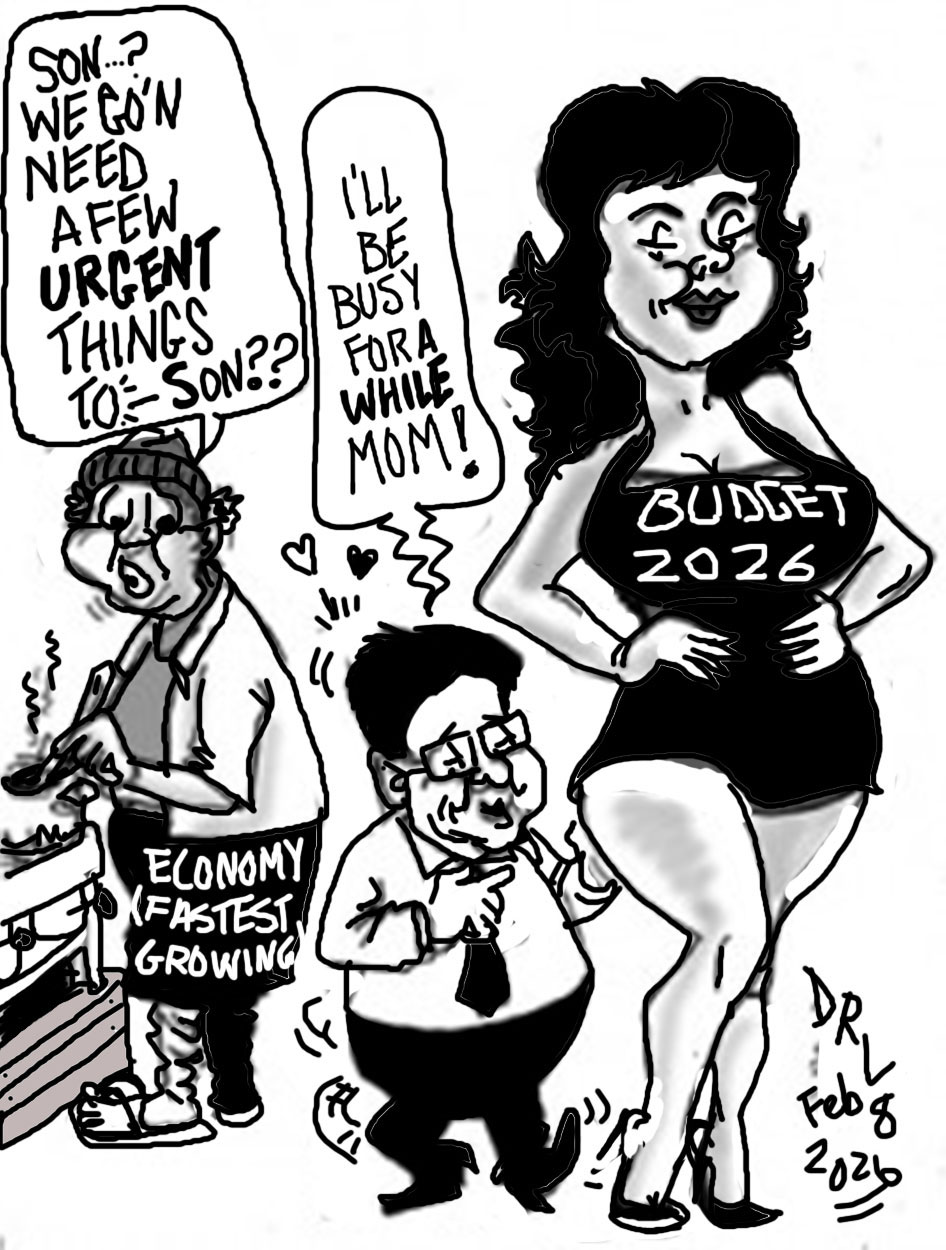
And so, billions are spent by government. Markets are rehabilitated. Facades are painted. Stabroek and Bourda are spoken of as though fresh concrete can summon back vanished commerce.
The vendors who crowd the pavements do so not because the markets are unpainted, but because enforcement is absent and informality is easier than order. Rehabilitating markets does not rehabilitate a system.
There is something faintly tragic in the government’s persistence. It is the optimism of a state that believes capital expenditure can substitute for civic culture. But Georgetown’s crisis is not primarily financial. It is administrative and moral. The drains fill because garbage is dumped with impunity. The garbage is dumped because regulations are unenforced. No sum of money, however grand, can purchase discipline.
The recent floods only dramatized what was already known. The water revealed the city’s anatomy: its sunken roads, its uneven surfaces, its blocked arteries. It showed how thin the margin is between inconvenience and paralysis. A few hours of rain—and the capital of a rising oil economy is immobilized. The contrast is stark. Offshore, platforms extract wealth from the seabed. Onshore, the capital drowns in runoff.
It may be time to admit what pride resists. Georgetown, as presently constituted, may be beyond rescue. A city cannot survive on nostalgia and subsidy. If City Hall lacks the capacity to govern, then interventions from the central government become acts of futility. They relieve immediate embarrassment but entrench long-term decay.
There are only two honest paths. One is radical reform: a renegotiation of municipal authority, a restructuring so profound that it would amount to rebirth. The other is withdrawal—an acceptance that the central government cannot forever compensate for local failure. To continue pouring billions into cleaning campaigns and cosmetic refurbishments is to pretend that symptoms are causes.
The city’s doom is not dramatic. It is incremental. It is in the small compromises: the illegal vending tolerated, the drains left uncleared, the pittance collected as municipal taxes that cannot pay even for garbage collection.
Perhaps Georgetown will persist, as it always has, in a state of suspended decline—neither fully collapsing nor genuinely renewing. But that is not survival in any meaningful sense. It is drift.
A capital city should embody aspiration. It should signal order, possibility, and seriousness of purpose. Georgetown, in its current state, signals fatigue. And no amount of government spending can disguise that fatigue for long.
The rain has done its work. It has exposed what speeches obscure. If the government continues to chase redemption through expenditure alone, it will find that the water always returns—and with it, the same uncomfortable truth: some cities, having lost their structure and spirit, cannot be saved by money.
(The views expressed in this article are those of the author and do not necessarily reflect the opinions of this newspaper.)
Subscribe to get the latest posts sent to your email.
Your children are starving, and you giving away their food to an already fat pussycat.
Feb 14, 2026
(Reuters) – Australia were dealt an early blow in their quest to reach the Super Eight stage of the Twenty20 World Cup after the depleted former champions crashed to a 23-run defeat by Zimbabwe...Feb 14, 2026
(Kaieteur News) – Georgetown has always possessed the air of a place living on memory. Not history in the grand sense, not the kind that builds monuments and sustains civic pride, but memory that is faded, selective, and slightly resentful. The old wooden houses, leaning like tired men; the...Feb 01, 2026
By Sir Ronald Sanders (Kaieteur News) – When the door to migration narrows, the long-standing mismatch between education and economic absorption is no longer abstract; a country’s true immigration policy becomes domestic — how many jobs it can create, and how quickly it can match people to...Feb 14, 2026
(Kaieteur News) – Members of Parliament from both the PPP Govt side and the opposition aisles have a challenge on their hands. Mr. Speaker, or Mr. Master Executioner. If government MPs choose Mr. Executioner, they giveaway the game -the Speaker delivers for their benefit. When the...Freedom of speech is our core value at Kaieteur News. If the letter/e-mail you sent was not published, and you believe that its contents were not libellous, let us know, please contact us by phone or email.
Feel free to send us your comments and/or criticisms.
Contact: 624-6456; 225-8452; 225-8458; 225-8463; 225-8465; 225-8473 or 225-8491.
Or by Email: glennlall2000@gmail.com / kaieteurnews@yahoo.com