Latest update February 10th, 2026 12:40 AM

Feb 10, 2026 Features / Columnists, Peeping Tom
(Kaieteur News) – For five years, from 2020 to 2025, the PPPC perfected a parliamentary habit that passed for strategy. It was not subtle, nor was it particularly clever, but it was effective in the way that repetition, delivered with conviction and contempt, often is.
In every major debate in the National Assembly—Budget debates included—the party returned obsessively to a single refrain: the poor record of the APNU+AFC between 2015 and 2020. The past was dragged forward, paraded, and beaten again. It became less an argument than a ritual, a kind of political incantation meant to summon public memory and suppress present scrutiny.
This tactic worked not because it was sophisticated, but because the APNU+AFC proved incapable of defending its own record with coherence or force. Silence, evasion, and self-pity are poor counters to accusation. And so, the PPPC enjoyed the luxury of attacking without fear of rebuttal.
The imbalance was compounded by circumstance. The PPPC had only just returned to office; it was early in its term, and its own record was necessarily thin. There was little to defend, little to explain, and therefore little risk. Parliamentary debate became a theatre of accusation rather than accountability, with the PPPC secure in the knowledge that history—selectively told—was on its side. But time, as it always does, altered the terms of engagement. By the time the 2026 Budget was tabled, the PPPC was no longer a government in its infancy. It now possessed a record— visible, and unavoidable. The old strategy of endlessly rehearsing the failures of 2015–2020 could no longer bear the weight placed upon it. The party seemed to know this, dimly. There were still obligatory references to the past, but they landed with diminishing force, like blows delivered long after the opponent has moved on.
Instead of adjusting its approach, the PPPC chose a more revealing course. It became fixated on the new political formation, We Invest in Nationhood (WIN), and on selected figures within the APNU. The Budget debate, which should have been an opportunity to explain, defend, and persuade, was converted into a series of attacks—some strategic, many petty. WIN was treated not as a political challenge to be engaged, but as an irritant to be mocked. This was not confidence; it was anxiety masquerading as aggression.
The result was an exposure of intellectual bankruptcy. A government secure in its record does not need to rely on ridicule. A government convinced of the coherence of its programme does not spend its time throwing innuendo across the floor of the Assembly. Yet this is precisely what unfolded. The PPPC appeared unable—or unwilling—to mount a serious defence of its own stewardship or to inspire confidence in its plans for 2026. That, of course, was not an easy task. The glaring shortcomings of the Budget itself only underscored the difficulty of defending it.
The PPPC therefore resorted to going after WIN and its leader. The party seemed to relish, in advance, the prospect of dismantling what it assumed would be a clumsy rebuttal of the Budget from the Leader of the Opposition. There was an expectation—almost a hunger—for embarrassment. The script had been written in their minds: the Opposition Leader would stumble, ramble, and expose his inadequacies. But politics, like life, has a habit of disappointing those who depend too heavily on caricature. What followed unsettled the PPPC. The Leader of the Opposition delivered a presentation that, while mostly read, was far from the disaster anticipated. There was an attempt to stop him, to derail the presentation on technical grounds. It was a small, mean manoeuvre, and it failed. More importantly, it missed the point.
The most damaging elements of the speech were not in the prepared text at all. They emerged in the ad-lib moments: the sharp repartee, the anecdotes, the lived experiences invoked to give texture to abstraction. These interventions brought the real suffering of ordinary people—cost of living pressures, daily indignities, quiet despair—into the sterile space of the National Assembly. It was there, in those unscripted moments, that the PPPC found itself exposed.
Even then, the party had an opportunity to recover. It could have responded with substance, with explanation, with humility. Instead, it reverted to habit: political attacks, personal insinuations, and the comfort of hostility. It was easier to wound than to persuade, easier to sneer than to explain. By the end of the debate, the impression was unmistakable. The PPPC had lost—not merely an argument, but an opportunity. A party that governs by memory alone will eventually be overtaken by the present. If the PPPC is to retain credibility, inside the National Assembly and beyond, it must rethink its reliance on vindictiveness and rediscover the harder, more demanding art of defending its own record.
(The views expressed in this article are those of the author and do not necessarily reflect the opinions of this newspaper.)
Subscribe to get the latest posts sent to your email.
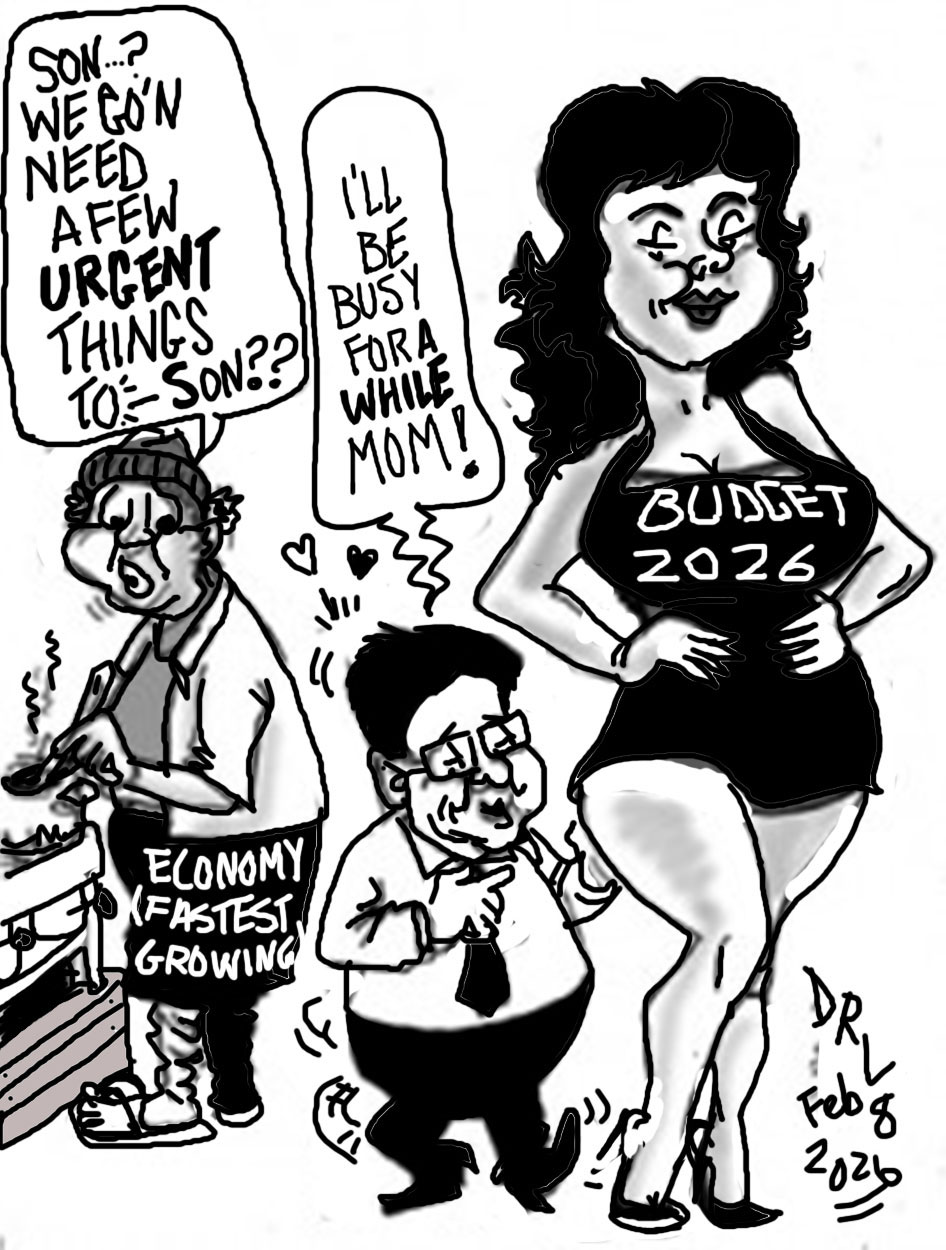
Your children are starving, and you giving away their food to an already fat pussycat.
Feb 10, 2026
Kaieteur Sports – Guyana’s Men’s Under-17 team battled well but came up short against host nation, Honduras, when the two teams met in their Group H encounter of the 2026 Concacaf Men’s...Feb 10, 2026
(Kaieteur News) – For five years, from 2020 to 2025, the PPPC perfected a parliamentary habit that passed for strategy. It was not subtle, nor was it particularly clever, but it was effective in the way that repetition, delivered with conviction and contempt, often is. In every major debate in...Feb 01, 2026
By Sir Ronald Sanders (Kaieteur News) – When the door to migration narrows, the long-standing mismatch between education and economic absorption is no longer abstract; a country’s true immigration policy becomes domestic — how many jobs it can create, and how quickly it can match people to...Feb 10, 2026
(Kaieteur News) – They said he couldn’t talk. He spoke. Proved them wrong. Hostiles said he didn’t know what he was about, that his head is hard. Indeed, his head is hard, which is why he’s still around, makes fools of his detractors. Others persisted through an approach from the...Freedom of speech is our core value at Kaieteur News. If the letter/e-mail you sent was not published, and you believe that its contents were not libellous, let us know, please contact us by phone or email.
Feel free to send us your comments and/or criticisms.
Contact: 624-6456; 225-8452; 225-8458; 225-8463; 225-8465; 225-8473 or 225-8491.
Or by Email: glennlall2000@gmail.com / kaieteurnews@yahoo.com