Latest update November 20th, 2025 12:35 AM

Nov 20, 2025 Features / Columnists, Peeping Tom
(Kaieteur News) – There comes a time in the affairs of a city when one must decide whether its salvation lies in tending to what one already has, or in the restless reinvention of everything, the latter coming at great expense and with a clawing earnestness that suggests modernity is something that can be poured from a cement truck.
The government appears to have reached that moment when it comes to the city and, by all indications, has chosen the latter course. The advertisements announcing consultations on “improving drainage” bear the familiar perfume of decision-making already made: a promise to concrete the earthen canals, as though the ancient veins of this low coastal city have somehow grown too old-fashioned to be useful.
I confess to a certain fondness for those old canals—not because they are picturesque (though even in their unkempt state, they can be), but because in the distant past they represented the triumph of attentive maintenance over brute engineering.
They are evidence of a time when a city understood where it sat: on and, below sea level, precariously habitable only because water could be persuaded, politely but firmly, to go elsewhere at the appointed hour. The Dutch and the British did not bequeath us canals out of whimsy; they carved them out of necessity, and they tended them the way one tends a trusted animal—regularly, respectfully, and with a healthy fear of what might happen if one ever stopped.
And stopped, we certainly did. The story of our drainage woes is not a story of earthen canals proving unequal to the task; it is the much simpler story of a society that grew allergic to maintenance. It is easier, after all, to deliver a contract than to deliver a clean canal. It is easier to promise a new system—modern, gleaming, concrete—than to confront the quiet shame of having allowed the existing one to fall into disrepair. Anyone who has watched a trench bloom with weeds, swallow silt, and lose its depth knows that no system, however expertly designed, survives neglect.
The kokers, those humble wooden impresarios of the tide, once directed the watery comings-and-goings of the city with little more than gravity and good timing. They released water at low tide, held it at high tide, and in so doing performed a daily miracle so ordinary that we ceased to appreciate it. Their decline did not begin because the principle was flawed; it began because their desilting schedules were sacrificed to the greater gods of forgetfulness and fiscal insufficiency. It takes very little for a koker to become ineffective: a few inches of silt, a few seasons of governmental indifference, and suddenly the tide mocks our incompetence instead of obeying our bidding.
Now comes this plan to concrete the canals, as though the fundamental problem were not clogged waterways but earthen walls. One hears talk of “modernization,” the sort of word that functions as a diplomatic substitute for “contracts.” We are invited to believe that a concrete-lined canal is superior to its earthen predecessor, yet no one has adequately explained how concrete will overcome the sheer ubiquity of debris, plastic, vegetation, and silt—all of which accumulate just as readily on cement as on soil. A concrete jungle, however well intentioned, still clogs if left unattended. And unattended is precisely how our existing system arrived at its current state.
The impulse to concrete every inch of the city’s veins is less about engineering and more about psychology. Concrete has a certain authoritarian charm. It appears permanent, decisive, incapable of being ignored. Maintenance, by contrast, is quiet, ongoing, and devoid of spectacle. It makes no headlines, yields no ribbon-cuttings, offers no photo opportunities. A government that maintains a canal earns no applause; a government that concretes one earns a ceremony, and a fleeting sense that something grand has been done.
Yet concreting a canal is not grand. It is, in fact, a confession—a tacit admission that we no longer believe ourselves capable of performing the mundane acts of stewardship upon which cities depend. It is the bureaucratic equivalent of a man who, having grown tired of bathing, purchases an expensive cologne and hopes no one will notice.
Before we plunge deeper into this concrete reverie, it would be useful to consult the study done under the APNU+AFC administration—a study, we are told, that examined the city’s drainage system in some detail. One assumes it still exists, gathering dust in the nation’s preferred repository for unused documents: a shelf in some well-air-conditioned office. If the study concluded that maintenance—not reinvention—was the cure, it would explain its disappearance. Maintenance is the prescription no government wishes to receive.
Perhaps the time has come to abandon our flirtation with the concrete jungle and return, instead, to the simple virtues of cleaning what we have and do so weekly rather than once every ten years.
The canals worked for centuries. They would work again if we treated them as living parts of the city rather than carcasses to be encased in cement. Georgetown does not need new canals; it needs new habits—habits of care, consistency, and the unfashionable discipline of maintenance crews showing up to do the same unglamorous work every day.
No concrete can replace that.
(The views expressed in this article are those of the author and do not necessarily reflect the opinions of this newspaper.)
Subscribe to get the latest posts sent to your email.
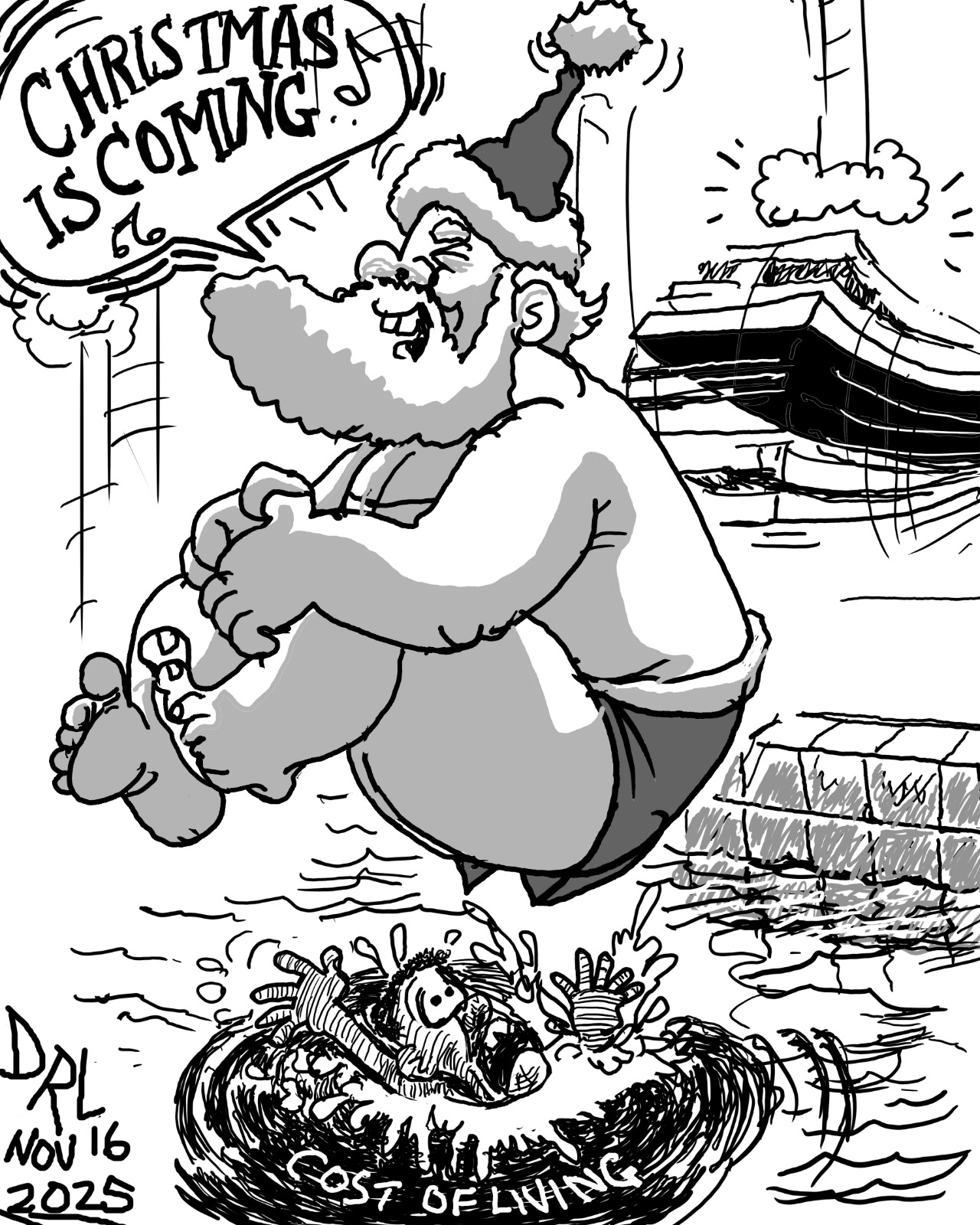
Your children are starving, and you giving away their food to an already fat pussycat.
Nov 20, 2025
The hosts took an unbeatable 2-0 lead against West Indies in the three-match ODI series ESPNcricinfo – Another New Zealand-West Indies game, another last-over finish, another heartbreak for...Nov 20, 2025
(Kaieteur News) – There comes a time in the affairs of a city when one must decide whether its salvation lies in tending to what one already has, or in the restless reinvention of everything, the latter coming at great expense and with a clawing earnestness that suggests modernity is something...Nov 09, 2025
For the powerful, sovereignty is a sword; for the small, it must remain a shield By Sir Ronald Sanders (Kaieteur News) – Sovereignty is supposedly the cornerstone of international order: the formal declaration that every state has the right to govern itself, protect its territory, and determine...Nov 20, 2025
(Kaieteur News) – I am keeping this gold smuggling business on the front burner. If Vice Pres. Dr. Bharrat Jagdeo believes that the moment has passed, I regret having to deliver a surprise. This is now beginning, barely reaching lukewarm temperature. He may have felt that he and his team...Freedom of speech is our core value at Kaieteur News. If the letter/e-mail you sent was not published, and you believe that its contents were not libellous, let us know, please contact us by phone or email.
Feel free to send us your comments and/or criticisms.
Contact: 624-6456; 225-8452; 225-8458; 225-8463; 225-8465; 225-8473 or 225-8491.
Or by Email: glennlall2000@gmail.com / kaieteurnews@yahoo.com